The key facts
- Serve Robotics is launching a Physical AI Services business line with three products: Serve Link, a data labeling tool, and a catalog of data collected by its own robots
- Bedrock Robotics has been named a customer; the company is working with T-Mobile on bringing AI computing closer to robots
- The existing businesses — sidewalk delivery and hospital robots following the acquisition of Diligent Robotics — remain in place
A new business built on its own technology
Serve Robotics, a maker of autonomous sidewalk delivery robots, announced on Thursday, November 5, 2026, the launch of a new business line, Physical AI Services. The company will supply its communications and data tools to other robot developers. The news was reported by TechCrunch citing an announcement made alongside the release of Serve's third-quarter financial results.
Who is behind the company
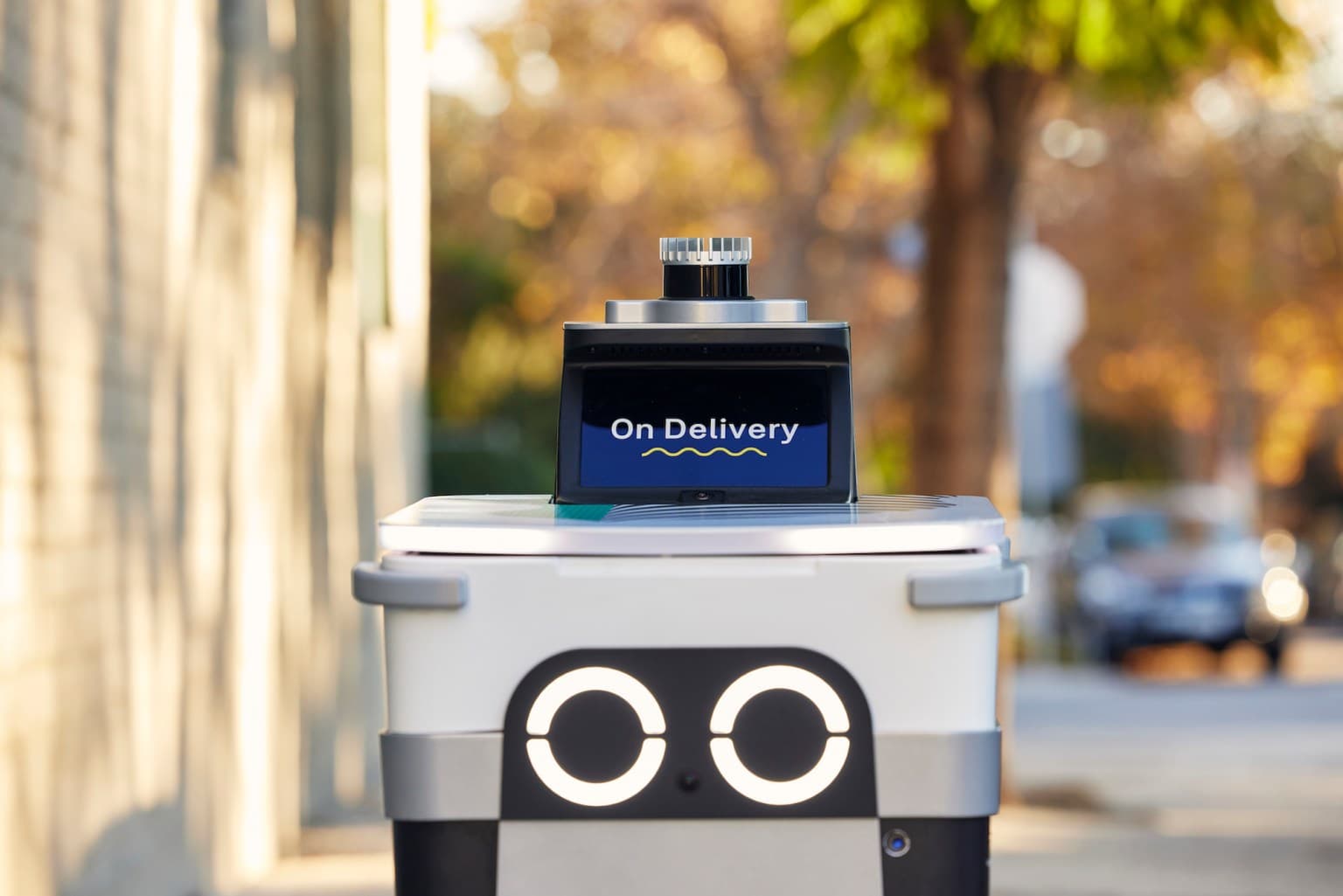
Serve Robotics was spun out as a separate entity after Uber acquired Postmates in 2021, and in 2024 it went public. Today it makes two types of robots: the recognizable sidewalk delivery robot 'with eyes' and a hospital robot acquired through the purchase of Diligent Robotics in January 2026. According to CEO and co-founder Ai Kashani, these lines are not being shut down: instead, the company wants to sell the technologies it built for its own robots to other developers — for example, those building robots for farms, warehouses and other unstructured environments. 'I think of this as an AWS moment: we are opening up technologies we built for ourselves so that others can build on top of them,' Kashani said in an interview with TechCrunch.
Three products and the first partners
The Physical AI Services line includes three products. The first is Serve Link, which connects robots 'in the field' with AI systems in data centers: this makes it possible to use powerful models without placing all the computing on board the robot. According to Kashani, the key challenge is 'reliably connecting over truly unreliable networks.' The second product is a data labeling tool that helps find edge cases in arrays of real-world data collected by the robot, which can then be used to fine-tune models. The third is a catalog of real-world data for foundation models, collected by Serve's own sidewalk robots and teaching AI to understand complex environments with people.
Partners and a shifting delivery landscape
Serve has already named the first partners of the new line: a customer is Bedrock Robotics, a startup developing autonomous driving systems for construction equipment, and the company is working with T-Mobile on bringing AI computing closer to robots. At the same time, the core sidewalk delivery business is expanding, but it is shifting away from Uber to other partners, including DoorDash and Wonder. The very idea of 'opening up' its technologies to external developers, according to Kashani, had been maturing for years — it is an approach borrowed from Amazon: first build the end application in full to understand exactly what needs to be created, and then open up the platform once the technology matures.