The key facts
- The first 700-tonne girder has been installed in Klin on the Moscow — Tver section; it was mounted by a special crane over a highway.
- More than 4,000 girders are needed for the entire mainline; the Selynskoye facility was the first to launch production, with output later to be expanded across ten sites.
- The high-speed mainline launch is scheduled for 2028, with a journey time of about 2 hours 15 minutes; 32,000 people and 11,000 units of equipment are involved in the construction.
Assembly of the mainline spans has begun
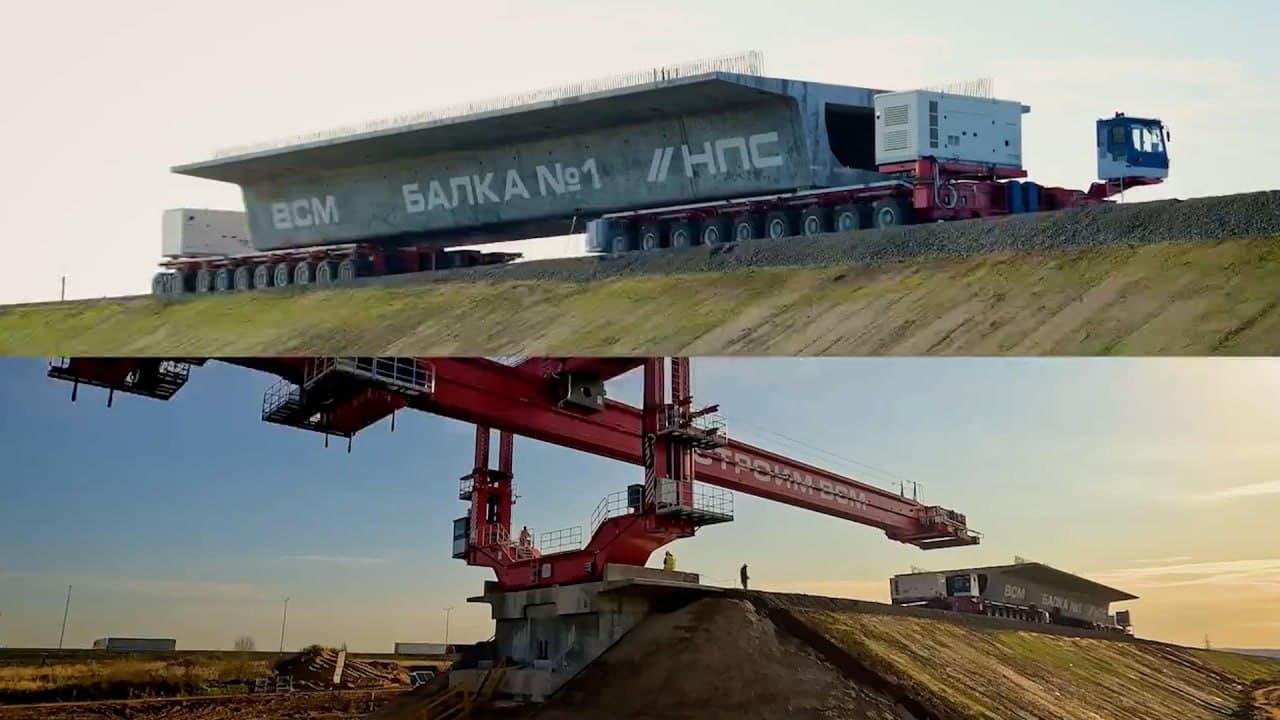
On the high-speed mainline under construction between Moscow and Saint Petersburg, the first test reinforced concrete girder has been installed — this is the first report Life.ru of the project's transition from design and preparatory work to the actual assembly of spans. The structure was installed on the section between Moscow and Tver, in Klin in the Moscow region, over a highway, using a special crane. The girder weighs 700 tonnes and is over 30 metres long. The entire overpass will consist of 24 spans with a total length of about 800 metres, Russian Railways specified.
Scale of production and progress of the works
In total, the mainline will require more than four thousand such girders. The Selynskoye production facility in the Moscow region was the first to launch their manufacturing; later, output will be expanded across ten specialised sites along the route. Deputy Prime Minister Andrei Nikitin called the installation of the first girder an important stage of construction and noted that production volumes must now be increased and the pace of installation maintained. Work is under way along the entire route: 32,000 specialists and 11,000 units of equipment are involved. The mainline will pass through Moscow, Saint Petersburg, the Moscow, Tver, Novgorod and Leningrad regions.
Timelines, rolling stock and financing
The launch of the high-speed mainline is scheduled for 2028: the journey between the capitals should take about two hours and 15 minutes, trains will depart every 15 minutes during peak hours, and by 2030 passenger traffic is forecast to reach 23 million people a year. Rolling stock is being prepared in parallel: according to the Ministry of Transport, in September the first car body shells of the future high-speed train successfully passed strength tests. Life.ru previously reported on the financing scheme: about a third of the funds come from the state, with the rest provided by investments. In April, Saint Petersburg Governor Alexander Beglov reported to Vladimir Putin that the construction schedule was being met.