The key facts
- An M3.6-class flare was recorded on the evening of November 5, with the peak at 21:33 Moscow time
- The solar activity index over 48 hours reached 5.3 out of 10
- A stream of fast solar wind from a coronal hole nearly 1 million km across is expected on the night of November 6 to 7
M3.6-class flare
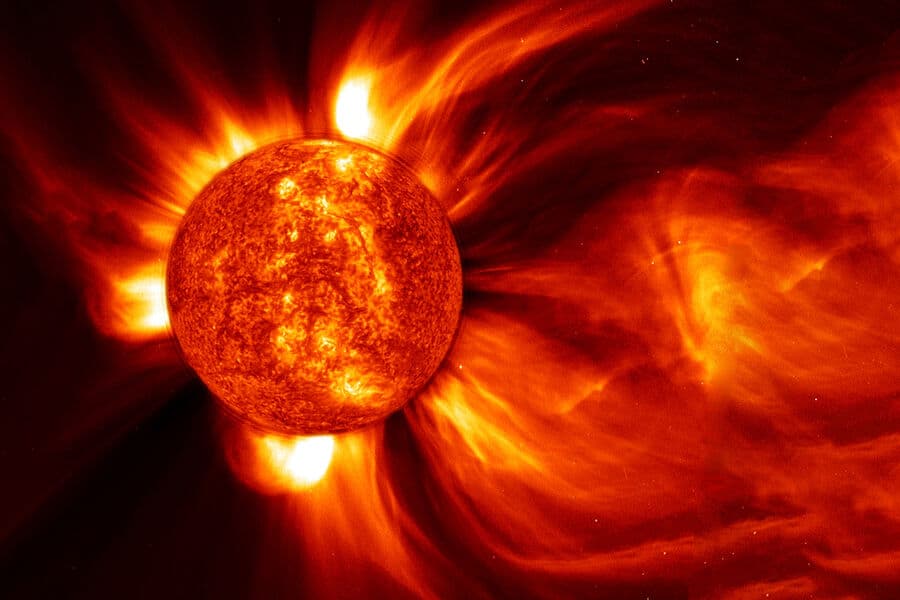
On the evening of November 5, a strong M3.6-class flare was recorded on the Sun. Its peak occurred at 21:33 Moscow time, according to data from the Laboratory of Solar Astronomy of the IKI RAN and the ISTP SB RAS. Class M combines strong solar flares. At the time of the data update, no new flares were observed, and the solar activity index over the past 48 hours reached 5.3 out of ten — indicating a persistently high background of activity, as reported by Life.ru.
Coronal hole and the expected geomagnetic storm
The flare coincided in time with another disturbance approaching Earth: it was previously reported that one of the largest coronal holes of 2026 had been detected measuring nearly 1 million kilometers. According to the same laboratory, a stream of fast solar wind from this region should reach the planet on the night of November 6 to 7 and, as expected, affect it for at least five days — until roughly the middle of next week. Against the backdrop of this event, the outlet also wrote about scientists preparing for a Kp 5-level geomagnetic storm. Thus, the November 5 flare and the approaching solar wind stream are two different phenomena: the first has already occurred, while the second remains a forecast with the stated timeframes.