The key facts
- Tensions escalated after von der Leyen mentioned 'associated membership' just hours after Germany's attempt to remove that wording from a joint statement by the 27 EU countries.
- According to diplomats, von der Leyen does not intend to abandon the idea, and the problem is that granting this status to Canada rules out Ukraine ever receiving it.
- The split is broader: Berlin opposes the European Commission's proposed EU budget of about €2 trillion and did not support the creation of a European Security Council.
Confrontation over a wording
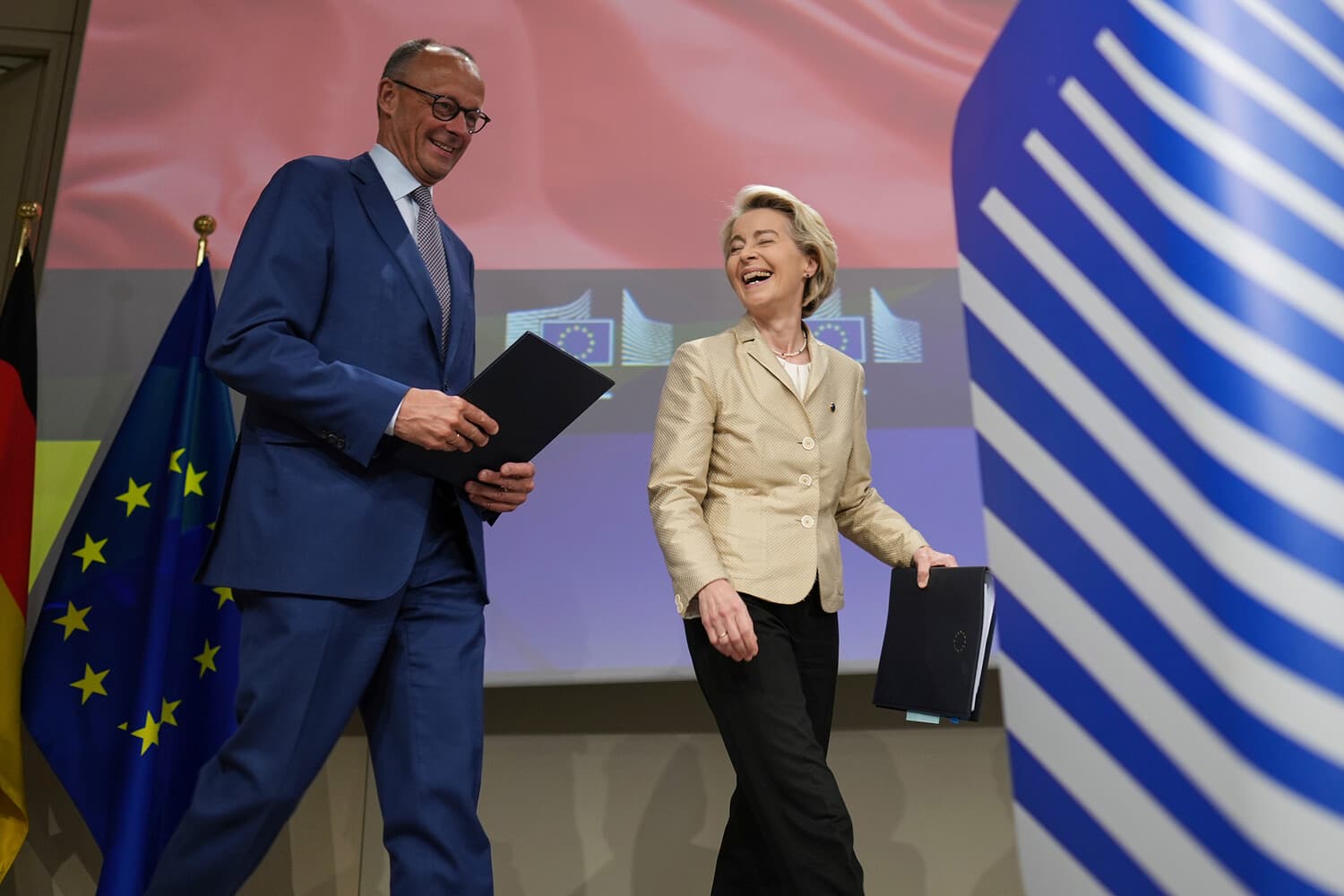
European Commission President Ursula von der Leyen and German Chancellor Friedrich Merz are in a state of confrontation over the European Commission's proposal to make Canada an 'associated member' of the EU. This is reported by Politico, citing four diplomats.
What is known about the disagreements
According to Politico, tensions escalated after von der Leyen used the phrase about 'associated membership' just hours after Germany's attempt to remove that wording from a joint statement approved by the 27 EU countries. The outlet notes that Merz had previously proposed 'associated member' status for Ukraine, but after the idea was rejected, including by Kyiv, Berlin officials saw the use of this term for Canada as a slight against the chancellor's initiative.
The parties' positions and a broader split
Two diplomats told Politico that von der Leyen does not intend to abandon the idea of 'associated membership' for Canada. The diplomats stressed that the problem is that granting Canada such status rules out Ukraine ever receiving it. According to the outlet, the disagreements are an example of the growing split between Merz and von der Leyen on issues of governing the bloc: Berlin is pushing to cut the EU budget proposed by the European Commission, which amounts to about €2 trillion, and did not support the proposal to create a European Security Council. Jan Techau, a former speechwriter at the German defense ministry, described the situation in a comment to Politico as an 'institutional dilemma': von der Leyen takes a strictly integrationist approach, whereas Merz 'speaks of nation-states as the main driver of EU policy'.
Background: the idea of a 'unique alliance'
The idea has been discussed since September, when von der Leyen stated that Canada could become the European Union's first associated member, and Canadian Prime Minister Mark Carney announced his intention to conclude a 'unique alliance' with the EU. The same month, the Financial Times reported that European countries were cool toward the idea, and in late October Politico reported that the European Union had dropped the idea of granting Canada such status — although Carney noted that Canada and the EU are working on deepening the partnership, as a result of which Canada would become the first associated member. Earlier, Canada stated that it was not raising the question of joining the European Union. Thus, reports about the status of the project are contradictory: according to some publications it has been rejected, according to others it continues to move forward, and it is precisely around its wording that the conflict between Brussels and Berlin has flared up.