
The key facts
- On November 5–6, a meeting of Central Asian leaders will take place in Astana within the framework of the Aqaba Process — the first time a round of the initiative is being held in the region
- On November 5–6, a meeting of Central Asian leaders will take place in Astana within the Aqaba Process — the first time a round of the initiative is held in the region
- The meeting’s agenda is security in the field of artificial intelligence and countering its use for terrorist and extremist purposes
- The meeting's agenda is security in the field of artificial intelligence and countering its use for terrorist and extremist purposes
- Uzbekistan has been participating in the process since 2025: Mirziyoyev proposed hosting one of the sessions in Samarkand, and Saidov took part in the Rome round in October 2025
Meeting in Astana: a new region and a new theme for a decade-old format
On November 5–6, Astana will host a meeting of Central Asian leaders within the framework of the international initiative known as the Aqaba Process. It is devoted to security in the field of artificial intelligence and to countering its use for terrorist and extremist purposes; participants also plan to consider strengthening international and regional cooperation in response to new technological challenges. This is reported by Gazeta in an analysis dedicated to how the format works.
What is the Aqaba Process
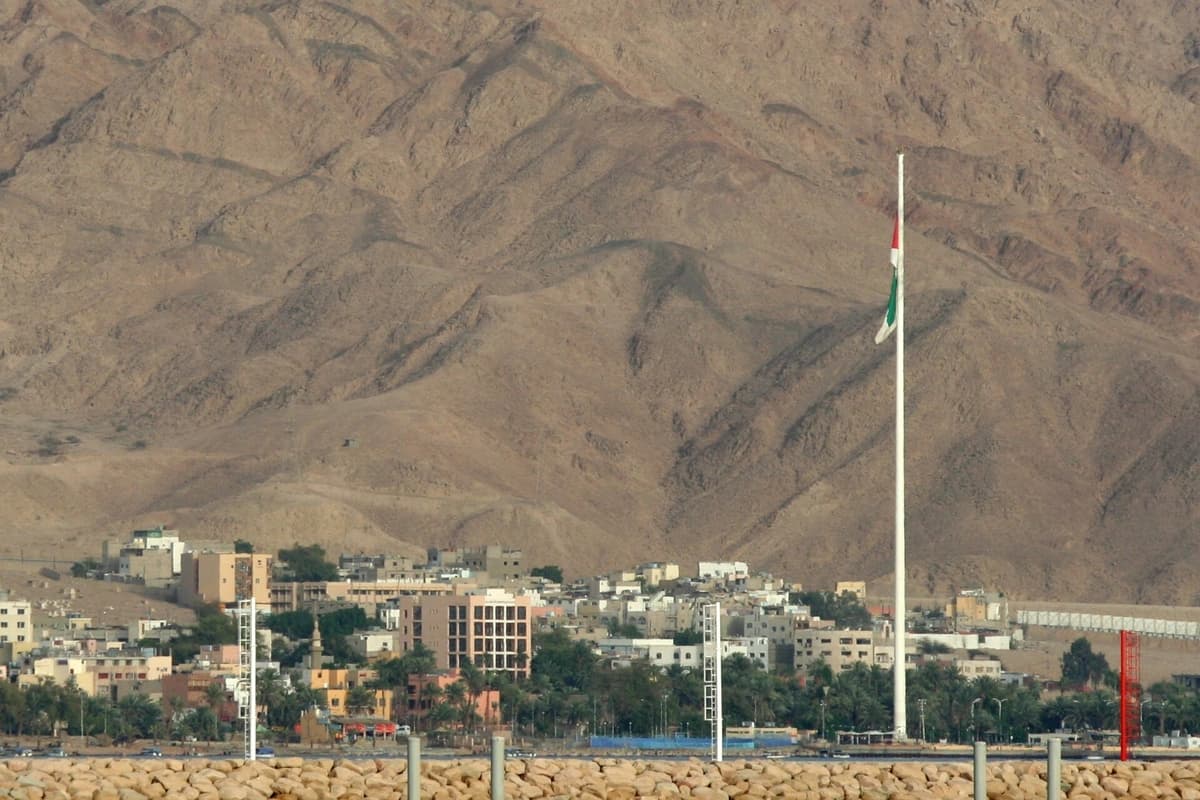
The initiative was launched in 2015 by King Abdullah II of Jordan in the Jordanian port city of Aqaba, with the stated goals of strengthening international cooperation and coordinating efforts in the security sphere. Initially, the emphasis was on coordination among law enforcement and military agencies, information sharing, and developing joint approaches to combating terrorist organizations and extremist ideology. The King himself described the significance of the process as follows: “Although we may have won some battles, the fight against terrorism and extremism is not yet over… Through the Aqaba Process, we have helped bring together interested leaders for coordination, the exchange of best practices, and the development of new strategies.”
A flexible format without membership
The Aqaba Process is neither an international organization nor an association with a permanent composition: it has no fixed membership and no supranational apparatus empowered to make binding decisions. It is a flexible platform for meetings, where the composition of participants and the subject matter are determined by the specific agenda. Depending on the topic, participants include heads of state and government, foreign and defense ministers, heads of law enforcement agencies and intelligence services, as well as international organizations and representatives of the private technology sector. The organizers are Jordan and partner states, and the meetings themselves are held not only in Jordan: among the venues that have hosted eventsare Spain, Albania, Indonesia, Brazil, Bulgaria, Rwanda, Singapore, the United Kingdom, Norway, Nigeria, the Netherlands, the United States, and the UN.
From traditional terrorism to drones, online games, and AI
Over ten years, the process’s agenda has expanded considerably. Individual rounds were devoted to specific regions — East Africa, Southeast Asia, Latin America, West Africa, and the Sahel: in March 2022, East Africa was discussed in Aqaba; in December of the same year, a round on Latin America was held jointly with Brazil; and in June 2023, threats in West Africa and the Sahel were addressed in Córdoba, Spain. Later, the digital environment and new technologies moved to the center of discussions. In February 2026, a round on airspace management and drones took place at the Royal Military Academy Sandhurst (United Kingdom), and in June 2026, at the UN headquarters in New York, a closed meeting of the European Union and the Aqaba Process was held on the future of terrorism, radicalization, and recruitment in online games — it brought together representatives of states, the UN, the gaming industry, and civil society. The meeting in Astana marks two shifts at once: for the first time, a round is being held in Central Asia, and for the first time, artificial intelligence becomes the central theme.
Uzbekistan’s participation
Uzbekistan joined the format in 2025. On August 26, 2025, during talks in Samarkand, President Shavkat Mirziyoyev spoke highly of the initiative in his conversation with King Abdullah II and proposed hosting one of the upcoming sessions in Samarkand; the parties also agreed on the need to jointly promote the ideas of tolerant and enlightened Islam. On October 15, 2025, Foreign Minister Bakhtiyor Saidov took part in the 'Aqaba Process 2025' meeting in Rome, organized by Jordan together with Italy under the chairmanship of King Abdullah II and Prime Minister Giorgia Meloni; it was the second round dedicated to countering terrorism and extremist ideology in West Africa. At the time, Saidov reaffirmed Uzbekistan's commitment to the international community's joint efforts to strengthen peace, stability and sustainable development. The Astana meeting is the first event of the process in the Central Asian region, which aligns with Mirziyoyev's proposal to hold a session in Samarkand, although sources do not report any specific agreements regarding Samarkand.