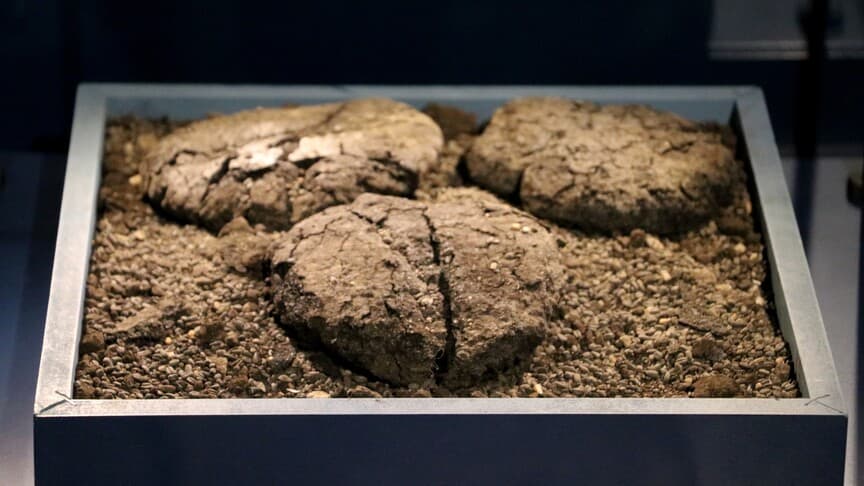
The key facts
- At pressures above ~222 gigapascals, ice X loses the cubic symmetry of its lattice — the first experimental evidence of this transition has been obtained
- The research involved teams from the University of Nevada, Las Vegas, the University of California, Berkeley, and Argonne National Laboratory; the work was published in Communications Chemistry
- The data allow for two possible symmetries of the new structure; a final determination requires further research
An experiment with diamond anvils
Scientists from the University of Nevada, Las Vegas, the University of California, Berkeley, and Argonne National Laboratory studied ice X — a form of water that exists at very high pressure. The sample was compressed between diamond anvils: the pressure achieved was roughly 2.2 million times atmospheric pressure. The arrangement of atoms was tracked via the scattering of synchrotron X-ray radiation. The work was published in the journal Communications Chemistry, as reported by Gazeta.Ru.
What they found
When compressed above roughly 222 gigapascals, the cubic lattice of ice X became distorted: instead of a simple highly symmetric structure, a more complex one emerged. Such a rearrangement had previously been predicted by calculations, but its signatures have now been recorded in an experiment for the first time. The data allow for two possible symmetries of the new structure — quantum-mechanical calculations favor one of them more strongly, but additional research is needed to finally clarify the arrangement of this form of water.
Why it matters
The result is important for models of the interiors of the ice giants — Uranus and Neptune: the structure of water at extreme pressure affects the properties of matter and the interpretation of planetary observations. At the same time, as the authors of the report note, the experiment primarily reproduced high pressure, while the temperature conditions inside the planets differ. The work refines the upper stability limit of ice and shows that further compression can make the structure of water more complex rather than preserve its symmetry.