The key facts
- The 20,000-hectare project is designed for up to 2 million residents; the first phase is 6,000 hectares for 600,000 people, with projects worth $50 billion
- Facilities worth $2 billion have been completed, construction of another $2.5 billion has begun; 20,000 apartments are promised by the end of 2026
- Relocation of 150 government agencies: three ministries are already operating, buildings for about 2,600 more employees are under construction
A city designed for two million residents
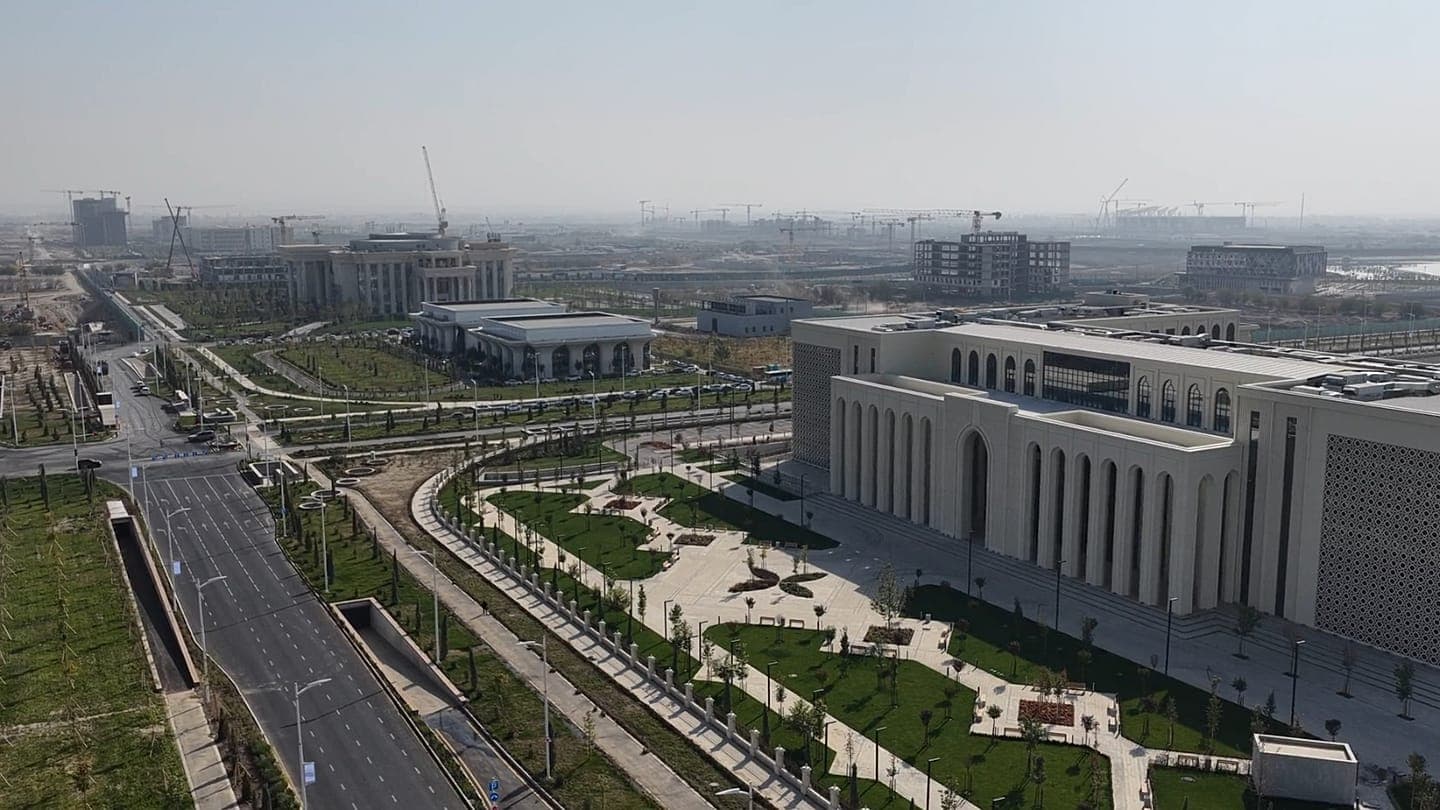
On the eastern outskirts of Tashkent, construction of New Tashkent has been underway since 2023 — a city covering 20,000 hectares, conceived as a major economic and administrative center for up to two million residents. The first phase occupies 6,000 hectares and is designed for 600,000 people; projects worth $50 billion are planned for it. According to figures cited by Euronews, facilities worth $2 billion have been completed, and construction of ten new projects worth $2.5 billion has already begun.
Administrative relocation and investment
A key part of the project is the relocation of 150 government agencies and state-affiliated organizations to New Tashkent; facilities are planned for more than 60 agencies. The ministries of construction, transport and energy are already operating there, and nine more buildings are under construction for approximately 2,600 employees. In October, President Shavkat Mirziyoyev called New Tashkent 'not just a place for building new housing,' describing plans for it as an independent economic center, and instructed officials to speed up construction by simplifying approvals and reducing administrative barriers. 50 plots have been reserved for foreign investors; according to Shokhrukh Ochilov, a specialist at the directorate, the directorate has hosted delegations from France and Kazakhstan and is working with companies from China, the UAE and Saudi Arabia.
Housing, universities and a stadium
In the first phase of the Sharq Bahori neighborhood, nearly 7,000 apartments out of the planned 15,000 have been completed on 95 hectares. Authorities expect that by the end of 2026, 20,000 apartments will be ready in New Tashkent, housing at least 70,000 people. The buildings of the New Uzbekistan University for 7,000 students and an academic building of the Nizami Pedagogical University for 12,000 students have already opened, and the National Library, seating 1,500 readers, is in operation. A 55,000-seat stadium costing $100 million is being built to FIFA standards; it is expected to host matches of the 2027 FIFA U-20 World Cup, which Uzbekistan will co-host with Azerbaijan.
Transport and what this changes in practice
The transport strategy is built around connections with the capital: 18 km of roads have been built, and a 21-kilometer metro line with nine stations is being designed, which is to connect to the Tashkent network and carry up to 230,000 passengers a day. A bus route for civil servants is already running, and construction of a bridge across the Chirchik River has begun. Within the city, the '15-minute city' model is being applied — schools, shops and parks within walking distance. For readers who have already seen brief news items about the project, the Euronews report is useful because it separates what is actually working (the ministries, 7,000 apartments, roads, buses) from plans and promises (the metro, the stadium, the full relocation of 150 agencies), allowing an assessment of the real stage of construction rather than just the announced figures.