The key facts
- The heating charge in an apartment building does not depend on heat consumption in an individual apartment — 'turning the valve' is pointless
- Recalculation for underheating: at +16 instead of +18 for five days, the charge drops by about 36%
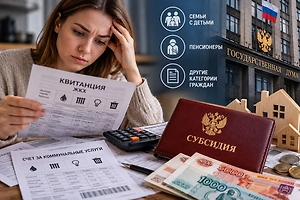
- A subsidy is granted if utility expenses exceed 22% of household income (10% in Moscow); it is arranged via Gosuslugi or an MFC for six months
Why saving heat doesn't lower the bill
Residents of apartment buildings who try to save on heating by turning down their radiators will see no difference in their bill. As Alexander Kudryashov, a senior lecturer at the Financial University under the Government of the Russian Federation, explained in an interview with RIA FedralPress, the heating charge is calculated either according to the standard rate or by the building-wide meter, and does not depend on how much heat a particular apartment consumed. Therefore, expenses can be legally reduced in only two ways: through a recalculation for insufficient heating or through a housing subsidy.
Recalculation for cold radiators
The first option applies if the apartment is colder than the standard: ordinary rooms must be at least +18 degrees, corner rooms at least +20. For every hour of violation and every degree of deviation, the charge is reduced by 0.15%. To document the underheating, you need to file a request with the emergency dispatch service and obtain an inspection report. According to the calculation given in the publication, five days at +16 instead of +18 degrees reduces the monthly charge by about 36%: with a payment of two thousand rubles, the saving is about 700 rubles; with four thousand, about 1.4 thousand rubles.
Housing and utilities subsidy
The second way is a subsidy for those whose utility expenses exceed the established share of household income. The federal standard is 22%, in Moscow it is 10%. An application can be submitted via Gosuslugi or an MFC, and the assistance is granted for six months. The practical takeaway for the reader is that both mechanisms depend not on the resident's behavior, but on the actions of the management company and on income level: the recalculation requires a documented underheating report, while the subsidy must be applied for separately and renewed every six months.
If the heating is shut off
Separately, Life.ru looked into which heater warms an apartment faster when the heating is off: for quick warming, the outlet names the electric convector as suitable, while an oil-filled radiator retains heat longer after being switched off. This addition concerns not the charges, but a temporary solution to the cold problem while the recalculation or subsidy is being processed.