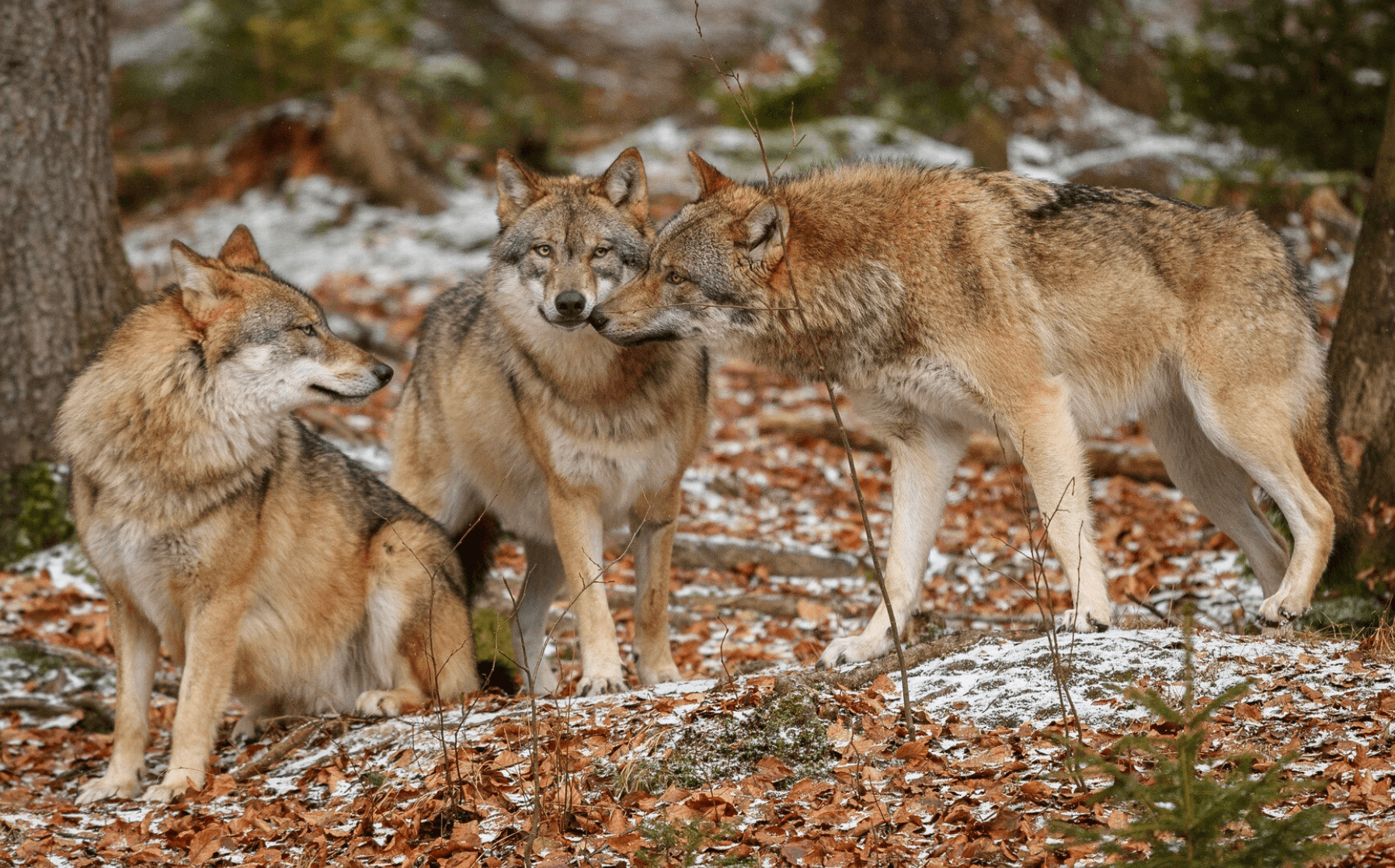
The key facts
- Kuzbass counted 51 wolves — almost four times more than the 13 individuals in 2022, but three fewer than a year earlier
- The most wolves are in the Izhmorsky district — 19, in Tisulsky — 7, in Tashtagolsky — 6
- Predator tracks appeared near Targay under Novokuznetsk: a pack periodically comes there from Altai
Population growth over three years
In Kuzbass, according to the regional Ministry of Forestry and Hunting, there are 51 wolves. In 2022, 13 animals were counted in the region, meaning the population has grown almost fourfold in three years. At the same time, compared with last year, the number has decreased by three individuals.
Where the predators were recorded
The most wolves were counted in the Izhmorsky district — 19 individuals. Seven animals were recorded in the Tisulsky district, and six in the Tashtagolsky district. Recently, predator tracks were found in the Targay area near Novokuznetsk: according to the ministry, a pack periodically comes there from Altai and does not stay in the region permanently.
No threat to settlements so far
The ministry reported that the animals are far from settlements, in the hunting grounds of the Nikolaevsky patrol area. At the time of the comment, no signals had been received about wolves approaching residential areas directly, and the ministry does not yet expect a mass appearance of predators near homes comparable to the situation with bears.
Context with bears
Earlier, in five districts of Kuzbass — Kaltansky, Osinnikovsky, Prokopyevsky, Tashtagolsky and Mezhdurechensky — a heightened readiness regime was introduced due to the increasing number of bears approaching homes. Thus, the growth in the number of wolves in the region is occurring against the backdrop of precautionary measures already in place for another predator species; however, according to the ministry, wolves are so far behaving differently and are not approaching residential areas.