The key facts
- Iran's GDP in the quarter ending June 20 fell 10.1% year on year, and 4.6% excluding oil
- Iran's GDP in the quarter to June 20 fell 10.1% year on year, and 4.6% excluding oil
- By various estimates, between 3,000 and 18,000 containers of Iranian cargo are stuck in Pakistani ports
- Qatar is relaying messages between Washington and Tehran about possible talks
The economy is paying more than the election
The war between the US and Iran became one of the main topics of the US midterm elections held on Tuesday, in which the Democrats won control of Congress. But, as The National notes, for Iran the cost of the conflict is proving even heavier — official data show GDP falling by more than 10% year on year in the latest quarter. Iranian parliament speaker and chief negotiator Mohammad Bagher Ghalibaf said Americans had voted against war, and warned on X that the Trump administration's attempt to ignore public dissent would bring a
Port congestion and industrial decline
The economic consequences of the conflict are becoming increasingly tangible: Iranian cargo is piling up in Pakistani ports. Mohammad-Ali Kargascha, a board member of Iran's Association of International Transport Companies, told the Mehr agency that the figure was first put at 3,000 containers, then 8,000, and finally 18,000 stranded containers. Storage and other costs on some shipments have exceeded $25,000, approaching the value of the goods themselves. Businesses also find it hard to arrange alternative routes through Turkey: some cargo goes overland, but with extra costs and delays.
Decline figures and energy shortage
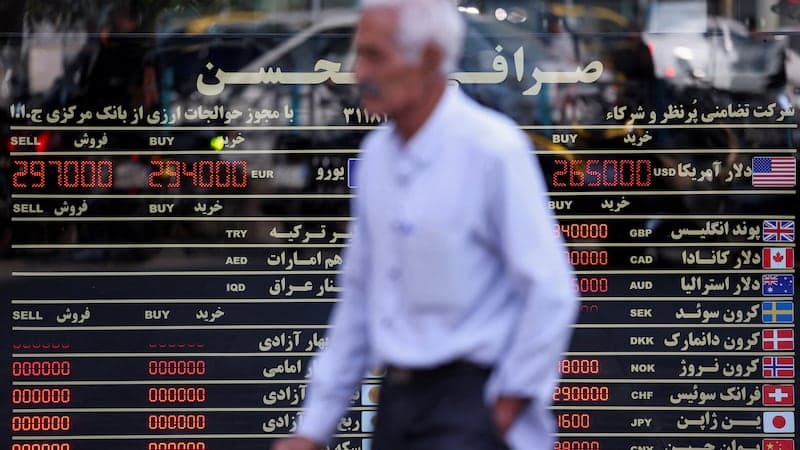
According to the Statistical Center of Iran, in the quarter ending June 20 GDP fell 10.1% year on year; even excluding oil, the economy shrank by 4.6%. Industry and mining contracted by 14.7%, and oil and gas extraction by 26.4%. March attacks on four gas processing facilities knocked out about 230 million cubic meters of daily capacity; officials say about 100 million has been restored, while another 130 million remains unavailable. Former member of parliament's energy committee Hedayatollah Khademi told the ILNA agency that Iran still faces a shortage of about 400 million cubic meters of gas per day, criticizing years of neglect of shared gas fields:
Industries under pressure and workarounds
The cement industry is already feeling the effect: Ali-Akbar Alvandian, secretary of the cement industry employers' association, said gas supplies to plants were cut off from late October, and producers are switching to fuel oil — a heavily polluting fuel whose transport effectively doubles fuel costs. Before that, the industry was receiving only 5–6 million cubic meters of gas per day against a need of about 28 million. Mining companies report shortages of explosives, fuel and imported components for machinery. At the same time, there are signs of adaptation: the Trade Promotion Organization reported growth in exports to Turkey of 59% and to Oman of 23% in the first six months of the Iranian calendar year, and some restrictions on overland routes were eased. However, these figures do not indicate a recovery in foreign trade overall.
The threat of a new war and domestic discontent
At the same time, the risk of a resumption of hostilities remains. Iranian Foreign Ministry spokesman Esmaeil Baghaei said that Tehran approaches possible talks with Washington 'with maximum caution and complete pessimism,' citing 'the experience of America violating previous agreements.' Qatar is relaying messages between the sides to resume negotiations, but attacks in the area of the Strait of Hormuz and reports of new strike plans underscore the fragility of the situation. The IRGC said on Wednesday that two more tankers were destroyed by naval mines near the strait and an American MQ-9 drone was shot down; these claims have not been independently confirmed. Washington confirmed limited strikes on Iranian military facilities on Qeshm Island. According to The New York Times, US Central Command has prepared options for new strikes, including a short, intense campaign; Donald Trump told The Financial Times that there is no immediate attack plan, but that forces are 'locked and loaded.' Discontent is growing inside the country: protest monitor Mark Pirouz recorded 30 demonstrations in 19 locations in the last week of October, mostly over unpaid benefits, pensions and wages and fuel shortages; in his assessment, the protests remain relatively small and predominantly economic in nature.