The key facts
- The October 2026 restrictions concerned not bandwidth but the speed of platforms with Starlink/Starshield terminals: about 160 km/h on October 23, above 400 km/h restored on October 24 according to Ukraine's Ministry of Defense
- Medium-range drone strikes at 50–210 km and interceptor drones were affected, including STING from Wild Hornets
- Ukraine signed a letter of intent with ICEYE and Nokia for its own satellite communications, with the first satellites due in 2028
What exactly was restricted
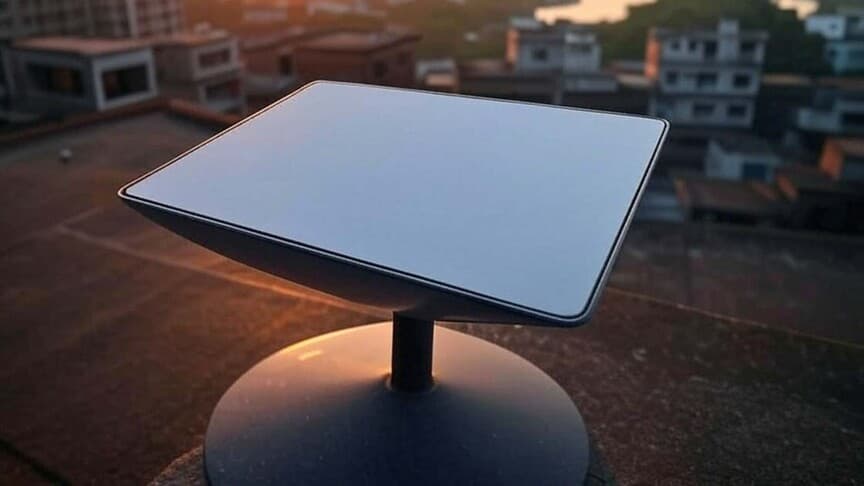
In October 2026, restrictions on the Starlink satellite services and their military variant Starshield exposed a vulnerability common to almost all modern armies: the dependence of combat operations on commercial low-orbit satellite networks. This assessment is offered by Dr. Can Kasapoglu, a senior fellow at the Washington-based Hudson Institute, in a column for Anadolu.
The technical essence of the restrictions
The key nuance, in the author's view, is that the restrictions did not concern the bandwidth of the satellite internet. According to the data cited in the publication, the decisions were linked to SpaceX and the US administration and limited the speed at which military platforms with Starlink or Starshield terminals could move while maintaining connectivity. As of October 23, the reported limit was about 160 km/h, but on October 24 Ukraine's Ministry of Defense confirmed the restoration of a stable connection at speeds above 400 km/h.
Who was affected
The restrictions particularly affected what Ukraine's General Staff calls medium-range strikes: since the summer of 2026, Ukrainian strike drones at distances of roughly 50–210 km had been putting pressure on Russian supply lines, and part of the operations relied on Starshield military communications. Interceptor drones were also affected, including STING developed by Wild Hornets, used against Russian jet-powered attack drones. The network's importance extends beyond the front: since 2022, Starlink has also supported civilian structures — government bodies, emergency services, and ordinary users.
Who holds the keys
The story of Starlink's appearance in Ukraine began with a public appeal by the then Minister of Digital Transformation, Mykhailo Fedorov, to Elon Musk on X in the first days of the 2022 war; according to the publication, negotiations had been underway for weeks before the public appeal. By January 2023, about 25,000 terminals were operating in Ukraine, and in total, from 2022 to 2025, the country received more than 50,000 terminals through official channels, with Poland playing a leading role. The explanations for the October restrictions remained unclear: in a statement on October 24, Musk claimed that Ukraine had violated the terms of the commercial service by using it for offensive military purposes, and that decisions on Starshield rest with the US government. Starshield operates through US military cooperation mechanisms, while Poland finances a significant portion of the commercial access under contracts.
Lessons and diversification attempts
The author also notes the flip side: strict access control had previously worked in Kyiv's favor — in early 2026, a 'whitelist' of terminals compatible with the Delta battle management system effectively cut off Starlink connections that Russian forces had obtained through third countries and covert purchases. After the October episode, in Kasapoglu's assessment, no NATO planner can assume that commercial infrastructure outside national control will remain available under any circumstances. Ukraine has already signed a letter of intent with Finland's ICEYE and Nokia to develop independent satellite communications, and in January 2026 ICEYE expanded Kyiv's access to radar imagery. However, the first satellites of the ICEYE-Nokia system are planned for 2028, and in the near term it cannot replace Starlink with its thousands of satellites and global coverage. The author's conclusion: the war has reached a stage where military power can no longer be explained solely by state-centric models — the companies making the 'flashlights' may have a say in which 'roads the armies march by at night.'