The key facts
- By November 3, the pollock catch exceeded 2 million tonnes — 3.1% above the 2025 level and 9.2% above the 2024 figure
- In the Sea of Okhotsk harvest declined, but in the West Sakhalin subzone the catch more than doubled
- PCA president Alexey Buglak forecasts a final catch of about 2.2 million tonnes
Record pollock catch
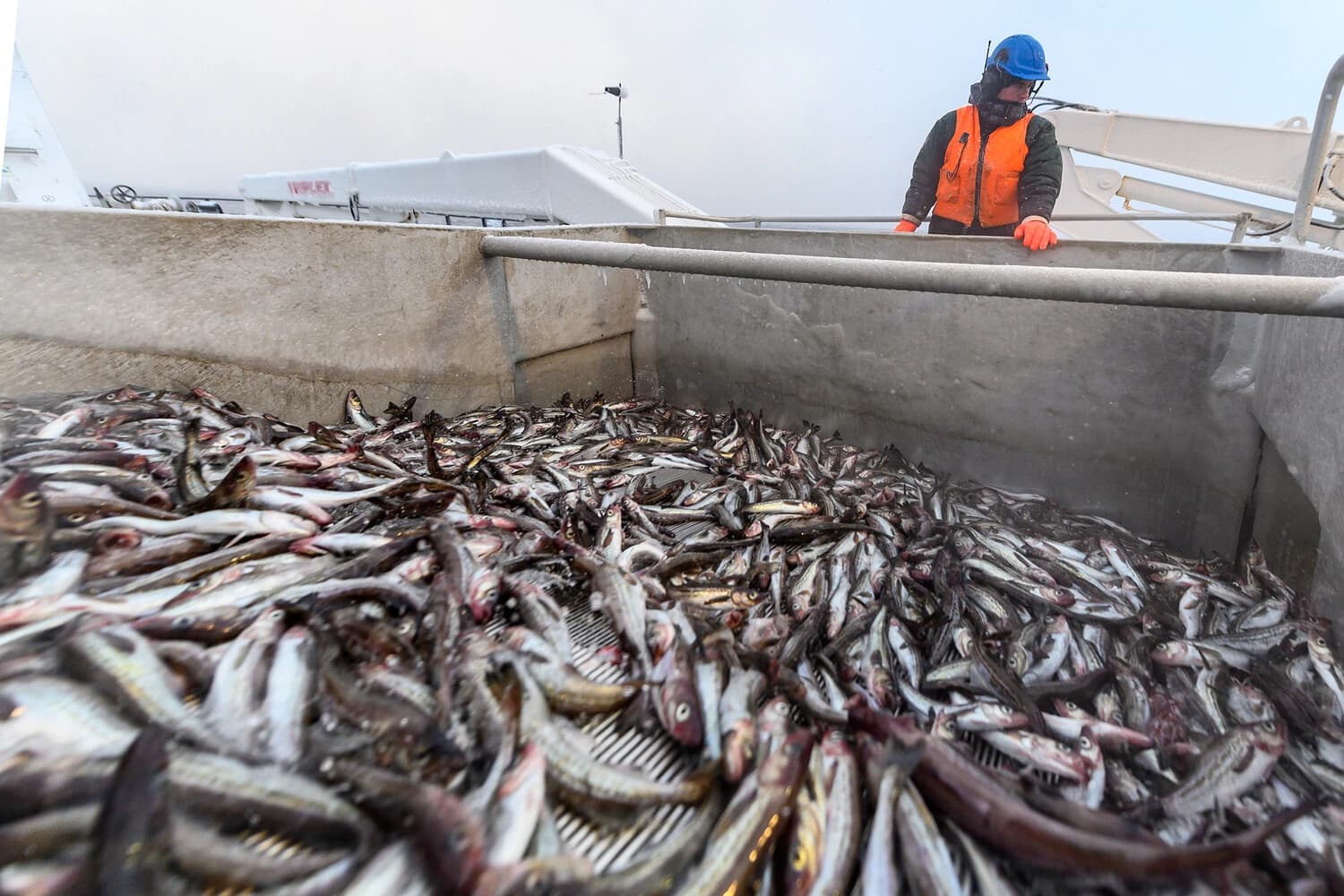
By the beginning of November, pollock catch in Russia exceeded 2 million tonnes, which is about half of the entire national fish catch. The figure is 3.1% higher than the record set last year. RIA Novosti reports this, citing the Pollock Catchers Association (PCA) — as written by Gazeta.Ru.
Dynamics by fishing area
According to the association, pollock fishing in the Far Eastern fishery basin has exceeded the 2 million tonne mark for the second year in a row. As of November 3, the catch volume was 60 thousand tonnes, or 3.1%, above the 2025 level and 170 thousand tonnes, or 9.2%, above the 2024 figure.
Where the catch is growing and where it is declining
In the main fishing area — the Sea of Okhotsk, which accounts for about half of the total pollock catch — a slight decline in harvest was noted. At the same time, other areas show growth: in the West Sakhalin subzone, the catch more than doubled — from 20.4 thousand tonnes in 2025 to 42 thousand tonnes in 2026. In the Karaginsky subzone, the figure rose by 28% to 71 thousand tonnes, and in the North Kuril zone — by 22% to 139 thousand tonnes. Additional growth was provided by the Petropavlovsk-Commander and East Sakhalin subzones.
Forecast and prices
Association president Alexey Buglak expects that the positive dynamics will continue by the end of 2026: by his estimate, the total pollock catch will be about 2.2 million tonnes. This is so far the association's estimate, not a confirmed year-end result. Against the backdrop of record harvests, pollock prices have risen noticeably: in September it was reported, that the wholesale price of pollock in the Far East reached 215 rubles per kilogram, up 59.3% year-on-year and 10.3% month-on-month. Thus, the growth in catch is accompanied by rising prices for the product. At the same time, as noted earlier, in Russia the catch of salmon and cod declined — the record result for pollock does not mean growth across all types of fishing.