The key facts
- The President of Kazakhstan proposed admitting Russia to the OTS in an 'OTS+' format, arguing that millions of speakers of Turkic languages live in Russia
- Political scientist Anvar Yuldashev considers such accession unlikely: Russia is a Slavic state
- Kamoliddin Rabbimov notes that the world's centers of power, including Russia, China and the West, are against the consolidation of the Turkic world
Tokayev's initiative and its rationale
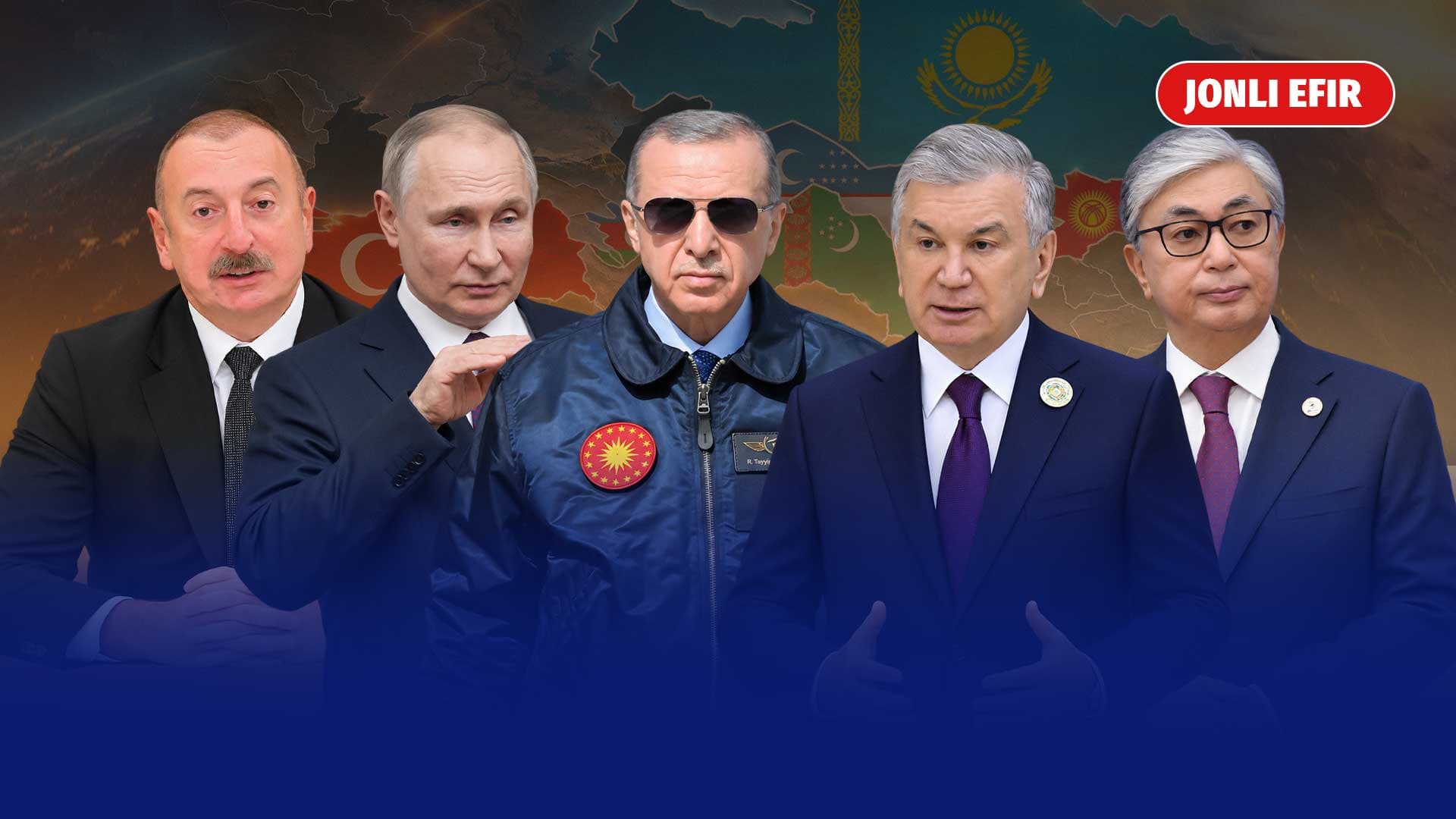
President of Kazakhstan Kassym-Jomart Tokayev proposed admitting Russia to the Organization of Turkic States in an 'OTS+' format. His main argument is that millions of speakers of Turkic languages live in Russia: Tatars, Bashkirs, Tuvans and other Turkic peoples in various regions of the country. Tokayev emphasized that Russia's accession would raise the organization's standing. Kremlin spokesman Peskov supported the initiative. The issue became one of the most widely discussed topics of the OTS summit. This is discussed in the Kun.uz program, where the topic was examined by political scientists Anvar Yuldashev and Kamoliddin Rabbimov.
A skeptical assessment: 'Russia is a Slavic state'
Anvar Yuldashev considers the proposal unlikely to be realized. According to him, Tokayev's idea can be discussed, but Russia's actual accession raises serious questions: the presence of Turkic peoples on the country's territory does not make it a Turkic state, and whether membership of Slavic Russia fits the essence and goals of the organization is a debatable point. Opponents of the initiative, he notes, cite precisely this argument — Russia is called a Slavic state that does not belong to the Turkic world.
Rabbimov: the great powers are against the unification of the Turkic world
Kamoliddin Rabbimov broadened the context: in his observation, powerful centers of power in the world are decisively opposed to the unification of the Turkic world — this concerns not only Russia and China, but also the West, where there are forces that do not want Turkey and the Turkic world as a whole to turn into a powerful geopolitical player. Russia and China, according to him, are not interested in the awakening, unification and transformation of the Turkic world into an independent global force; some states of the region may also be opposed.
From cultural integration to defense cooperation
Rabbimov also pointed to the practical dynamics: today the Turkic world is moving from cultural integration to economic integration, and with further development of cultural and economic cooperation this will naturally open the way to military-strategic cooperation as well — cooperation in security and defense between Turkic states has already noticeably strengthened, mainly through bilateral relations. As an example, he cited a major meeting of engineers from the Turkic states held in Tashkent a week earlier, where products of the defense industry of Turkey and other Turkic countries were presented, along with presentations of tanks, air defense systems and modern military equipment built to NATO standards, and negotiations were held.