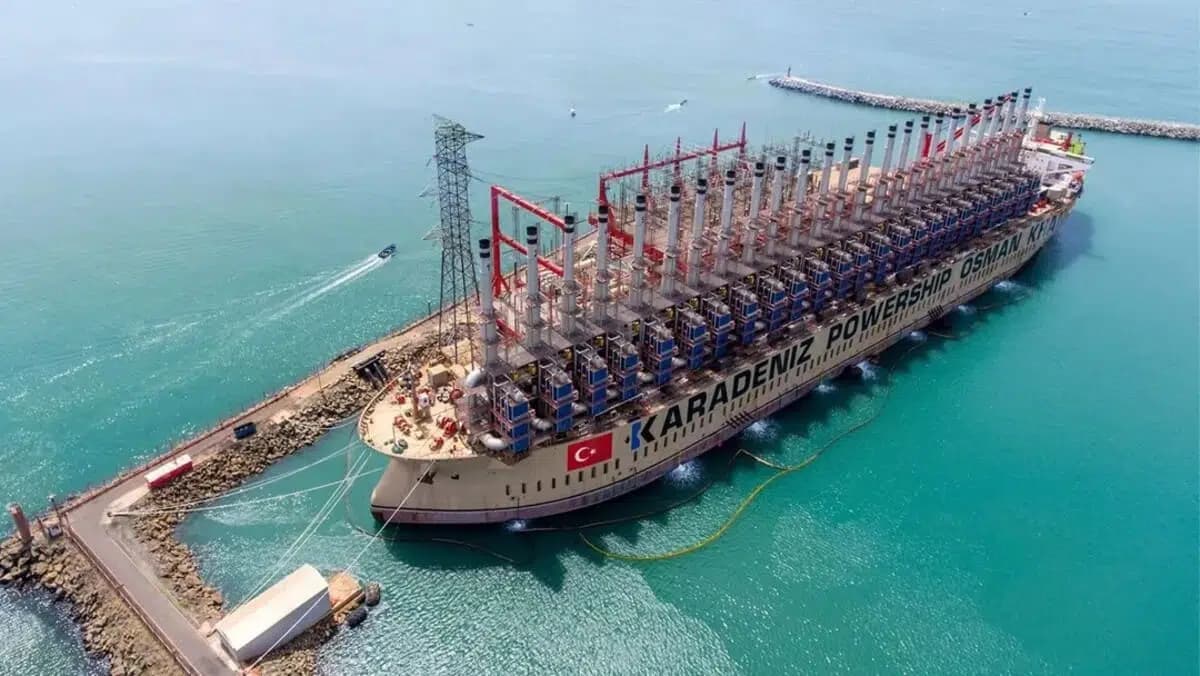
The key facts
- Karpowership and Seatrium signed a contract for the conversion and integration of five Whale Class vessels
- Each vessel is designed for up to 600 MW, with a combined total of up to 3 GW
- The first vessel is due to arrive at the Seatrium Tuas Boulevard Yard in December 2027
Contract to convert five vessels
Turkey's Karpowership and the Singaporean shipbuilding and engineering company Seatrium have signed a contract for the conversion and integration of a series of five Whale Class vessels. The agreement provides for the installation of equipment for next-generation floating power barges and their integration into a single system. Design work has already begun, reports Kun.uz citing the companies' press release.
Timeline and scope of work
The first vessel is scheduled to be delivered in December 2027 to the Seatrium Tuas Boulevard Yard shipbuilding and repair yard in Singapore. There, specialists will install the power generation equipment, complete the installation of mechanical systems and carry out preliminary testing before the power ship is handed over for operation. This work covers preparing the generation units, fuel supply systems and power transmission systems for joint operation.
Capacity and the 'plug and play' principle
Whale Class is Karpowership's most powerful class of floating power plants: each vessel is designed to deliver up to 600 MW, and the total design capacity of the five ships can reach 3 GW. According to the company's estimate, depending on the level of consumption, one such vessel can supply electricity to hundreds of thousands of households; the generated energy is transmitted ashore and, through the common grid, to consumers.
Multi-fuel design and hydrogen
The design of the new vessels incorporates the possibility of later fuel changes: they will be fitted with multi-fuel power units capable of running on traditional marine fuel, natural gas and blends with added hydrogen. This solution is intended to allow the use of different fuels without restructuring the vessel's hull. Compatibility with hydrogen blends, as noted, creates conditions for changing the plants' operating mode in the future — depending on the development of fuel supply and the relevant infrastructure.
Why floating power plants are in demand
One of the main reasons for interest in floating power plants is the ability to deliver them to the desired location and launch them relatively quickly. Building a large plant on land can take several years, whereas a vessel with ready-made power equipment is simply connected to the onshore electrical infrastructure. Karpowership prepares its vessels on a 'plug and play' principle: according to the company, after arriving at the designated location, such a plant can begin generating electricity in as little as 30 days — this timeframe refers to starting up a ready-made plant on site, not to building or upgrading the vessel.