The key facts
- MP Emily Darby said TT Rockstars rewards children for the 'duration, not the quality' of time online
- From 24 November the company will enable a time limit and a 'curfew' in all schools and switch off leaderboards by default
- Early Education Minister Paul Waugh called gamification 'propaganda' by EdTech companies aimed at increasing screen time
Complaints about a popular educational app
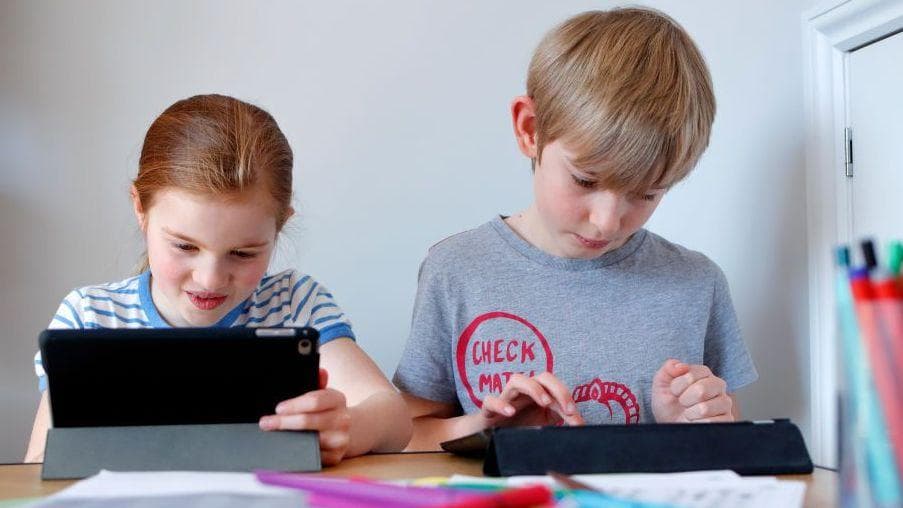
A British parliamentary science committee studying the impact of screen time and digital devices on children's brain development has received a complaint about a popular educational app. Emily Darby, the Labour MP for Milton Keynes Central, said that primary school children spend too much time on TT Rockstars — a game for memorising the times tables that schools widely assign as homework. According to her, the app and similar ones may harm children's development because they reward them for the 'duration, not the quality' of time online. She added that parents are worried about conflicts over devices and the pressure of competing with classmates, which may lead children to abandon real-life activities in favour of the screen. BBC News reports on the complaints to the government.
The company's response: limits from 24 November
Bruno Reddy, founder of Maths Circle, the company behind TT Rockstars and a former maths teacher, said he shares concerns about screen time and is working with schools to introduce restrictions. According to him, each game in the app is 'deliberately short', and characters remind children to take breaks; the guideline for schools is 'three minutes, four or five times a week', and in September a typical child played for three days at about six minutes each. He stressed that the company deliberately avoided retention mechanics — streaks, random rewards, chats, loot boxes and notifications — there is no advertising, and schools pay a fixed subscription regardless of playing time. The key practical change: from 24 November 'every school will have a curfew and a daily time limit enabled, and leaderboards will be switched off by default'. According to the company, TT Rockstars and the similar programme Numbots are used in 17,000 schools and more than 100,000 households.
The government's position and growing criticism of EdTech
The Minister for Early Education, Paul Waugh, spoke more harshly at the committee hearing than the complaint itself: 'Gamification is not a way to learn. It is propaganda that you will be given by EdTech companies, but it is all for the sake of screen time. It is profit-driven.' He said that learning can be interesting without competition, and educational technology should support teachers rather than replace them. The government is currently developing guidance for schools and parents on how much time children aged 5 to 16 should spend on screens. Criticism of educational technology is growing louder: Charlotte Ashton, co-founder of the Generation Focus campaign for smartphone-free schools, said that most digital 'learning tools' have little evidence of benefit and growing data on harm, so the campaign supports schools that stick to proven teaching methods. The editorial team notes that the dispute concerns a single app, but it unfolds against the backdrop of a broader discussion: earlier, clinicians called for reducing screen time in classrooms for health reasons, and parents were advised to limit screens for children under five to one hour a day.
 Image source, Getty Images

Former maths teacher Bruno Reddy launched TT Rockstars in 2010