The key facts
- The wage board agreed to raise the minimum wage in the garment sector after five days of protests
- Workers demand 30,000 taka ($240) a month versus the current 12,500 taka — a 140% increase
- The size of the increase is not determined; a decision is promised by December, with payments from January
Agreement after protests
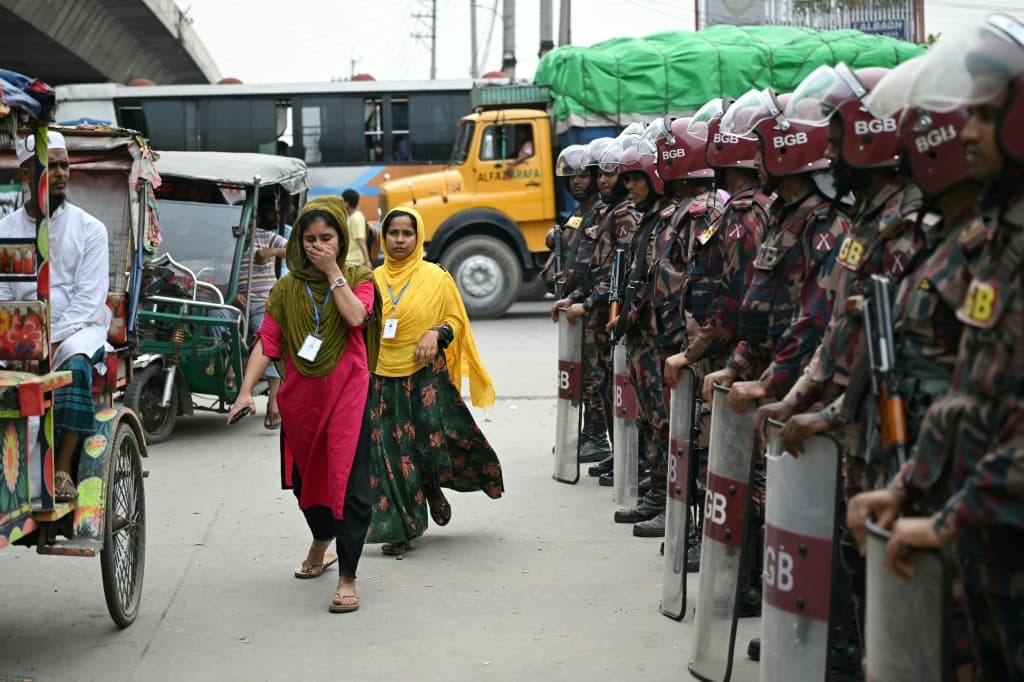
Bangladesh's garment industry wage board announced on Wednesday that it had agreed to raise the minimum wage in the country's key export sector. The decision came after five days of protests and sporadic clashes: since Saturday, thousands of workers have taken to the streets demanding higher wages, throwing bricks and setting up barricades, while police used tear gas, AFP reports. The board, made up of representatives of employers and workers, was set up by the government on Sunday specifically to negotiate the increase; it did not specify the size of the raise.
Workers' demands and factory owners' position
Workers are demanding a minimum monthly wage of 30,000 taka (about $240) — 140% more than the current 12,500 taka. They say rising prices for food, housing, transport and healthcare, amid 8% inflation, have eroded purchasing power. Babul Akter, the workers' representative on the board, noted that workers want the increase finalized by December so they receive revised wages as early as January, and that the factory owners' representative had agreed: «We are working together». ABM Shamsuddin, a representative of the Bangladesh Garment Manufacturers and Exporters Association (BGMEA), confirmed that the work would be completed by December.
Scale of the industry and the situation in industrial hubs
Bangladesh's garment industry — the world's second-largest clothing exporter after China — accounts for about four-fifths of the country's export earnings of up to $38 billion and employs more than four million people. It makes clothing for well-known brands, from Fruit of the Loom to Levi Strauss and VF Corp (Vans, Timberland, The North Face); the largest single market is the United States, and the biggest trading bloc is the EU. While the board was negotiating on Wednesday morning, protests continued in major industrial hubs — Gazipur, Mirpur, Narayanganj and Savar. Abdullah Al Mahmud, a police superintendent of the Narayanganj industrial police, said protesters were ransacking factories and mobilizing workers to strike, stating: «We will not allow them to set up blockades anywhere». His colleague from Gazipur, Amjad Hossain, described the situation as «tense».