The key facts
- PM2.5 levels in New Delhi exceeded 461 µg/m³ — more than 30 times the WHO daily limit
- Tightened measures (restrictions on transport and construction) were introduced three days before the new pollution peak
- India's Supreme Court allowed limited use of 'green' firecrackers on Diwali
Record smog levels in India's capital
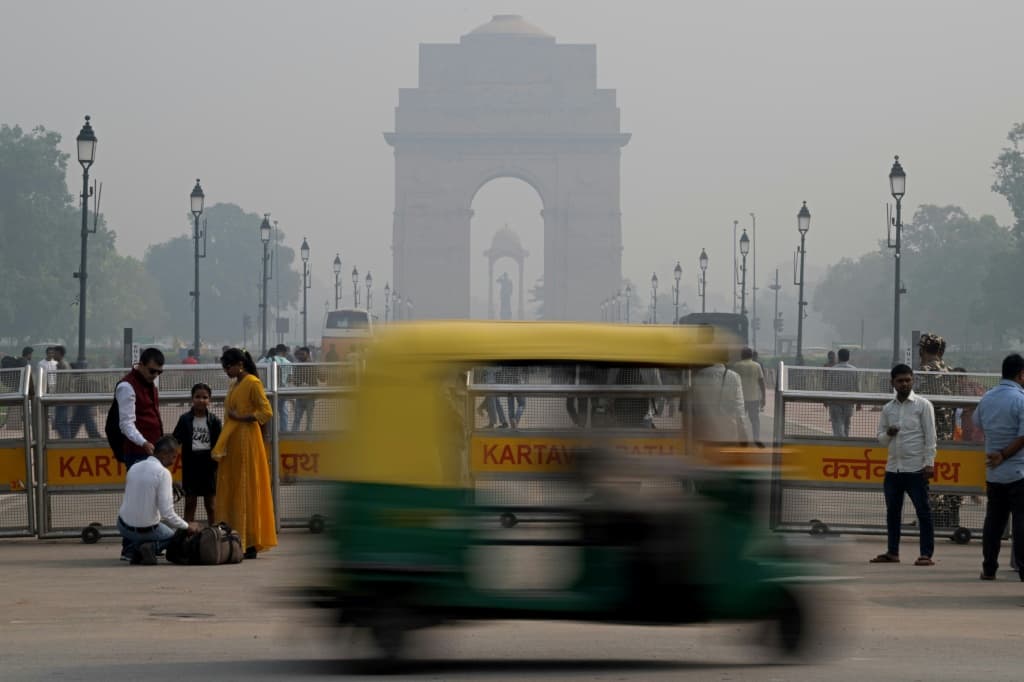
On Wednesday, November 4, the concentration of toxic PM2.5 microparticles in New Delhi exceeded 461 micrograms per cubic meter in some districts of the city — more than 30 times above the daily limit recommended by the World Health Organization. The data comes from monitoring company IQAir, as reported by AFP. PM2.5 is carcinogenic particles small enough to enter the bloodstream.
Measures failed to stop the deterioration
The reading rose just three days after authorities tightened anti-smog measures, including restrictions on vehicle traffic and construction work. The New Delhi metropolitan area, home to more than 30 million people, is considered one of the most polluted capitals in the world. Further deterioration is expected ahead of Diwali on Sunday — the Hindu festival of lights, when fireworks add pollution to the already toxic air. India's Supreme Court this month allowed limited use of so-called 'green' firecrackers, designed to reduce emissions, but, as AFP notes, bans are regularly violated and the city is rocked by explosions.
Where the winter smog comes from
According to India's Ministry of Environment, cited by the agency, transport accounts for 23% of Delhi's winter pollution, biomass burning, including rural stubble burning, for 20%, and industry, including coal-fired power plants, for about 9%. The largest share — 27% — comes from secondary particles, which form when gases from transport, industry, power plants and biomass burning react in the atmosphere. Jacob Koshy, author of a book on pollution titled 'The Nitrogen Bomb' and science editor at the newspaper The Hindu, argues that the formation of these particles is further spurred by the huge volumes of fertilizers applied to fields around the capital: the ammonia released creates a 'base layer' for reactions with other pollutants. The scale of the problem is illustrated by a 2024 study in the peer-reviewed journal The Lancet Planetary Health: according to its estimate, air pollution in India was linked to 3.8 million deaths in 2009–2019.