The key facts
- Transbaikal historically lay within the Amur tiger range and may become a territory of their permanent habitat
- The main condition is the presence of wild boars, roe deer and red deer; without food, tigers will return to their usual range or die
- Conclusions about the situation in Transbaikal are still premature: there is not enough data about the animal found
Transbaikal is being considered as a potential tiger habitat
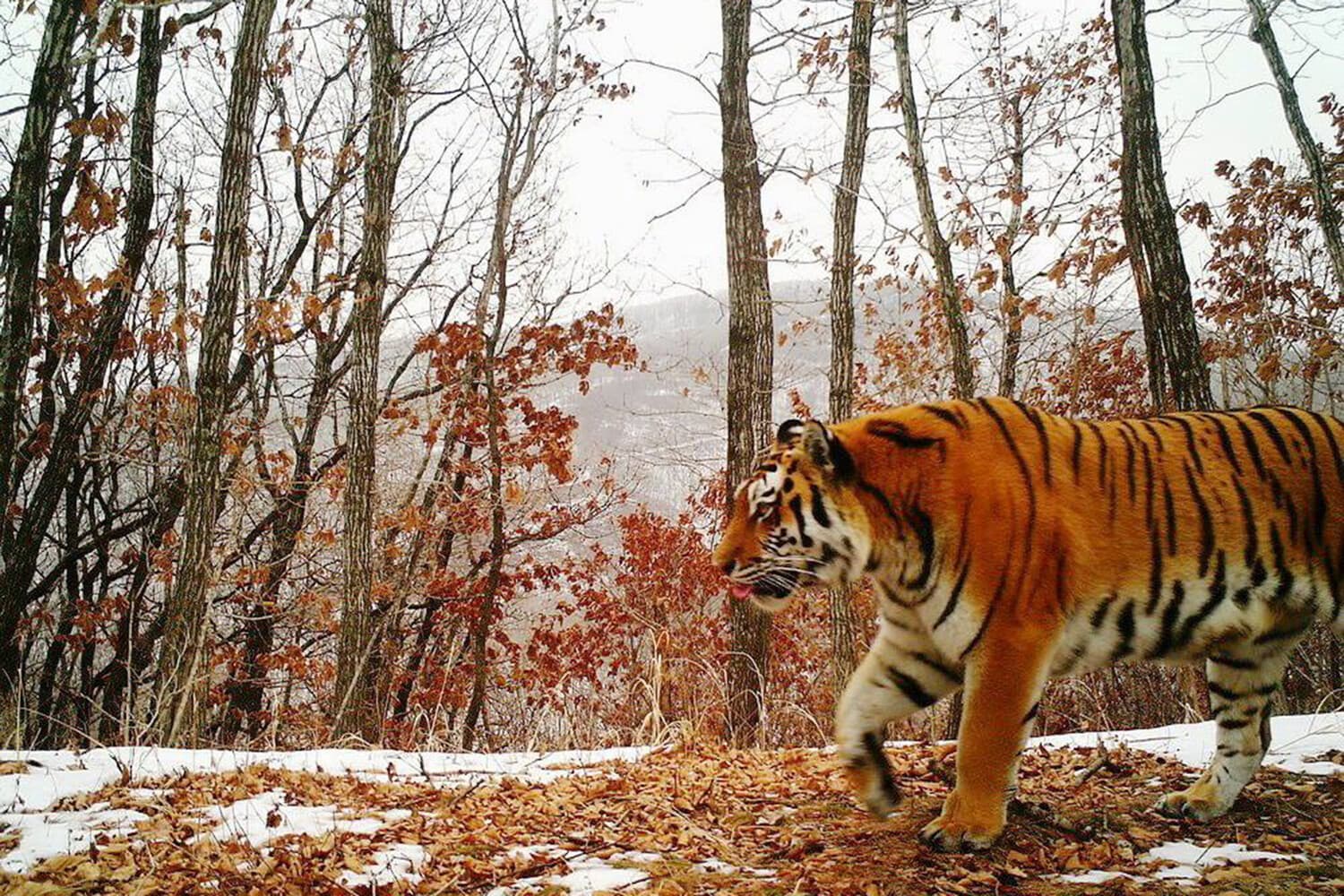
Zabaykalsky Krai could potentially become one of the territories of permanent habitat for Amur tigers, since it historically lay within their range. This was stated by Sergey Aramilev, general director of the Amur Tiger Center, in a conversation with TASS, as retold by Gazeta.Ru. According to him, tigers have already restored their population in the Jewish Autonomous Region, and in Amur Region it continues to grow, so a small number of individuals may eventually establish themselves in Transbaikal as well.
The decisive factor is the food supply
Aramilev named the availability of a food base as the key condition for the predators to establish themselves in a new territory: if there are enough ungulates — wild boars, roe deer and red deer — in the places where tigers appear, the animals will be able to stay. Otherwise, they will most likely return to their usual range or fail to find enough food. Individual tiger excursions beyond the main range often end with a return to Amur Region, where a stable group of about ten individuals has already formed; sometimes the animals die from lack of food.
What remains unknown
The specialist considers it premature to draw conclusions about the situation in Transbaikal: there is not enough data on the sex and age of the animal found, nor on whether it is really a tiger and where exactly it is located. Thus, for now we are talking about a potential prospect, not a confirmed permanent tiger presence in the region. Earlier, according to the same publication, the tigers gifted by Russia to Kazakhstan began hunting.