
The key facts
- Collins' 2026 word of the year is «mogging»: to outshine or surpass someone, most often in looks
- Usage of the word grew by 210% over the year; finalists include Manchesterism, carspreading, hydration break, ghost jobs, bixie and P(doom)
- The word derives from the acronym AMOG and was previously associated with the manosphere, but, according to a linguist, is now «mostly detoxified»
Word of the year — «mogging»
Collins English Dictionary has named «mogging» the word of 2026 — a slang term used humorously to mean outshining, surpassing or «one-upping» someone or something, most often in terms of looks. The word is popular among Generations Z and Alpha and entered mainstream usage in 2026: its frequency of use grew by 210%. Collins managing director Alex Beecroft linked the choice to how each generation leaves its mark on the language, noting that Gen Z and Alpha have turned the word into humorous slang, «mogging» everyone else. This was reported by BBC News and euronews, which published coverage of the announcement on the same day, 3 November 2026.
From toxic roots to the mainstream
The word's origin is its most controversial aspect. «Mogging» is traced back to the acronym AMOG (Alpha Male of the Group); in the 2010s the term was used on bodybuilding and incel forums, and was later picked up by the manosphere — a network of resources promoting aggressive masculinity and anti-feminism. Linguist from King's College London Tony Thorne told the BBC that it was originally «a toxic term about extreme competitiveness, the desire to dominate», which a younger audience began using ironically and as a joke. In his assessment, the word is now «mostly detoxified», although it retains a hint of mockery and an element of competitiveness.
How the word went mainstream
The term's spread was aided by its association with influencer Clavicular, known for «looksmaxxing» content who regularly posts videos in which he tries to «mog» people in public places; he recently pleaded not guilty to charges including rape. The word gained wide recognition when posts went viral saying the streamer had been «brutally frame mogged». In 2026 the term is already used by celebrities and the media: British Vogue captioned a photo of actor Hudson Williams at the Golden Globes as «mogging at the Golden Globes», figure skater Alysa Liu said her «main goal at the competition was to mog», and Arnold Schwarzenegger ironically asked about the trend «frame mogging» in a post featuring footage from his bodybuilding youth.
Rivals and the link to «maxxing»
«Mogging» beat out on the final shortlist the words «Manchesterism» (a term associated with mayor Andy Burnham about devolving power to the regions), «carspreading» (car manufacturers increasing the length and width of cars), «hydration break» (made famous at the FIFA World Cup), «ghost jobs» (vacancies posted with no intention of hiring anyone), «bixie» (a haircut shorter than a bob but longer than a «pixie») and «P(doom)» (an estimate of the probability of civilisational collapse due to AI). Notably, in October Dictionary.com already named the related word «maxxing» its 2026 word of the year: while «looksmaxxing» describes efforts to improve one's appearance, «mogging» implies comparison with another person. Collins' previous word of the year was «vibe coding», and the list has been compiled since 2013 — past winners include «permacrisis», «AI» and «Brat».
 Image source, Getty Images
Mogging is about playfully upstaging someone or something
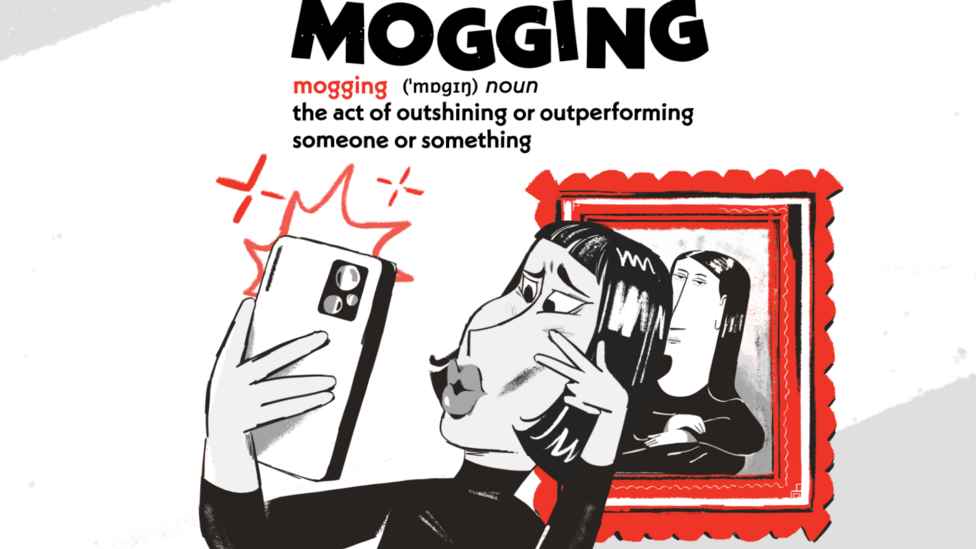 Image source, Collins
Mogging the Mona Lisa, whatever next?