The key facts
- Great Thursday in 2027 falls on April 29, and Easter on May 2
- The main content of the day is the Last Supper and the institution of the Eucharist
- Cleaning, bathing, and 'Thursday salt' are folk customs, not church rules
The date and the church meaning of the day
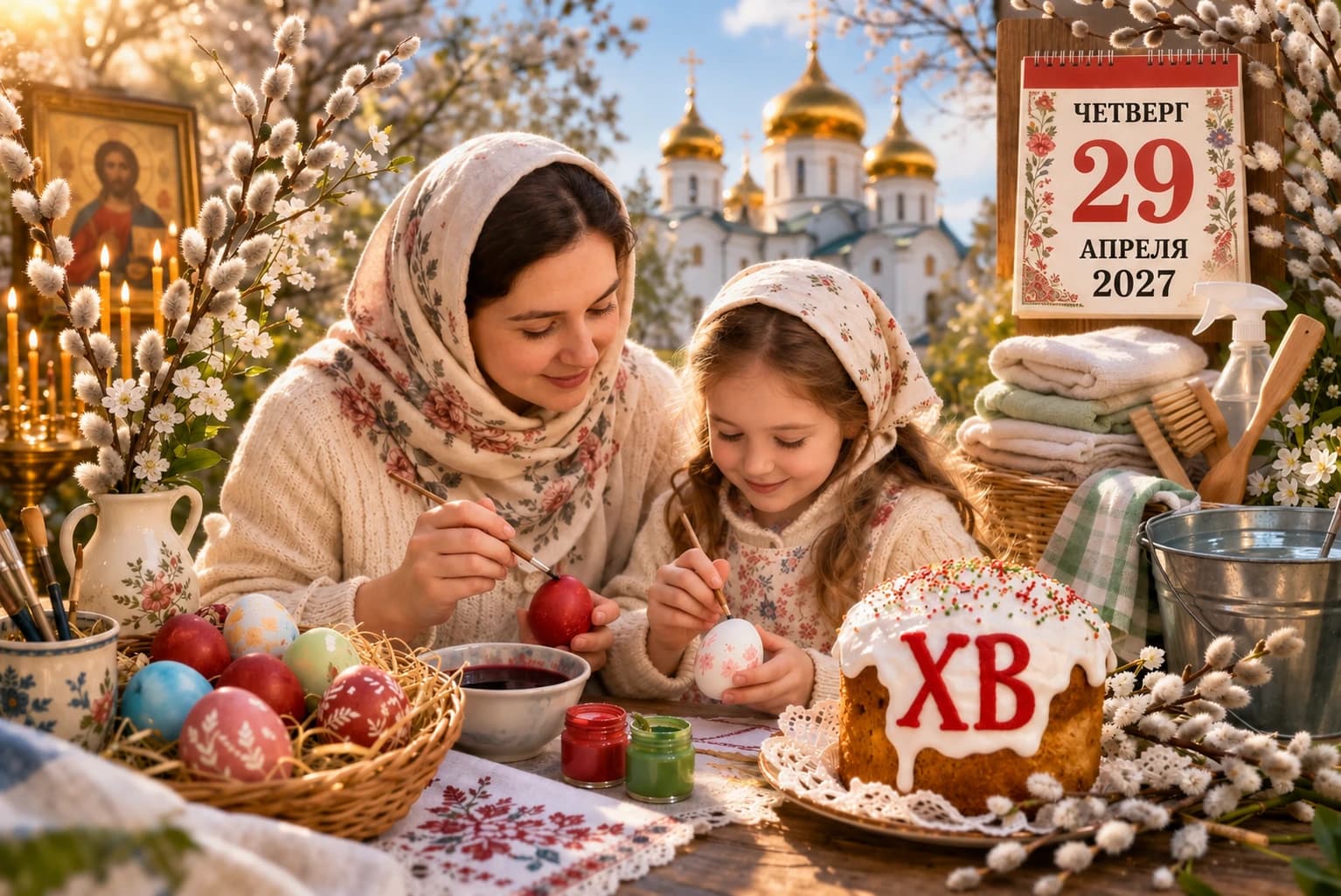
In 2027, Clean, or Great, Thursday falls on April 29 — it is the Thursday of Holy Week before Orthodox Easter, which will be celebrated on May 2. This is reported by Life.ru. The church name of the day is Great Thursday, or Great Thursday (Holy Thursday). The services recall the events of the final hours before Christ's arrest: the washing of the apostles' feet, the Last Supper and the institution of the Mystery of the Eucharist, the prayer in the Garden of Gethsemane, and the betrayal of Judas. It is with the Last Supper that the Church links the institution of Communion, which is why participation in the service and in Communion is considered the main content of the day.
What the faithful do and what belongs to folk tradition
On Great Thursday the Liturgy of St. Basil the Great is celebrated, combined with vespers, and in the evening the Service of the Passion of Christ is held with the reading of the twelve Gospel passages. In cathedrals, a bishop may perform the rite of the washing of feet. The faithful are traditionally advised to prepare for confession and Communion, to make peace with their loved ones, and not to reduce the day to household chores.
Cleaning, bathing, and superstitions: what is not a church rule
General cleaning, bathing before sunrise, baking Easter cakes (kulichi), and dyeing eggs are everyday traditions of preparing for Easter, not obligatory rites. There is no special church requirement to wash before dawn, and water on this day acquires no special properties: in Orthodoxy, sins are dealt with through repentance and confession, while illnesses require medical care. The prohibitions on lending money or leaving the house untidy are folk beliefs: there is no church ban on financial transactions on April 29. The same applies to 'Thursday salt,' which by custom is prepared on the night of April 28 to 29: the Church does not endorse the protective and healing properties attributed to it. Quarrels, foul language, and noisy feasts are discouraged not because of any special prohibitions of the day, but because the fast and Holy Week are still ongoing.
Food and practical questions
According to the liturgical typicon, Great Thursday differs from the strictest days of Holy Week: hot fasting food with vegetable oil is allowed, and the monastic rule also mentions a small amount of wine. Fish, meat, dairy products, and eggs remain forbidden for those keeping the fast. Easter cakes and paskha may already be prepared, but they are eaten after Easter begins. At the same time, the monastic rule cannot be mechanically applied to every layperson: for children, pregnant women, the elderly, and people with illnesses, the measure of fasting is determined with regard to their health. Weddings are not performed on this day — just as throughout Great Lent, Holy Week, and Bright Week.