The key facts
- At the DMZ, Friedrich Merz repeated Kohl's 1993 call for Korean reunification
- 39.1% of South Koreans consider reunification impossible — a record in two decades of polling
- North Korea adopted a new constitution in March 2026 that excludes peaceful reunification
Merz's words at the DMZ echo the rhetoric of 1993
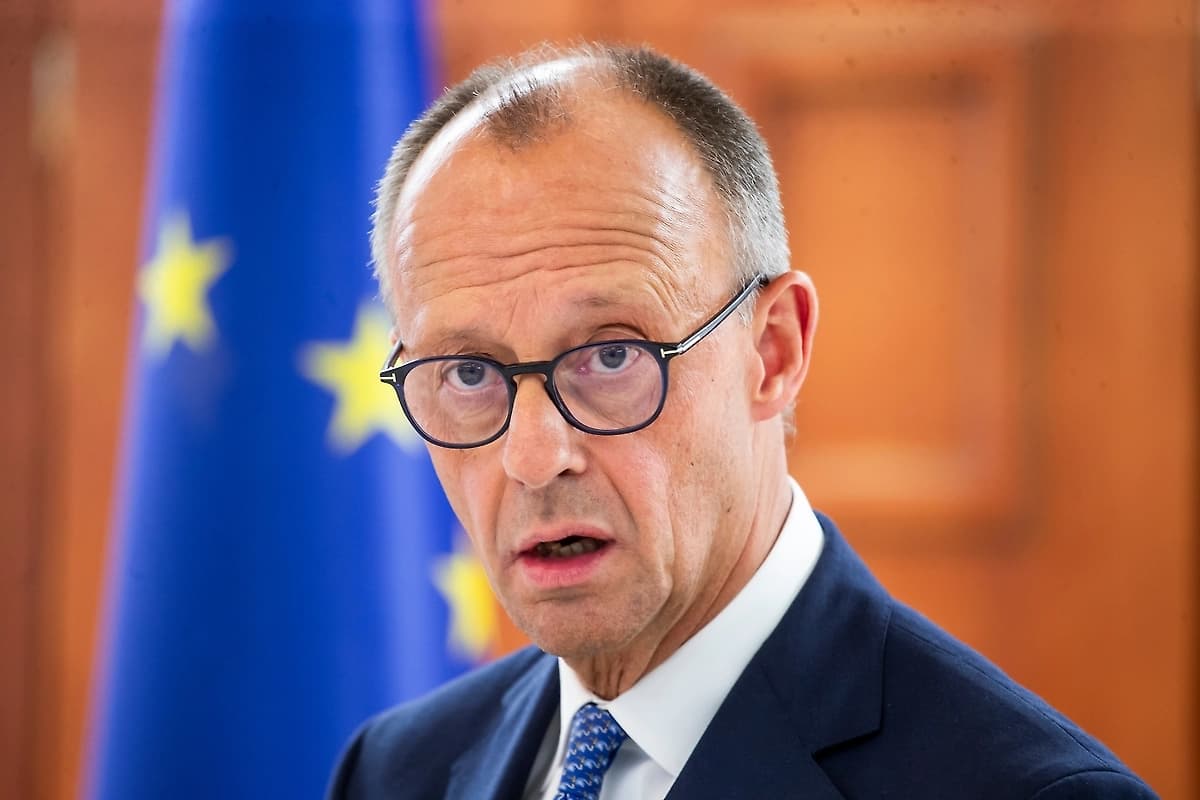
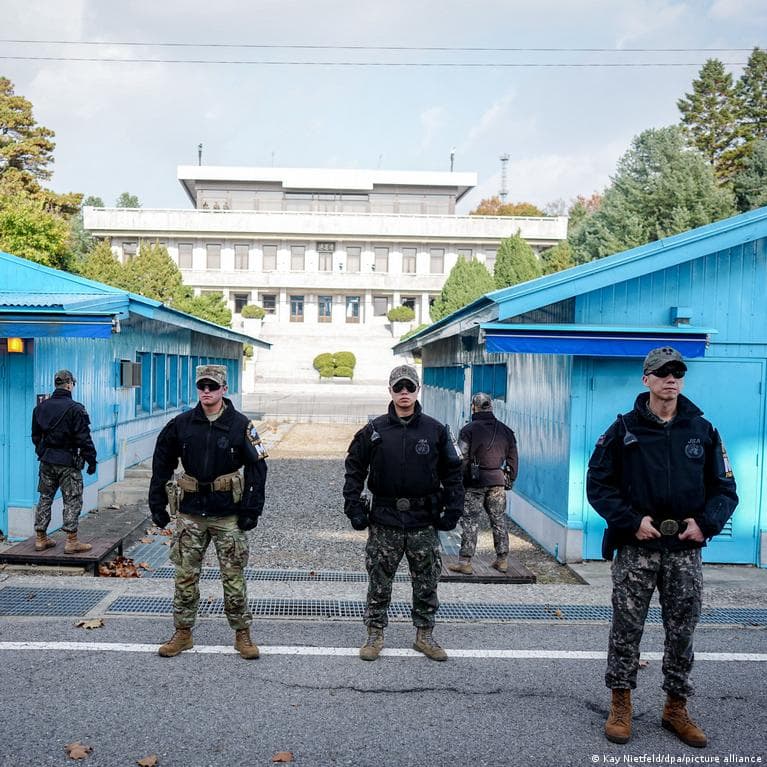
German Chancellor Friedrich Merz, on a visit to Asia, on Friday visited the observation deck at the demilitarized zone dividing the two Koreas and called for the reunification of the peninsula. 'We Germans know how painful the division of a country is. We also know that those who stand firmly by their values and have the courage to engage in dialogue can bring walls down,' Deutsche Welle quotes his words from a social media post. 'We wish the peoples of Korea unity in freedom,' he added. In essence, as the outlet notes, Merz was merely able to repeat the hopes that Chancellor Helmut Kohl expressed at the same spot in 1993 — two years after the peaceful reunification of Germany.
Why the German scenario does not work for Korea
The history of the two Koreas — countries sharing a language and cultural heritage, divided by decades of confrontation between their regimes — does indeed resemble the German one. But, as DW emphasizes, there is a fundamental difference between the situations: East Germany in 1990 was considerably more developed than North Korea is today, and even Germany needed decades to bring the regions' living standards closer together. Professor Ritchie of Hankuk University noted that the DPRK regime seeks to protect its own power, which would be threatened if a united country had a democratic system.
The South: the official course remains, but support is falling
Officially, Seoul has not abandoned reunification as a national goal: South Korea's constitution still provides for peaceful reunification based on freedom and democracy. However, according to Professor Chu Jae-woo of Kyung Hee University, recent governments have promoted the idea noticeably less often than before. A survey by the Institute for Peace and Unification Studies at Seoul National University, published in September, showed that 39.1% of South Koreans consider reunification impossible — the highest share in roughly two decades of observations. Among the main concerns, respondents cited the enormous costs of the North's infrastructure — roads, hospitals, schools. Chu also noted a generational shift in attitudes: young South Koreans, he said, see the North as 'just another country' — poor and threatening — without the sentimental attachment of older generations.
The North: the constitution has enshrined the rejection of reunification
Pyongyang is more candid on this issue. In December 2023, Kim Jong-un announced a change to the constitution: peaceful reunification was declared impossible, South Korea was declared a hostile rival, and there is no longer any intention to unite the countries, DW recounts, citing Chu Jae-woo. The revised DPRK constitution was adopted in March 2026, and the regime is actively purging mentions of reconciliation and national unity. 'I don't think the North could have made it any clearer that it has no intention of moving closer to the South,' Ritchie said, adding that analysts, officials and ordinary South Koreans 'roll their eyes' at the mention of reunification.
The geopolitical dimension
Reunification is further complicated by diverging strategic alliances: the South is tied to the United States, the North — to China and, increasingly, to Russia. In Chu's view, the superpowers would not want to give up their allies: the United States would not welcome a united Korea leaning toward China, while Beijing would resist the appearance of American troops at what is now its border with the DPRK. Chu himself calls the current status quo imperfect but the best way to preserve regional stability — although, the publication notes, a decade from now the economic, social and military-political situation may change radically.