The key facts
- The $1 billion agreement was signed by Foreign Minister Badr Abdelatty; it includes a British credit guarantee of $200 million
- The dollar rose almost 8% in October, with the pound hitting a record above 56 to the dollar; an estimated $4 billion left government bonds
- The dollar rose almost 8% in October, the pound hit a record above 56 to the dollar; an estimated $4 billion has left government bonds
- The central bank raised its rate for the first time since March 2024 — by 100 b.p. to 20%
- The central bank raised its rate for the first time since March 2024 — by 100 basis points to 20%
New financing agreement
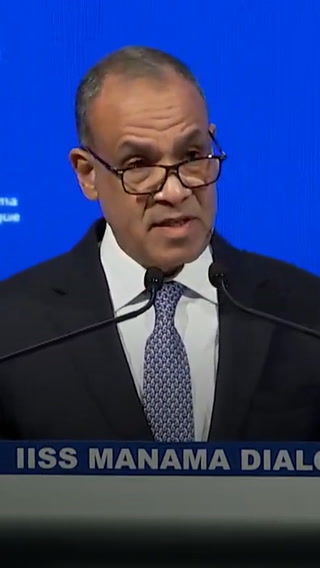
Egypt has signed a $1 billion financing agreement with the World Bank — the second of three concessional development policy operations approved by the bank's board in May. The document was signed by Foreign Minister Badr Abdelatty on Sunday, The National reports. The package includes a British credit guarantee of $200 million, and the funds are tied to reforms of state-owned enterprises, competition rules, tax administration and the cost of government borrowing. Back in May, the bank noted that Egypt had weathered 'two years of successive external shocks,' and since then the pressure has intensified: the US-Israeli war with Iran raised the country's oil, shipping and insurance costs for an import-dependent economy.
War and the budget: subsidies of about $18 billion
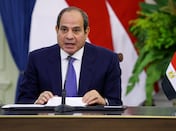
The scale of the pressure is illustrated by figures announced at the Egypt Forum in late October. Prime Minister Mostafa Madbouly said oil was trading at around $110 per barrel versus the $75 assumed in the budget, and the government had chosen, 'at this stage,' to absorb the costs through the budget rather than pass them on to citizens or risk power cuts of 6–8 hours a day. President Abdel Fattah el-Sisi described fuel and electricity prices as 'completely uneconomic' and sold below cost. Finance Minister Ahmed Kouchouk estimated subsidies at 840 billion Egyptian pounds ($15 billion) for the current fiscal year, and with the cost of borrowing included, the real bill approaches 1 trillion pounds ($17.9 billion).
The pound, the rate and the market
The strain has reached the currency: since the beginning of October the dollar has risen in price by almost 8% — from about 52 pounds to a record of over 56 on October 26. According to available estimates, roughly $4 billion in foreign money left Egyptian government bonds between October 15 and 26. On Thursday, the central bank raised its rate by 100 basis points to 20% — the first increase since March 2024, ending an easing cycle in which the rate had been cut by 825 points since April 2025; the inflation target has been pushed back to the end of 2027. The regulator's chief, Hassan Abdalla, called the flexible exchange rate the 'first line of defense' against external shocks and stressed that the priority is keeping dollars in the banking system rather than on the black market, even at the cost of a weaker pound. On October 25, trading on the Cairo exchange was halted for 30 minutes — the first such halt since 2021 — after the EGX100 index fell by 10%.
Revenues do not cover the pressure, prices are rising
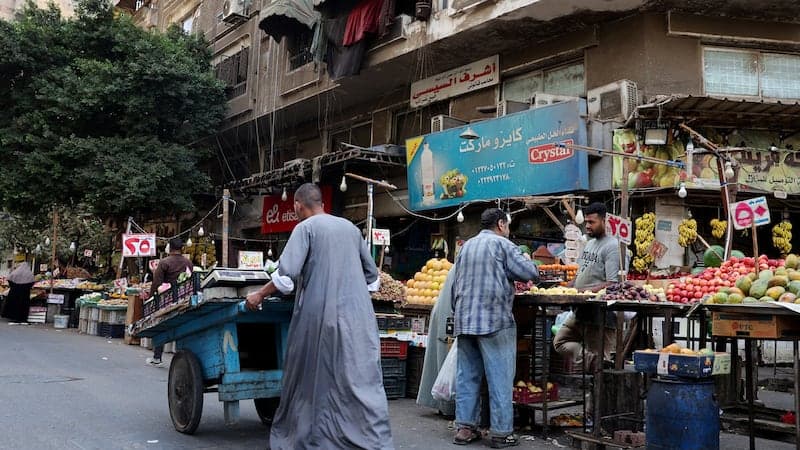
Other sources of hard currency provide only partial protection. Remittances reached a record $33.9 billion in the first eight months of the year, but growth in tourism revenues slowed to 1.7% compared with 16.3% in the fiscal year that ended in June 2025. Suez Canal revenues, which stood at about $10 billion a year before the Red Sea attacks, have recovered only to roughly $4.4 billion, and the canal's chief warned that renewed tensions around the Bab el-Mandeb strait seriously threaten this recovery. In Cairo shops, shoppers — whose comments The National cites — were shocked by rising prices: a bottle of cooking oil, more than 95% imported, rose from 75 to 90 pounds in a month, meat by 100 pounds per kilogram over five months, and soap from 20 to 35 pounds since the summer. Traders attribute this to the rising cost of imported powdered milk, animal feed and chemical raw materials.
Debt and the IMF program
Egypt's external debt reached $166.45 billion at the end of June according to World Bank data, and from July of this year through June 2027 the country must repay about $60.9 billion with interest, including roughly $19.1 billion on central bank deposits — mostly from Gulf countries. El Sisi acknowledged the severity of the situation, saying that 'electricity is indeed expensive,' that the cost of reforms has 'fallen heavily on the Egyptian,' and urged officials to prioritize easing the burden on the cost of living. Official data for October are not yet available: urban inflation slowed to 13.9% in September, although food inflation accelerated. After electricity tariffs were raised by an average of 12% in August, the cabinet spokesman said there would be no increases in fuel and electricity prices 'at this stage.' Meanwhile, an IMF mission is in Cairo for the final review of the loan program, which could unlock about $2.3 billion before its completion on December 15; the government, reportedly, will not seek a new agreement to replace the current one.