The key facts
- Poppy cultivation grew by 325% to 43,300 hectares; 1,466 tonnes of opium were produced, compared with 296 tonnes in 2025.
- 76% of cultivation was in the northeast; Badakhshan led the growth (+344%).
- Traders' opium revenues are estimated at $525 million — about 2.7% of GDP.
Sharp rise after three years of decline
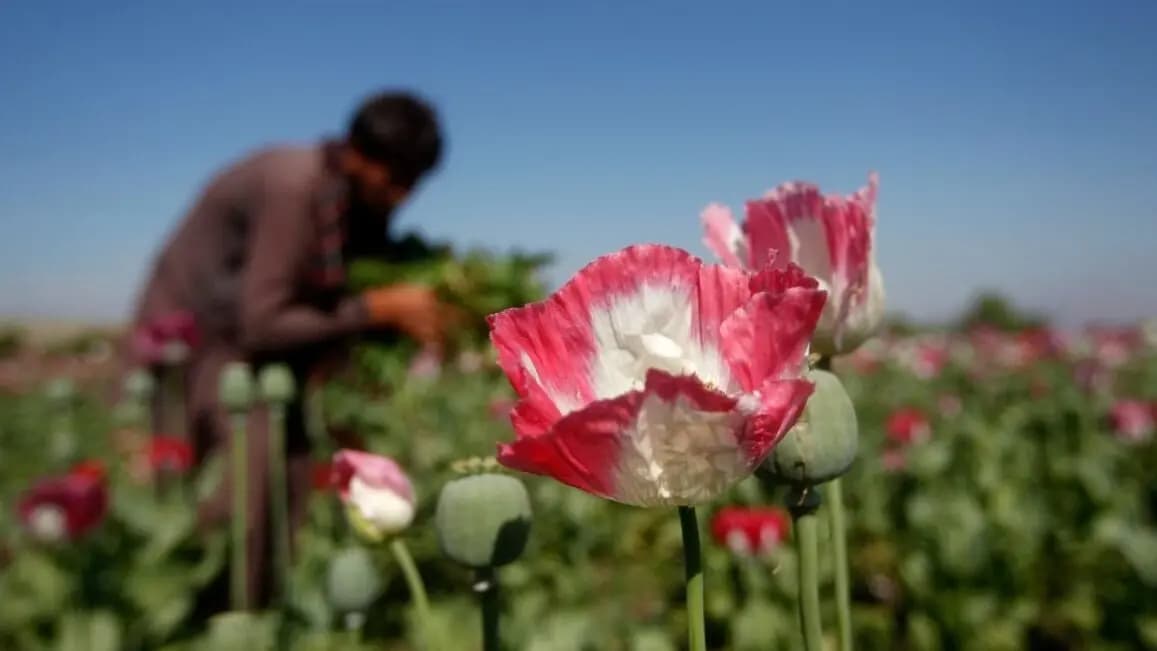
The area under opium poppy cultivation in Afghanistan increased by 325% in 2026, ending a three-year period of low figures that followed the drug production ban imposed by the Taliban movement in April 2022. This is stated in a report by the United Nations Office on Drugs and Crime, which is cited by Daryo.uz. According to the organization's estimate, poppy was grown on 43,300 hectares, compared with roughly 10,200 hectares in 2025. Opium production rose almost fivefold — from 296 to 1,466 tonnes; the increase is explained by the expansion of cultivated areas and higher yields, from 29 to 33.8 kg per hectare, thanks to precipitation and water supply. At the same time, cultivation remains significantly below pre-ban levels, when it exceeded 200,000 hectares, but the report notes that the ban appears to be weakening.
Geography has shifted to the northeast
For the first time in years of the ban, the center of production has moved: 76% of all cultivation was in the country's northeast instead of the historic southwest. The largest increase was recorded in Badakhshan province — from 6,600 to nearly 29,500 hectares (+344%), while in Takhar cultivation grew more than elevenfold — from 274 hectares to 3,400. In total, the northeastern provinces accounted for about 33,000 hectares and roughly 1,090 tonnes of opium — three quarters of the national volume. Growth was also recorded in traditional areas: in Helmand, the area increased from 681 to 3,500 hectares, and in Kandahar to 1,560. Poppy cultivation was detected in 16 of 34 provinces — five more than a year earlier.
Farmers hide plantations; eradication operations lead to clashes
According to UNODC, farmers are adapting to cultivation detection measures: satellite imagery showed hundreds of small poppy plots inside wheat and barley fields, as well as plantations on fenced-off areas. In Helmand, more than 90% of cultivation was concealed by one of these methods; farmers also stagger planting and harvesting across different periods to reduce the risk of losing the entire crop. Eradication operations in Badakhshan in May and June were accompanied by protests and clashes with Taliban security forces; several people were killed and injured. According to the report, some protesters supported the destruction of plantations but opposed the methods used in the operations and reported damage to other crops. Taliban authorities claimed to have destroyed about 22,000 hectares of poppy, but UNODC was unable to technically verify this figure.
Revenues have recovered; the UN warns of further growth
Although production volumes remain below pre-ban levels, revenues have recovered: traders inside Afghanistan received about $525 million — roughly 2.7% of GDP and 8.5% of the agricultural sector (excluding processing, smuggling and exports). The price of a kilogram of opium was about $500, compared with $570 in 2025 and less than $100 before the ban. UNODC warns that declining stockpiles, high prices, economic hardship and the resumption of cultivation could lead to further growth in opium production and heroin smuggling after 2026, and calls for investment in alternative sources of income — agriculture, jobs, access to markets and financing, infrastructure and vocational training. Continued monitoring, in the organization's view, should show whether the 2026 growth is a temporary adaptation by farmers or the beginning of a large-scale recovery of the opium economy.