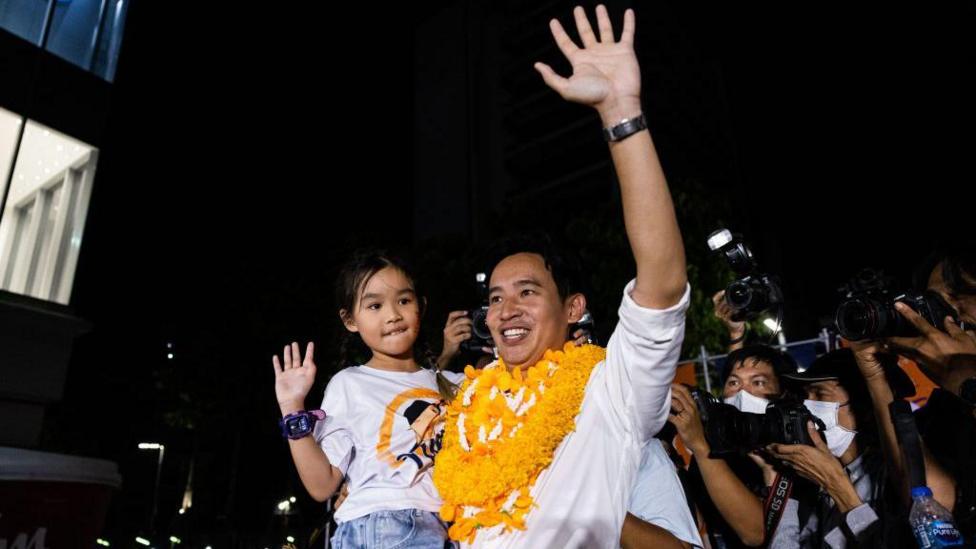
The key facts
- Arnon Nampa was sentenced to 2 years and 8 months under Article 112; his total across 14 cases exceeds 34 years, with verdicts in two more cases still pending
- Arnon Nampa was sentenced to 2 years and 8 months under Article 112; across 14 cases his total exceeds 34 years, with verdicts in two more cases still pending
- Since 2020, 294 people have been convicted under the lèse-majesté law, including 20 minors; sentences reach 50 years
- The reformist Move Forward party was dissolved in 2024 merely for proposing to soften the penalties
- The reformist Move Forward party was dissolved in 2024 merely for proposing to soften the punishments
New verdict and accumulated sentences
A court in Bangkok has sentenced the 42-year-old human rights defender and lawyer Arnon Nampa to two years and eight months in prison for violating the lèse-majesté law (Article 112 of the criminal code). The case stemmed from his speech in August 2020 at a Harry Potter-themed demonstration in central Bangkok, where he, dressed as a young wizard, called for public discussion of the monarchy's role. This is reported by BBC News. This is only one of 14 cases brought against him under the same article: the total sentence he has received so far exceeds 34 years, and verdicts in two more cases are still pending. Arnon himself called the verdict expected: 'If the country were more open, we could freely discuss these issues,' he told journalists.
What is known about Article 112 and its application
Article 112 of Thailand's criminal code provides for three to 15 years in prison for 'defaming, insulting or threatening' the king, queen, heir or regent. In practice, as the BBC notes, the law is interpreted far more broadly: prosecutions have arisen for statements about any member of the royal family, about the institution of the monarchy, and even about deceased kings — in one case, the case concerned the king's dog. According to the publication, over the past six years 294 people have been convicted under this article, including 20 minors; sentences reach 50 years, and dozens of cases are still being considered. Most defendants are denied bail, even though proceedings can drag on for years. Akarachai Chaimaneekarakat, a lawyer with the organization Thai Lawyers for Human Rights, says the law's wording is so vague that even discussing the law itself could be deemed a violation of Article 112.
How the wave of prosecutions began
Before 2020, the monarchy was almost never discussed publicly in Thailand. On 3 August 2020, in a speech at a student rally, Arnon Nampa for the first time openly raised the issue of the monarchy's opaque power and wealth, including King Vajiralongkorn's decision to take personal control of the Crown Property Bureau's assets and parts of the army. Before that, enforcement of the lèse-majesté law had been suspended for three years, but after the protests prosecutions resumed and accelerated from late 2020. Dozens of young activists, the BBC reports, have fled the country: among them is 24-year-old Supicha 'Melinn' Chailom from Chiang Mai, who faced four charges under Article 112 — including for a speech in which she compared the treatment of the royal dog with that of ordinary people — and who has been granted asylum in Canada.
Why the law is practically impossible to change
Although Article 112 was formally passed by parliament and its penalty was already raised to the current three to 15 years in 1976, the Constitutional Court has effectively declared the law untouchable. The reformist Move Forward party — the successor to Future Forward — was dissolved in 2024, and its leader Pita Limjaroenrat was barred from politics merely for proposing to soften the penalties under this article. According to the lawyer Chaimaneekarakat, the courts make defence difficult: witnesses and documents are denied, hearings are held behind closed doors, and judges sometimes criticise defendants even before the trial begins. Arnon Nampa, who has been held in a Bangkok remand prison for three years, prepares for every hearing by memorising his arguments by heart — he is forbidden to write them down. He writes letters to his children and, in his own words, may spend the rest of his life in prison.
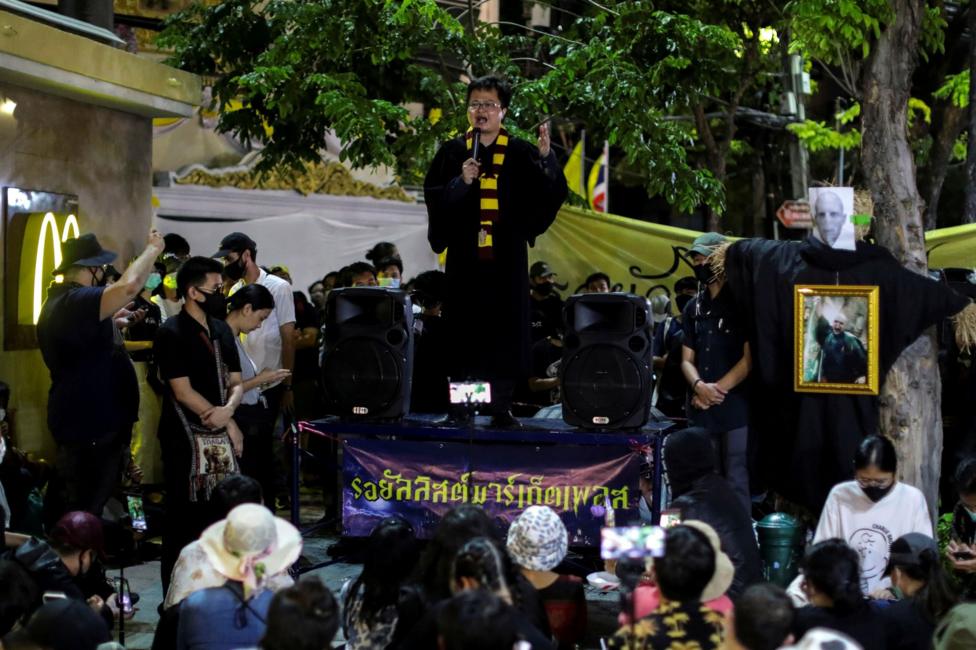 Image source, Reuters
Arnon Nampa dressed as Harry Potter at the protest in August 2020
 Image source, Arnon Nampa's family
A drawing by Arnon Nampa's 10-year-old daughter showing her father in prison
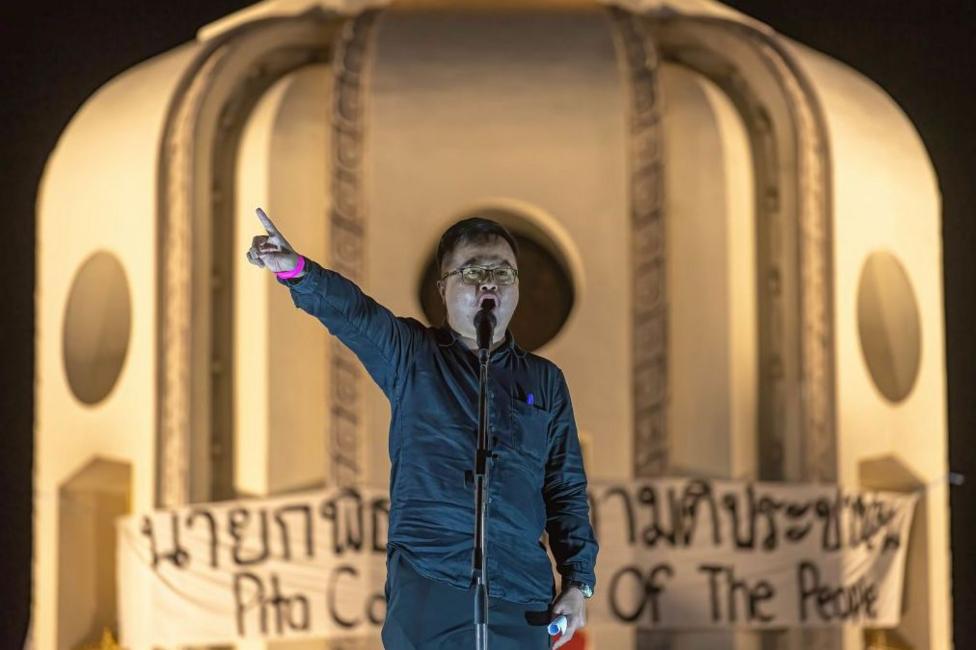 Image source, Getty Images
Arnon at a protest in 2023
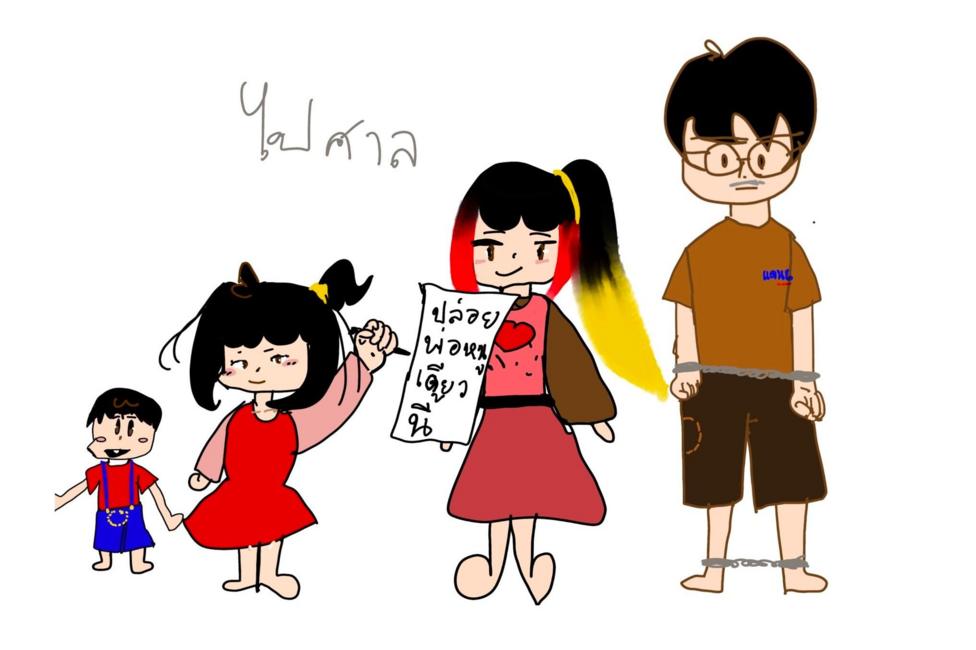 Image source, Arnon Nampa's family
Arnon's family, drawn by his daughter, titled 'heading to court'. Her mum is carrying a poster that says, 'Free my dad'
 Image source, Arnon Nampa's family
Arnon's reunion with his family, as drawn by his daughter
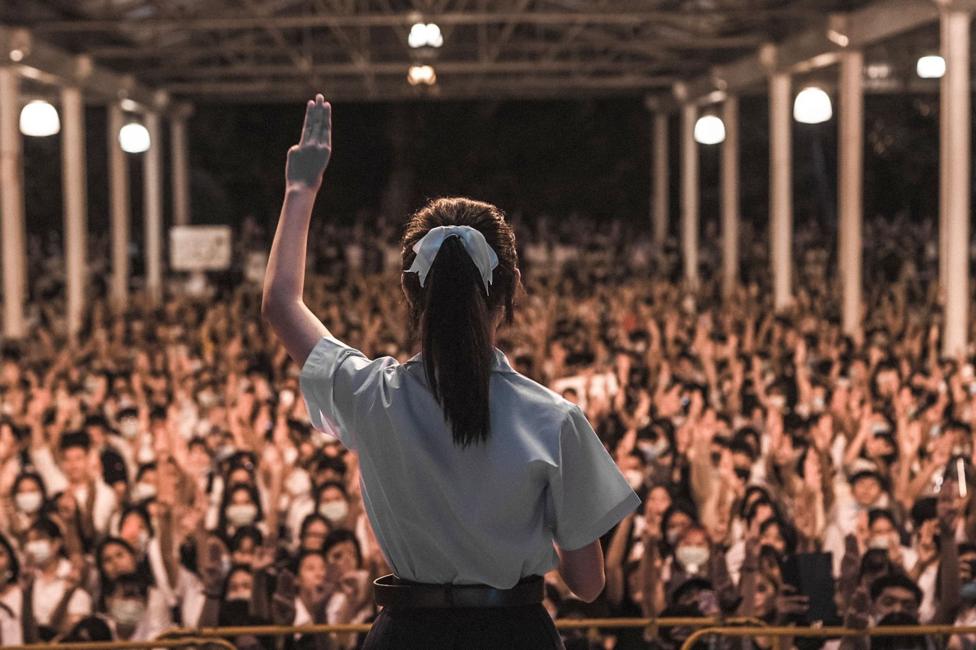 Image source, Goodmondayshoot
Melinn doing the three-finger salute in August 2020
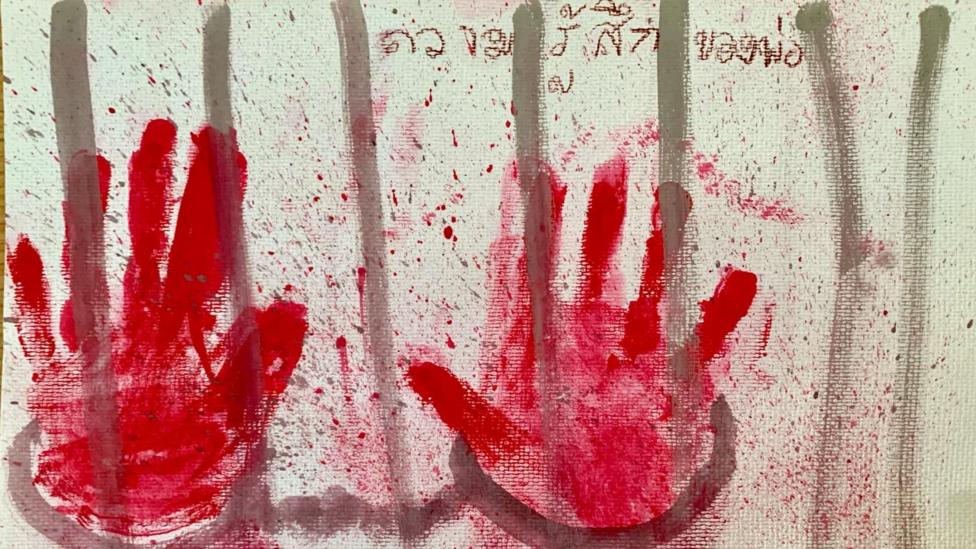 Image source, Arnon Nampa's family
A painting by Arnon's daughter titled 'my dad's feelings'
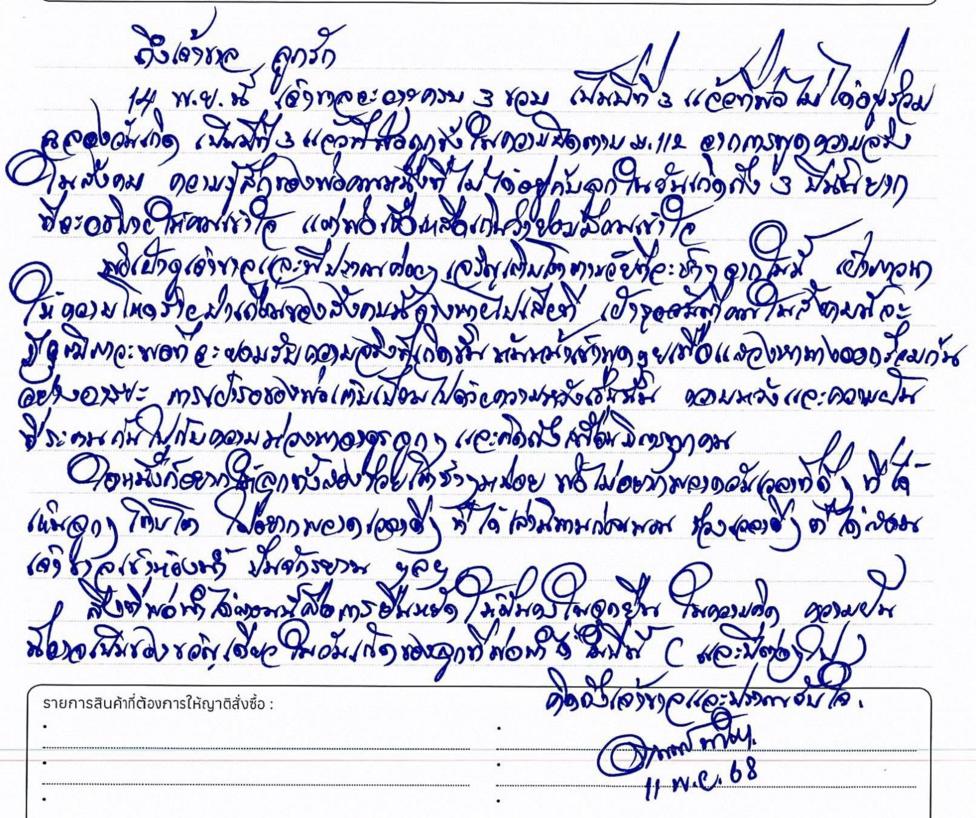 Image source, Arnon Nampa
Arnon has been writing letters to his children since he was jailed three years ago