The key facts
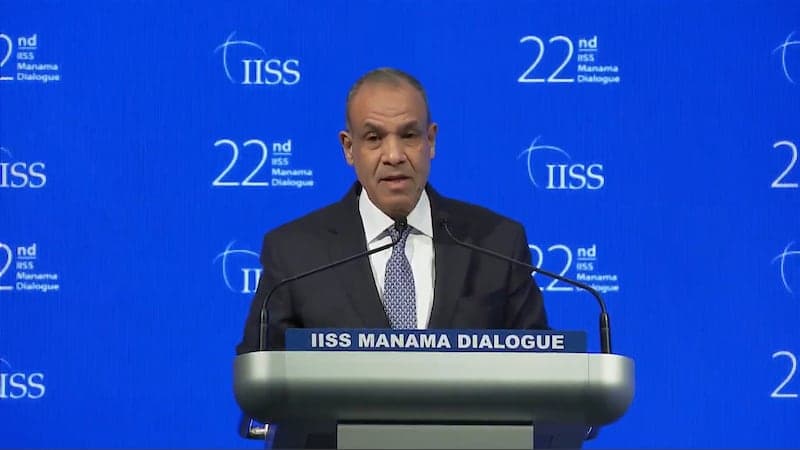
- Egyptian Foreign Minister Badr Abdelatty said at the IISS Manama Dialogue that any blow to Gulf security will reverberate across the whole world
- Saudi Deputy Foreign Minister said Prince Khalid bin Salman's visit to Tehran was aimed at de-escalation and supporting the mediation of Qatar and Pakistan
- According to sources, the talks in Tehran produced no clear progress, but the sides agreed to continue dialogue
Cairo's warning at the Manama forum
At the annual IISS Manama Dialogue security forum in Bahrain, Egypt's Foreign Minister Badr Abdelatty said that reports The National.
What is changing in the conflict
Abdelatty called for movingfrom the logic of crisis management to the logic of building order— responding not to threats as they arise, but preventing them before they flare up. He stressed the importance of maritime security: disruptions to shipping in the region, he said, affect global energy and food security, financial markets, supply chains and trade.
Context of the war and new fronts
As The National recalls, all six Gulf states came under repeated Iranian missile and drone strikes this year after the war began in late February with US and Israeli airstrikes on Iran; Tehran retaliated by attacking countries hosting American military facilities, as well as energy and other strategic infrastructure. Now Yemen's Houthis, Iran's allies, are opening another front: they have resumed attacks on Saudi Arabia and are threatening shipping in the Red Sea. The interim agreement reached in June has delivered neither a durable truce nor a return to normal shipping through the Strait of Hormuz; fears of a resumption of hostilities are linked, in particular, to the period after the US midterm elections on November 3.
Saudi-Iranian contacts without a breakthrough
Speaking on the same panel, Saudi Deputy Foreign Minister Waleed al-Khuraiji said that Defense Minister Prince Khalid bin Salman's visit to Tehran earlier this week was aimed at reducing regional tensions, encouraging dialogue and diplomatic solutions, and supporting the mediation of Qatar and Pakistan. According to informed regional sources cited by The National, the talks in Tehran yielded no clear progress, but the sides agreed to keep talking. Representatives of Saudi Arabia, Pakistan and Turkey asked Iran to push the Houthis to stop attacks on the kingdom; Iran, according to the sources, responded by promoting the idea of a regional truce. Al-Khuraiji characterized relations with the US, calling Washington the kingdom's