The key facts
- The DPRK has escalated the situation at the border: a mine explosion, missile launches, artillery, and propaganda loudspeakers
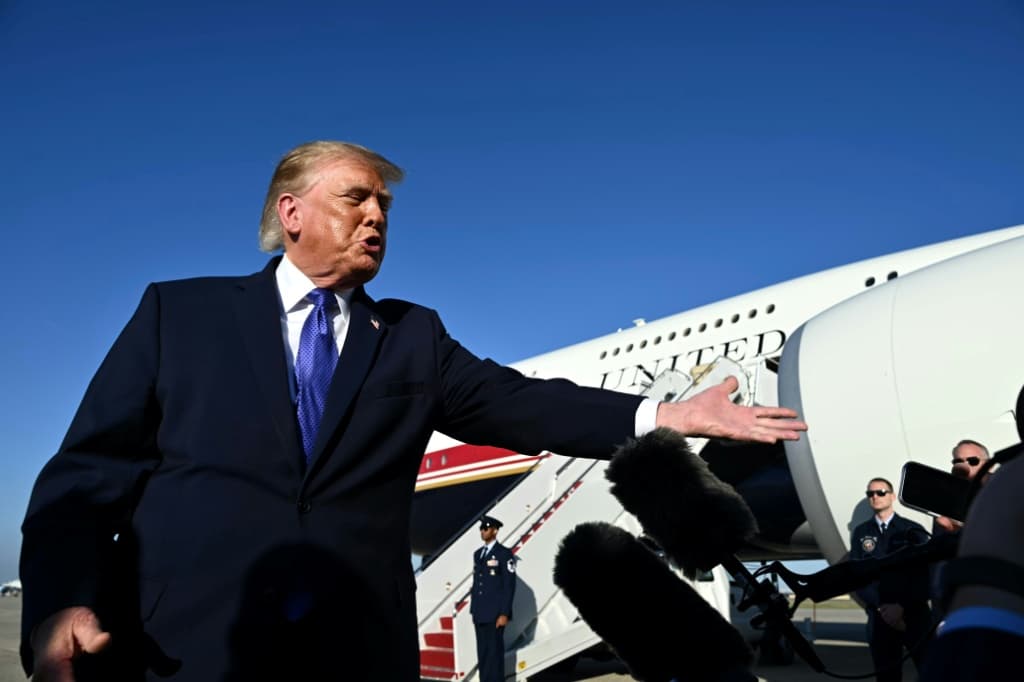
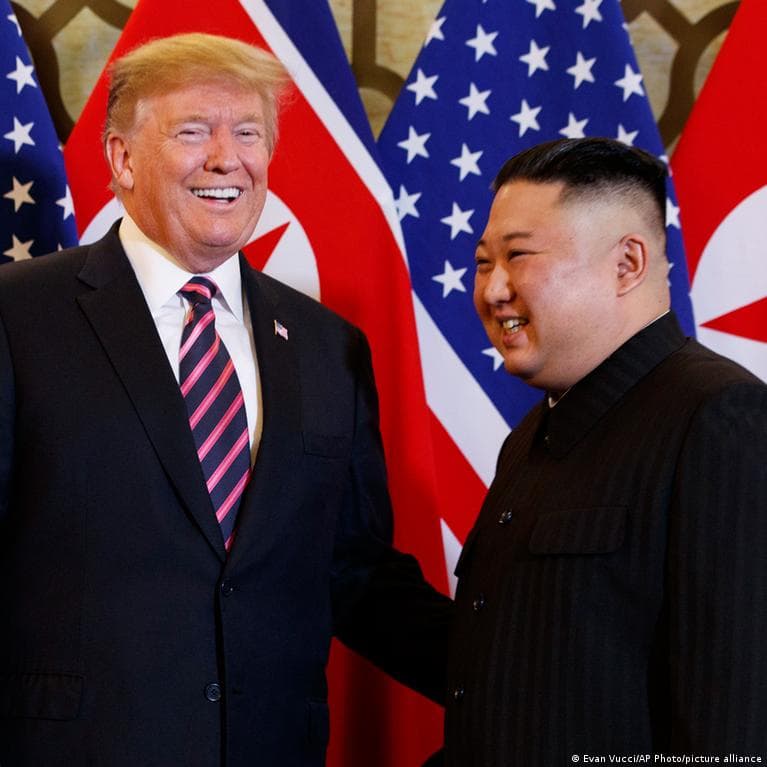
- Trump has signaled readiness to resume talks with Kim Jong Un; a meeting on November 18 in Shenzhen is being discussed
- Concerns are growing in Seoul that the US may conclude a deal that ignores South Korea's security
Double pressure on Seoul
Relations between the two Koreas are going through a particularly hostile period, reports Deutsche Welle. Last month Seoul accused North Korea of planting a mine on the southern side of the fortified border; the explosion wounded three South Korean servicemen. Pyongyang refused to apologize and called the incident a false flag. After that, the North carried out a series of weapons tests, held the first military drone exhibition in its history attended by Kim Jong Un, moved self-propelled artillery to the border, and is preparing loudspeakers for propaganda broadcasts toward the South. On Thursday, the DPRK launched about 10 short-range ballistic missiles toward the Sea of Japan — shortly before the planned visit to South Korea by German Chancellor Friedrich Merz.
The fear: talks without Seoul
But the anxiety in Seoul concerns not only Pyongyang. Politicians fear that the United States may seek a breakthrough in dialogue with the DPRK, even at the cost of ignoring South Korean security. Trump has signaled his desire to resume talks; a possible meeting on November 18 in the Chinese city of Shenzhen, where he will attend the APEC summit, is being discussed. There has been no official response from Pyongyang to Washington's signals; however, as the National Intelligence Service reported at a closed session of a parliamentary committee, Kim Jong Un discussed the possibility of meeting with Trump at a meeting with senior members of the Chinese Politburo in Dandong. Additional concern was raised by the format of trilateral US talks with Russia and China on Ukraine without Kyiv's participation: in Seoul, there are fears that the same could be done with the Korean Peninsula.
A crisis of trust with Washington
“Right now there is a trust problem between the two governments,” Kim Sang-woo, a former politician and member of the council of the Kim Dae-jung Peace Foundation, told DW. According to him, relations once considered solid have been shaken by tariffs, trade restrictions, and demands to pay more for the stationing of American troops; the president's diplomats have lost access to key figures in the White House. He also linked Trump's desire for a meeting to a “personal pursuit of the Nobel Prize”: a formal end to the Korean War, suspended by the 1953 armistice, could secure that goal for Trump — hence the fear in Seoul that southern security will become a bargaining chip.
The nuclear dimension and voices for an own bomb
Professor Kim Eun-jung of Kongju National University called the possible US recognition of Pyongyang as a nuclear state the most serious threat — it would legitimize the North Korean program and undermine the nonproliferation regime. She also noted concerns about a scenario in which the DPRK gives up long-range missiles that threaten the United States but keeps short-range ones that can reach South Korea and Japan. Such uncertainty, she said, strengthens voices in South Korea in favor of their own nuclear deterrence: “All of our neighbors effectively have nuclear weapons, and although no one wants a domino effect, it could begin.”
The European context
The escalation comes against the backdrop of repeated attempts by President Lee to establish contact with Pyongyang — which, as DW notes, irritates Seoul's European allies, outraged by the dispatch of North Korean soldiers and the supply of ammunition and missiles to Russia for the war in Ukraine; Moscow is seen as paying for this support with money, technology, and security guarantees. Merz, who visited Seoul, stated: “Korea's security affects Europe's security. And Europe's security affects Korea's security.” He promoted the idea of an alliance of middle powers in defense of free trade and against “unilateralism, autocratic power politics, and violations of international law,” adding that the United States is redefining its interests and the rest will have to adjust their policies. Whether Seoul will respond with a rapprochement with the EU remains unclear; according to the article's conclusion, the South Korean government is currently struggling to maintain communication with both the DPRK and the United States.