The key facts
- Rivian is licensing elements of its AI assistant to Volkswagen as part of the $5.8 billion joint venture
- Deal terms are not disclosed; a possible debut is in the ID EVERY1 model
- The assistant launched in September 2026 on the R1S, R1T, and R2
What has changed in the agreement
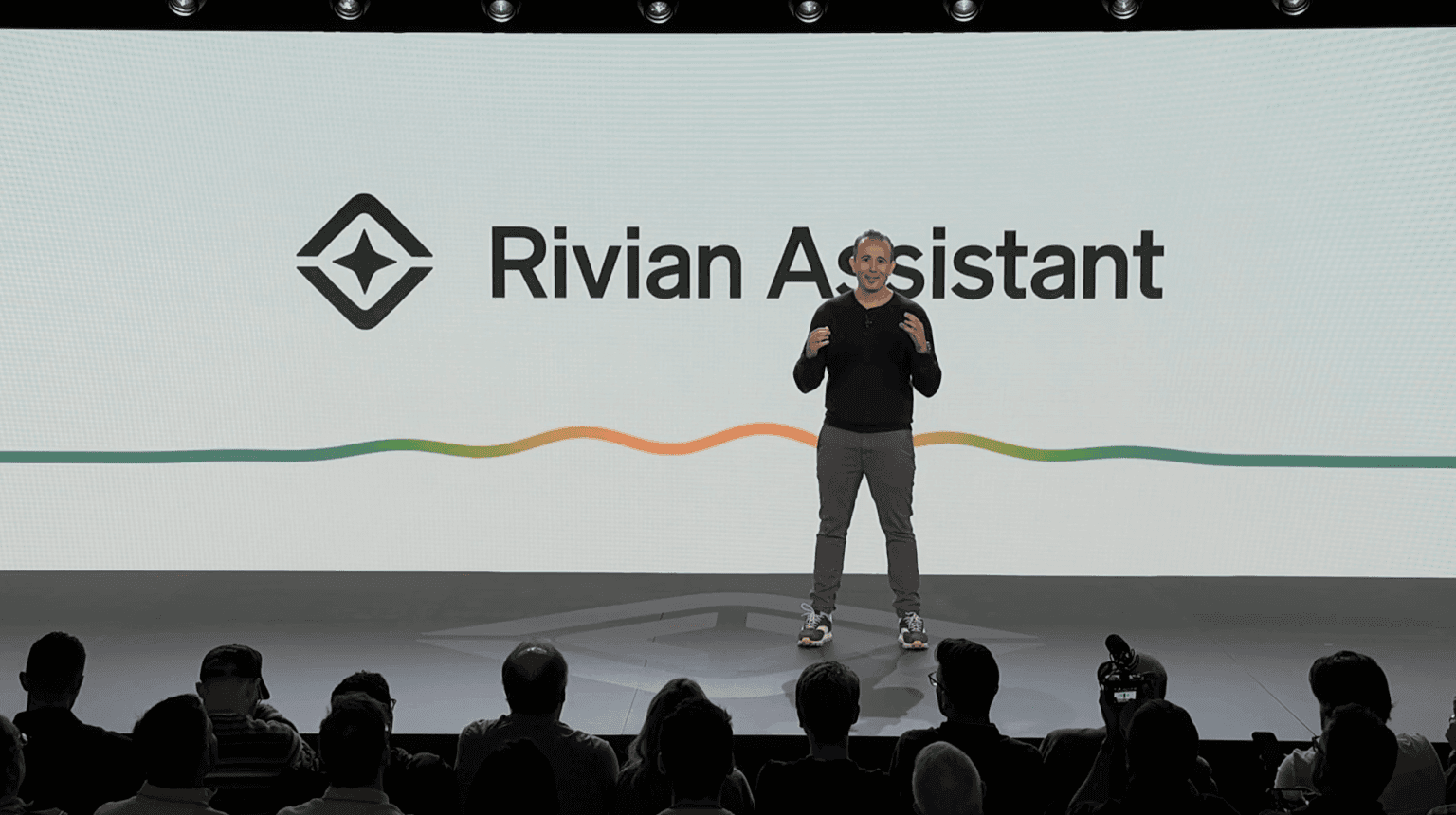
The joint venture of Rivian and Volkswagen Group, created in 2024 to bring Rivian's electrical architecture and software to VW's next-generation vehicles, is expanding once again — this time it also covers the AI assistant. According to Rivian's third-quarter investor presentation, the company is licensing elements of its voice assistant technology to the German automaker. The size of the licensing payments, the payment terms, and the list of VW models that will receive the technology are not disclosed.
Where the technology may appear first
The assistant, launched on Rivian vehicles in September 2026, may debut at Volkswagen in an affordable electric vehicle, the ID EVERY1 — a compact four-door hatchback that will become the first VW model built on Rivian's software and electrical architecture. The assistant itself took two years to develop and arrived later than planned: it appeared on the flagship R1S SUV, the R1T pickup, and the new mid-size R2 crossover. According to Rivian founder and CEO RJ Scaringe, speaking at Disrupt 2026, the company built its own agentic platform that understands what action a person wants to perform when talking to the vehicle and routes the request to the right part of the software — this will make it possible to run third-party AI agents in cars, such as Anthropic's.
Deal context and Rivian's strategy
The financial framework of the partnership has already been expanded: the joint venture was initially valued at up to $5 billion, but within a few months VW increased its commitments to $5.8 billion in investments in Rivian through 2027. Rivian calls the expansion to the AI assistant 'proof of the extensibility of the platform built in-house.' The technology grew out of a push for vertical integration: during the update of the R1T and R1S , the company reduced the number of electronic control units from 17 to seven and cut the amount of wiring, which, it claims, allows it to deliver large-scale OTA updates across the entire vehicle. VW's interest — the company had failed to offer a comparable software-defined vehicle at Tesla's level — was a direct result of this work.