The key facts
- Vantara has announced a halt to animal imports and a shift towards supporting wildlife in the countries of origin
- Vantara has announced it will stop importing animals and shift to supporting wildlife in their countries of origin
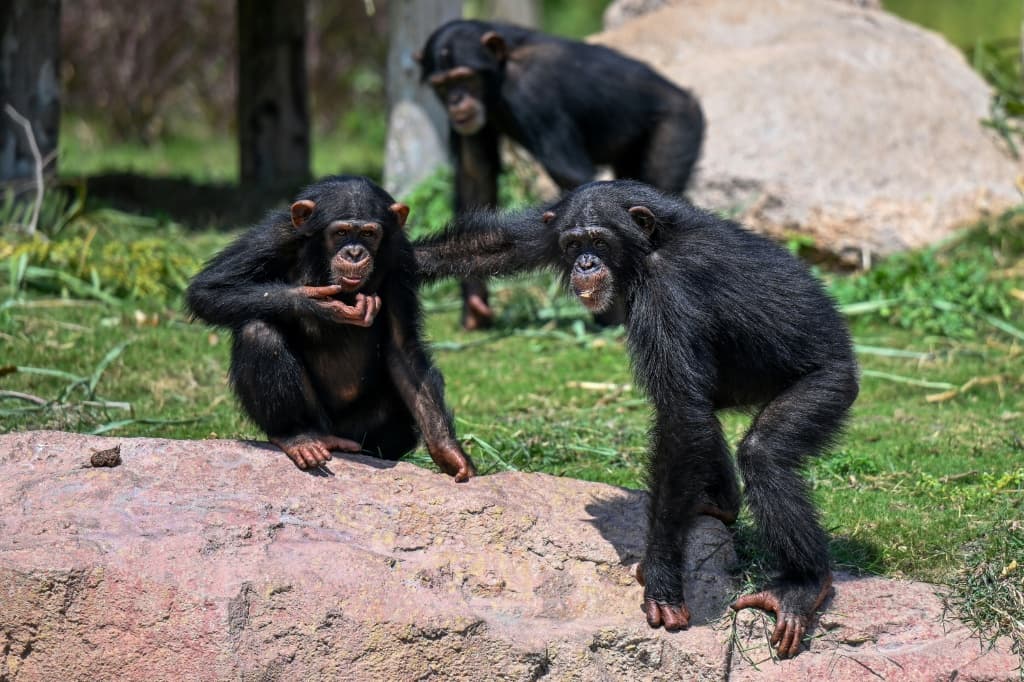
- CITES said India has suspended imports of the most threatened species, but questions remain over elephants, chimpanzees and the Tapanuli orangutan
- 27 international conservation organisations have demanded full transparency about the origin of every animal
World's largest animal rescue centre under pressure of criticism
Vantara, an animal rescue centre in Jamnagar in the Indian state of Gujarat that is closed to the public, is billed as the largest in the world. According to AFP, which was granted rare access for a two-day inspection, the 3,500-acre (1,416-hectare) site next to the world's largest Reliance oil refinery holds around 200 lions, 200 cheetahs, 150 tigers, more than 260 former working elephants, hippos, reptiles and birds, including penguins. The centre is a project of 31-year-old Anant Ambani, the younger son of Mukesh Ambani, head of Reliance Industries. Vantara claims to hold more than 150,000 animals of over 2,000 species from at least 30 countries, but annual reports record noticeably smaller figures — one of the opaque details activists want clarified.
CITES complaints and disputed acquisitions
The centre's acquisitions drew the attention of the CITES secretariat — the international convention on trade in wild animals. Last year CITES said a number of specimens traded as 'captive-bred' may not actually be so, and called for reforms so that Vantara does not 'inadvertently become a driver of the illegal capture of wild animals'. AFP cites examples: dozens of critically endangered turtles were sent by a German commercial breeder to a closed zoo in Togo, then to Belgium, and only afterwards to India; Spix's macaws, a Brazilian species extinct in the wild, were transported from Germany without the required consent of Brazil. Questions are also raised by the Tapanuli orangutan, which AFP saw in a solitary enclosure: it is listed as 'captive-bred', although the species — the rarest great ape, with only about 800 individuals left — has no known captive breeding programmes; Vantara believes the animal was misidentified as a Tapanuli orangutan.
The promised 'reset' and the critics' response
In August, Vantara promised to 'respond to criticism through dialogue, transparency and evidence, not lawsuits', and appointed former CITES chief John Scanlon as chairman of a new governing board overseeing animal acquisitions. CEO Vivan Karani told AFP that the centre has 'pivoted': imports have stopped, international experts have been hired, and resources should 'travel, not animals'. In October, Vantara returned an orangutan to Indonesia which, it says, was rescued from traffickers in 2024, and proposed opening 10 mobile veterinary centres across the country. This month, the CITES secretariat reported that India has suspended imports of the most threatened species pending new due diligence procedures, but questions remain over elephants, chimpanzees and the Tapanuli orangutan; CITES officials, who are meeting on 2 November, urged India to continue investigations and take action against 'instances of illegal trade'. Scanlon, meanwhile, said India's Supreme Court had settled the legal questions over imports: 'That is the end of the road there.' Karani pointed to an audit ordered by the Supreme Court in 2025, which found no evidence of 'violations or wrongdoing' and called Vantara 'a modern Noah's Ark'. Last month, 27 international conservation organisations welcomed the promised shift but demanded measurable reforms, including 'full public transparency' about the origin of every animal. Daniela Freyer of Pro Wildlife, who helped draft the letter calling for a permanent end to imports, said: 'Where rules have been broken, there must be consequences.' Activists said they are 'watching closely' to make sure the promises are kept.
What is already working
AFP describes the quality of animal care as undeniably impressive: veterinarian Kushal Konwar Sarma showed off an elephant hospital with hydraulic operating tables and hydrotherapy pools where retired working elephants are rehabilitated; according to him, such facilities 'have no parallel not only in India but, I would say, in the world.' More than 4,000 staff work at the centre. Vantara took in its first animal in 2009 — an Asian elephant named Gauri, who had been used for begging in Rajasthan. The influx of animals accelerated in 2019 and during the Covid-19 pandemic. Attention to the centre grew in 2024 after Anant Ambani's lavish pre-wedding celebrations attended by Mark Zuckerberg, Bill Gates and Ivanka Trump, with a performance by Rihanna; in March 2025, Vantara was inaugurated by India's Prime Minister Narendra Modi. The centre is now collecting genetic data to prevent inbreeding among Asian lions, building a university and promising to fund conservation projects abroad.