The key facts
- In the regional elections in Saxony-Anhalt, the far-right party Alternative for Germany received 44.5% of the vote, but would not be able to form a government due to the 'firewall' — an agreement among the main parties not to cooperate with it
- The next chancellor elections are scheduled for 2029, but if the government crisis deepens they could take place earlier
- The state secretary of the German ministry, speaking in Tashkent, said he expects the agreements with Uzbekistan to continue regardless of the composition of the government
Far-right records and the question of continuity
German politics is undergoing a major turning point after World War II: in regional elections, the Alternative for Germany party is setting historic records. According to Kun.uz, in Saxony-Anhalt the far-right received 44.5% of the vote and took first place. However, to form a government they would need an absolute majority or an alliance with another party, while Germany's leading parties have agreed never to cooperate with them — this mechanism is called a 'firewall', that is, a political barrier. The next chancellor elections are scheduled for 2029, but if the government crisis deepens, they could take place earlier.
What the German state secretary said in Tashkent
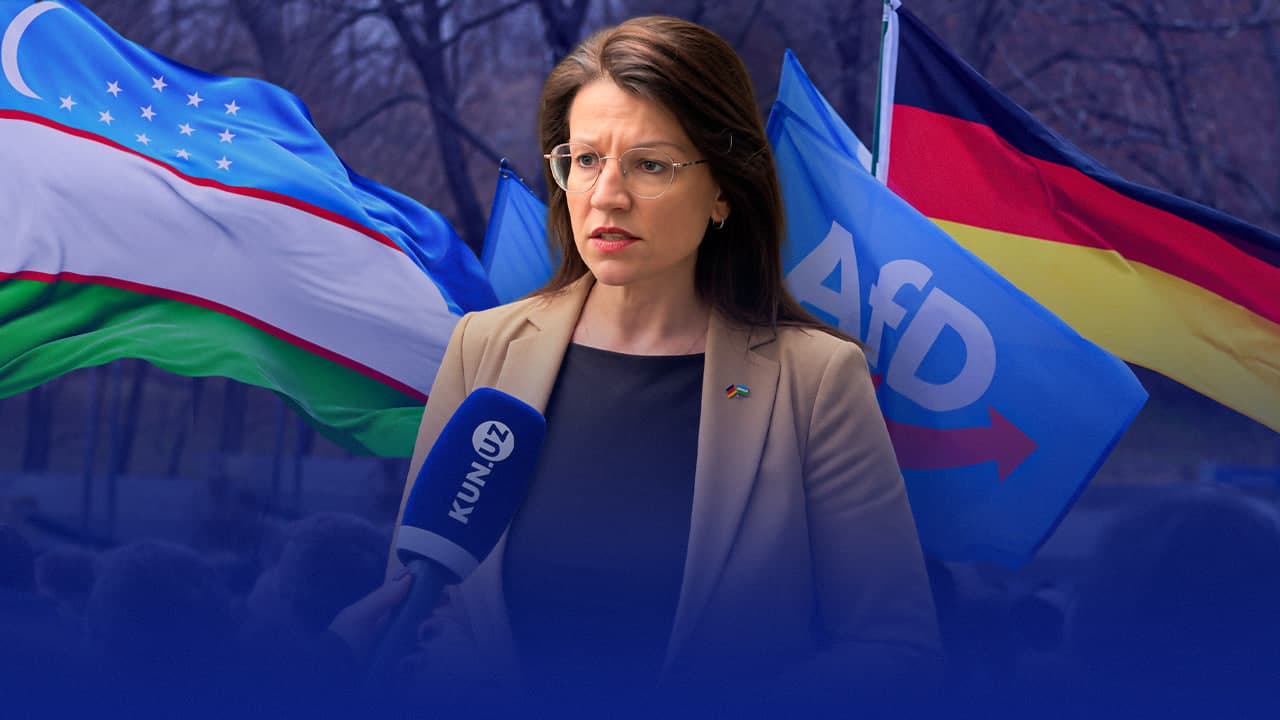
Against this backdrop, Kun.uz interviewed the state secretary (parliamentary undersecretary) of Germany's Ministry of Food and Regional Identity, who is in Tashkent with a delegation. The delegation includes business representatives, scientists and practitioners. Asked whether there are any restrictions on cooperation with Germany, the state secretary replied that first it is necessary to 'bring people together', and then markets, and expressed the hope that the agreements already signed with Uzbekistan will continue to operate regardless of who forms the government.
Agriculture as the focus of cooperation
The state secretary noted that compared with past decades, Germany and Uzbekistan are today 'significantly closer'. In the field of agriculture, he named specific companies: the German firms Claas and Lemken have visited Uzbek enterprises. Among common tasks, he highlighted resources, raising productivity, new technologies and adaptation to climate change. According to him, the delegation visited a research institute for viticulture and crop production, where joint opportunities for improving results and preserving harvests were discussed.