The key facts
- In early October 2026, actor Tiger Shroff's driver was wounded in Mumbai; the suspected attackers linked themselves to the Lawrence Bishnoi gang, but the police have not confirmed the gang's involvement
- Bishnoi's network operates from a prison in Gujarat and extends beyond India: Canada has designated the gang a terrorist organization, and the FBI has added Goldy Brar to its most wanted list
- Experts disagree: some see this not as a mafia 'revival,' others as an extortion campaign
A new wave of attacks on Bollywood stars
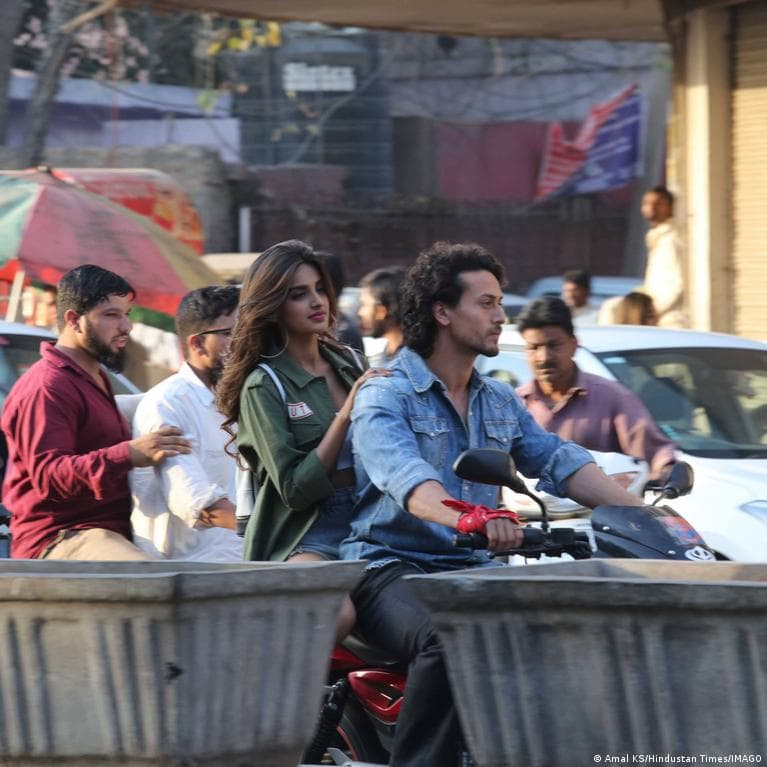
In early October 2026, Indian actor Tiger Shroff was shot at in Mumbai; his driver was wounded. The suspected attackers, who claimed responsibility, warned in an audio message that they would kill anyone who works 'not with us' or with Salman Khan, and linked themselves to the Lawrence Bishnoi gang. The police have not confirmed the gang's involvement. This is reported by Deutsche Welle.
A series of attacks since 2022
The shooting near Shroff is only the latest episode in a series of attacks on prominent figures in the film industry since 2022: shots were fired near Salman Khan's apartment and director Rohit Shetty's home in Mumbai, and near the home of actress Disha Patani's family in northern India; actor Ranveer Singh, according to reports, received an extortion demand of nearly $1.1 million. The attacks have also spread beyond India: comedian Kapil Sharma's café in Surrey (Canada) was shot at three times.
A gang run from prison
Lawrence Bishnoi, 33, who comes from a wealthy landowning family in Punjab, was a student politician in Chandigarh before ending up in prison and, according to journalist Jupinderjit Singh, 'got acquainted with the university of crime through prison.' He has been in custody since 2014 and is currently held in a prison in Gujarat — the home state of Prime Minister Narendra Modi. Investigators believe he still runs operations from his cell using smuggled phones and messaging apps. The gang's network is international: in September 2025, Canada designated it a terrorist organization, and last month the FBI added Goldy Brar, considered the head of the group in North America, to its list of ten most wanted fugitives, offering up to $1 million for information on his whereabouts. Recruitment, according to Singh, takes place mostly online: poor youth are offered money, protection and weapons.
Motive: revenge, money and publicity
For Bishnoi, the conflict with Salman Khan appears personal: in 1998, the actor was accused of killing a blackbuck, an animal revered by the Bishnoi community. Bishnoi vowed revenge; many of the attacks targeted people in the actor's circle, including, according to police, the gang-linked murder of politician Baba Siddique in 2024. Singh sees in the vendetta an attempt by criminals to appear as 'moral guardians,' but also points to money: with the departure of the previous generation of gangsters led by Dawood Ibrahim, a vacuum emerged that Bishnoi is trying to fill. Former Mumbai police commissioner D. Sivanandhan notes that the gang 'has no connection to Mumbai' and uses Bollywood as an 'ATM,' while crime journalist S. Hussain Zaidi considers the attacks above all a way to attract attention: fear is the basis of extortion.
A return of the 1990s or not?
Experts differ in assessing the scale. In the 1990s, Mumbai's underworld was deeply woven into the film industry: gangsters invested in films to launder money, and in 1997 T-Series founder Gulshan Kumar was murdered. According to Sivanandhan, in 1998, 101 businessmen were shot dead in the city — roughly 'every third day' — mostly over unpaid extortion sums; the turning point came after the tough anti-organized crime law of 1999. Zaidi does not consider the current situation a 'revival': back then, several gangs fought over Mumbai, whereas today virtually only the Bishnoi faction is active, and the shift to digital payments makes large cash transactions difficult. Sivanandhan, on the contrary, is convinced that the shootings with swift statements on social media are a campaign to collect extortion money. The fear, however, is real: president of the All-India Cine Workers Association Suresh Shyamlal Gupta wrote to Home Minister Amit Shah that, out of fear, leading figures may leave Mumbai, and that the city 'will not be allowed to return to the underworld days of the 1990s.' A number of stars have already increased their security.