The key facts
- Before mulching, Ganichkina advises loosening the top layer of soil where moths and sawflies overwinter
- The recommended mulch layer is 5–7 cm, sometimes up to 10 cm; it must not be piled right up against the base of the bush
- The best material, in her opinion, is lowland peat with neutral acidity; high-moor peat needs to be limed or mixed with ash
First loosening, then mulch
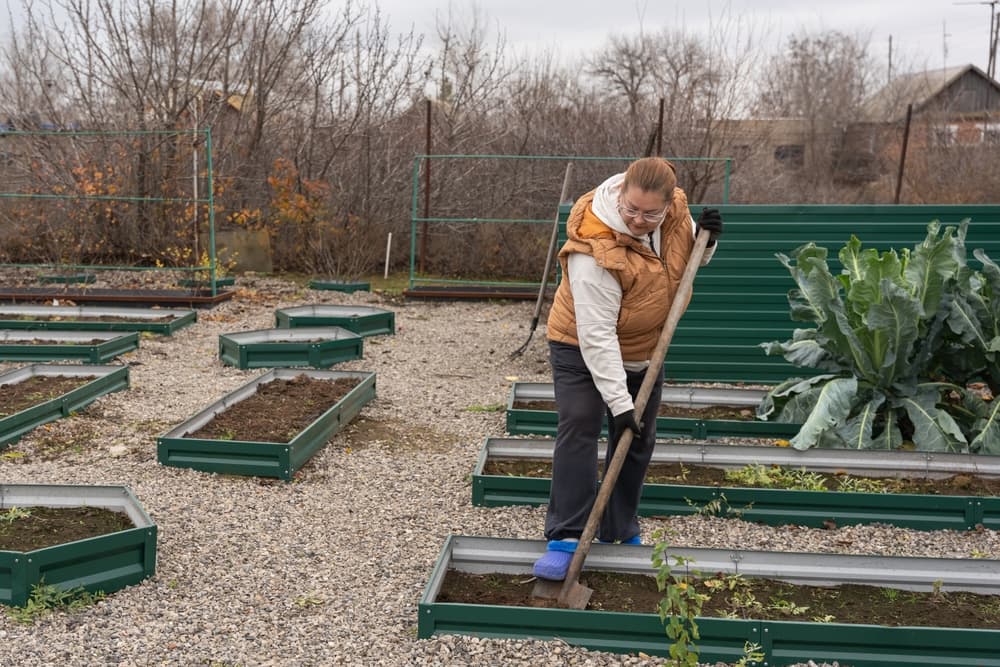
Autumn mulching helps the garden survive the winter: it suppresses weeds, protects roots from temperature swings, and retains moisture in the soil. But, as agronomist Oktyabrina Ganichkina told Life.ru, simply spreading peat around the bushes is not enough — the soil must be prepared first. According to her, some pests, including moths and sawflies, go into the soil to overwinter at a depth of about 3–7 centimeters. Loosening the top layer brings some of them to the surface, where overwintering conditions are worse. The soil should be worked carefully so as not to damage the roots.
Materials and layer
After loosening, the agronomist advises scattering red or black ground pepper or dry mustard around the bushes, then covering the soil with a nutrient substrate. She herself prefers ready-made lowland peat with neutral acidity. High-moor peat will also work, but it is acidic, so it needs to be limed or mixed with ash; humus and turf soil are also suitable. The mulch layer should be 5–7 centimeters, in some cases up to 10; the material should be spread evenly and lightly compacted, but not piled right up against the base of the bush, so that the bark does not become waterlogged. An alternative is a 'collar' made of woven or non-woven material, on top of which soil or nutrient material, such as peat or humus, is still needed.
Watering and other autumn tasks
Ganichkina noted that after mulching, additional watering is not always necessary: if the soil is already sufficiently moist, there is no need to water deliberately — whether moisture-charging irrigation is needed depends on precipitation and the condition of the soil. This matches an earlier Life.ru publication, in which the agronomist advised gardeners in central Russia not to rush with scheduled tree pruning either, if there are no broken branches, rot, or other damage, and reminded them that moisture-charging irrigation is not required when autumn rains have soaked the soil down to the roots. 'First, it is the end of all pests. Second, of weeds. Third, we save the root system from frosts: all fruit and berry plants die from the ground, from the roots, not from above,' the agronomist explained.