The key facts
- In the House of Cornelius Maximus, a wardrobe was found containing cosmetics, a lamp, a necklace of 24 amulets and 38 bronze coins
- The necklace was identified as crepundia — a child's protective amulet that adults sometimes kept as a memento of childhood
- The facade of the house was excavated back in 1912; the rooms behind it have been investigated only now
A wardrobe that survived Vesuvius
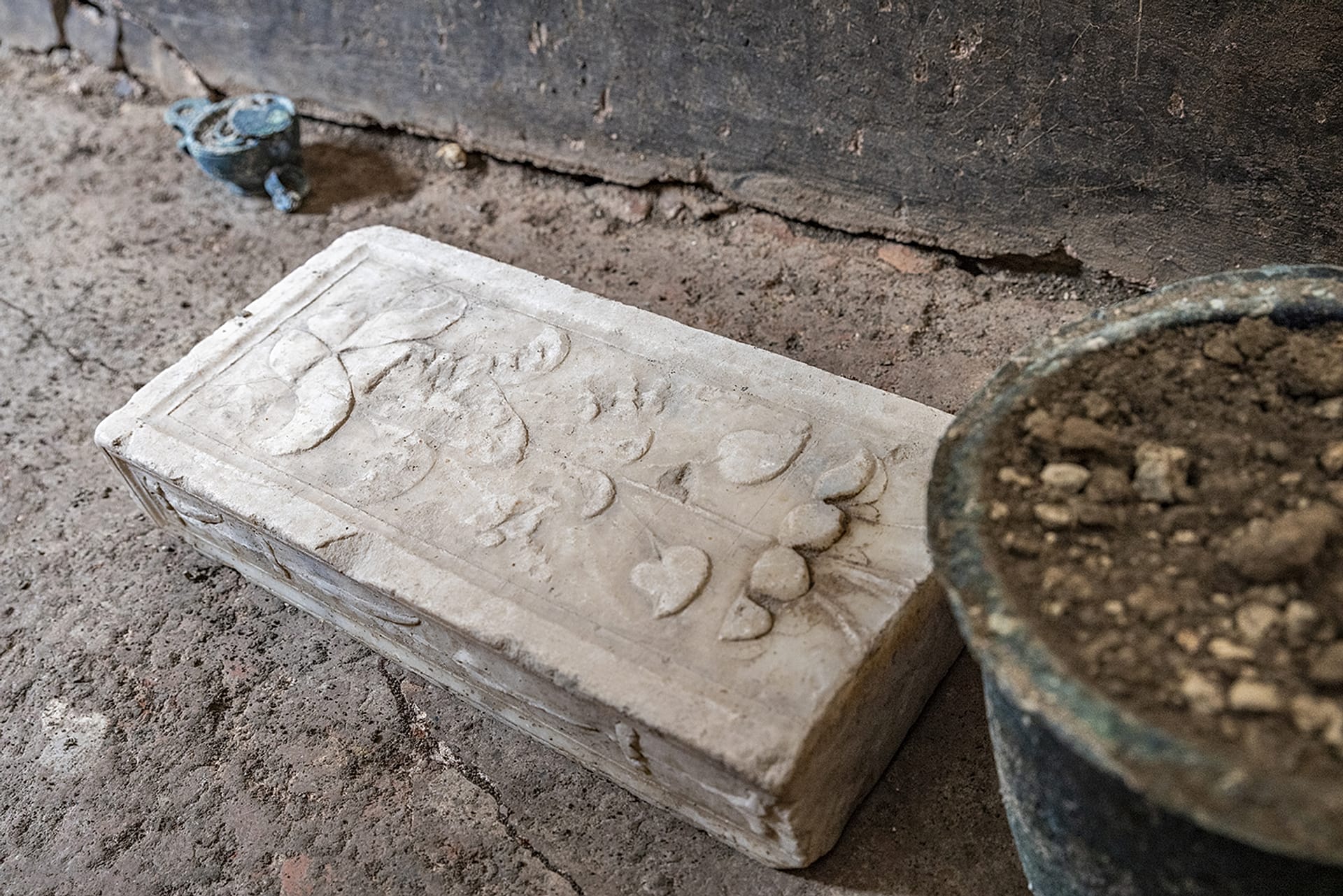
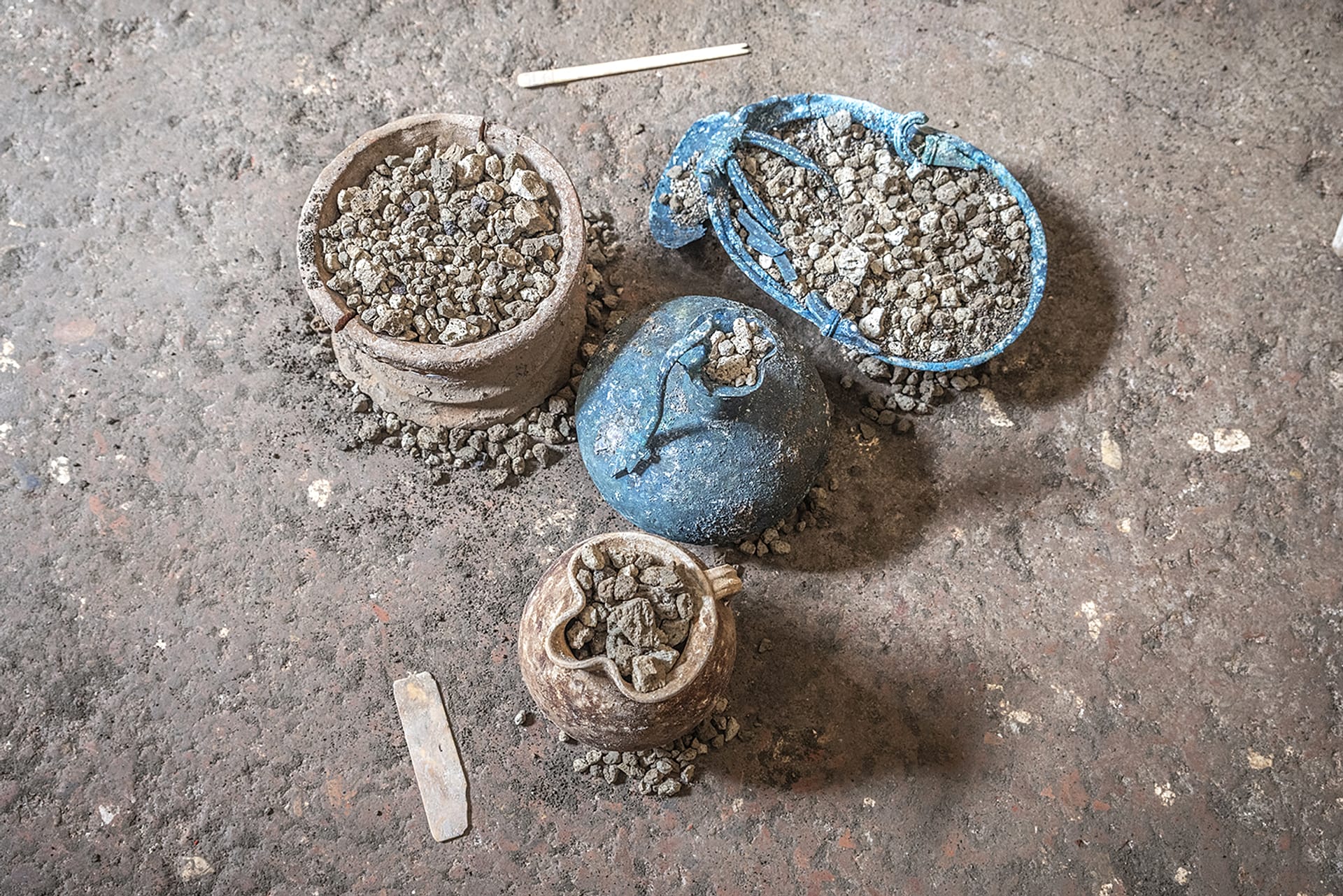
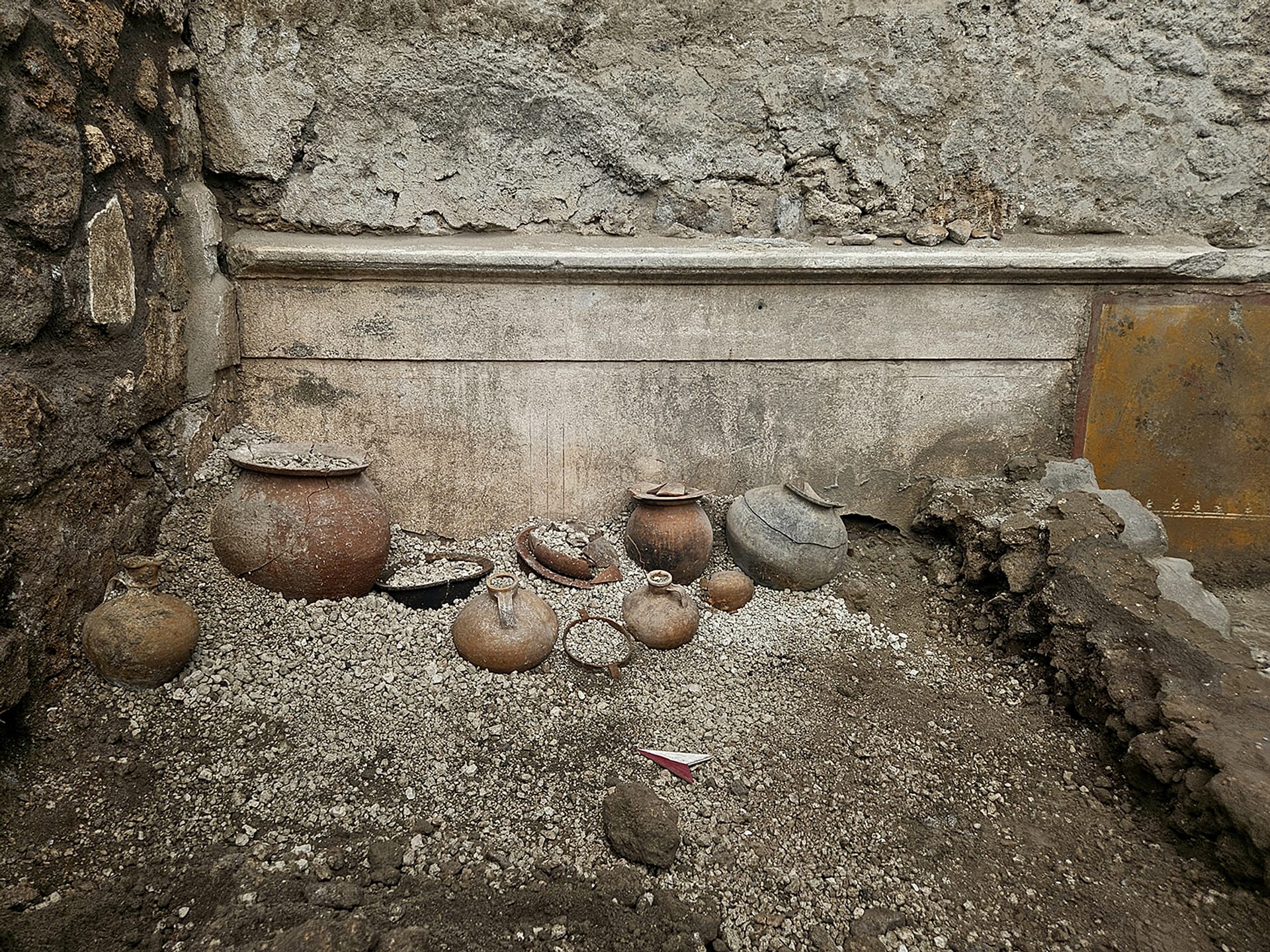
Archaeologists of the Archaeological Park of Pompeii have reconstructed the contents of a wardrobe kept in house IX 11, 7 — the so-called House of Cornelius Maximus in the central part of the city, buried by the eruption of Vesuvius in 79 AD. This was reported by euronews citing data from the park. Inside were everyday items: tweezers and a vessel for grinding cosmetics, a glass balsamarium, a censer, a bronze lamp, as well as lead weights, presumably used in trade operations, which lay in a wooden box of which only faint traces survived. Also found there were vases and pots of bronze, glass and ceramics, including an elegant little jug decorated with pine-cone scales.
A 'rattle' necklace and a hoard of coins
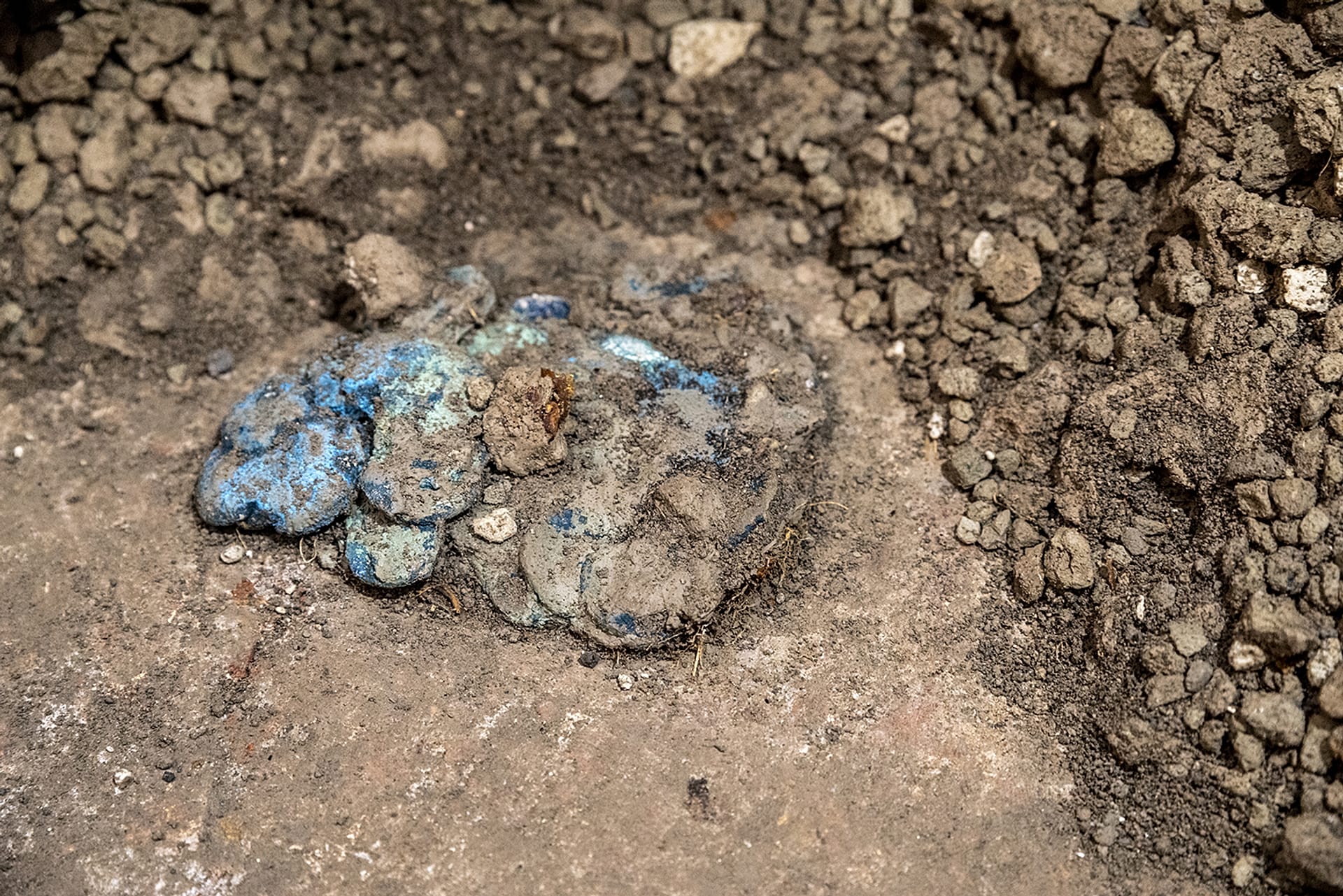
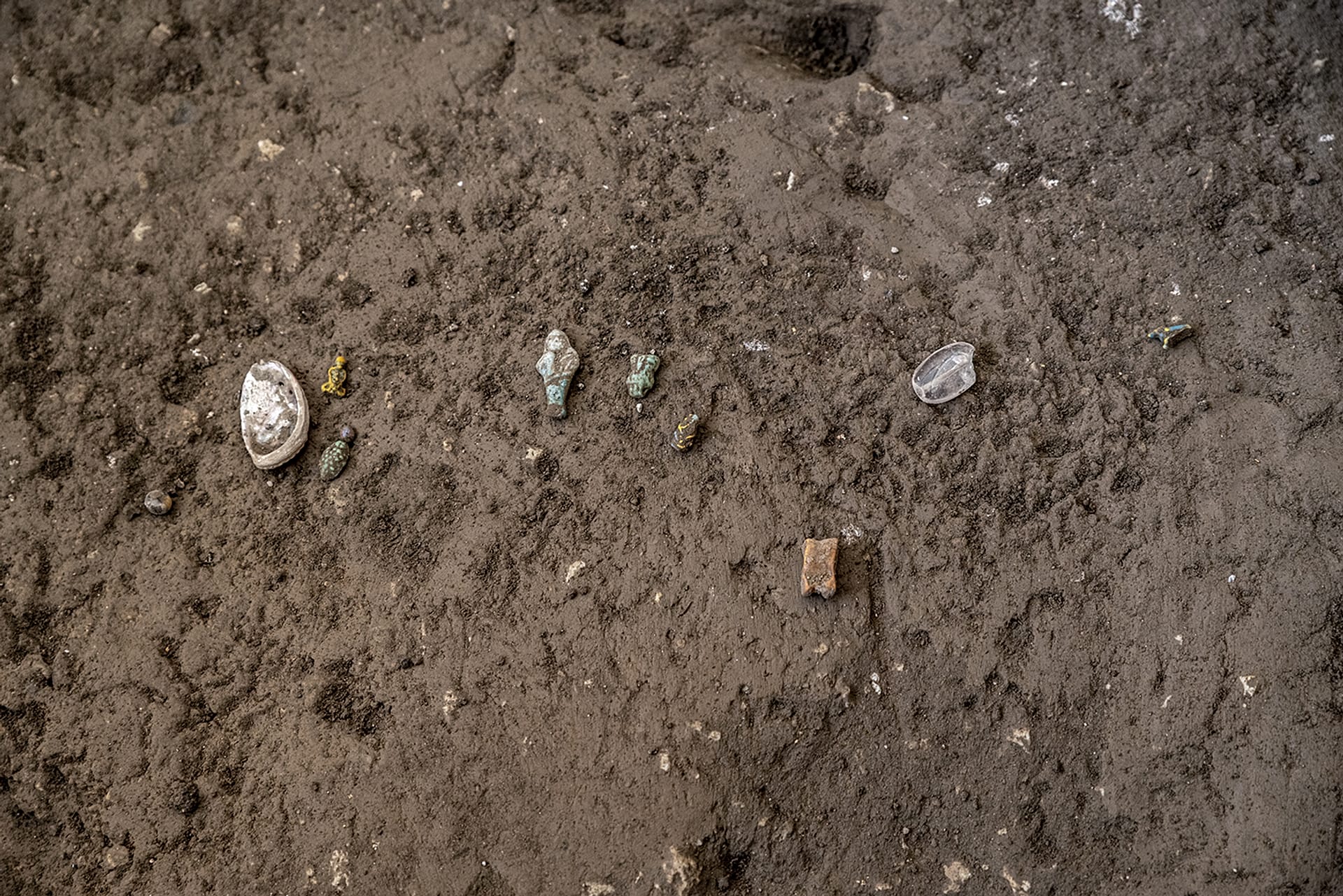
Particular attention was drawn to a necklace of at least 24 miniature pendants of faience, bone, glass paste and rock crystal depicting deities (Bes and Mercury are identifiable), feet, hands, pine cones and grape clusters. According to experts, such necklaces were sometimes considered 'magical' objects for spells and remedies, but in fact they are crepundia — 'rattles': necklaces with amulets given to children for protection and so that their movements could be heard. Adults sometimes kept such items as a reminder of childhood — in boxes or, as here, in fabric pouches inside a wardrobe. The second find is a small hoard: 38 bronze coins in a 'cistella', a woven container of plant material, the remains of which were analysed. The presence of coins suggests that the owners did not have time to take away what was valuable — material or emotional. The fate of the owners remains open: they may have fled and never returned, or, as the historian Tacitus reminds us, perished without heirs.
A house with a high standard of living and uninvited guests
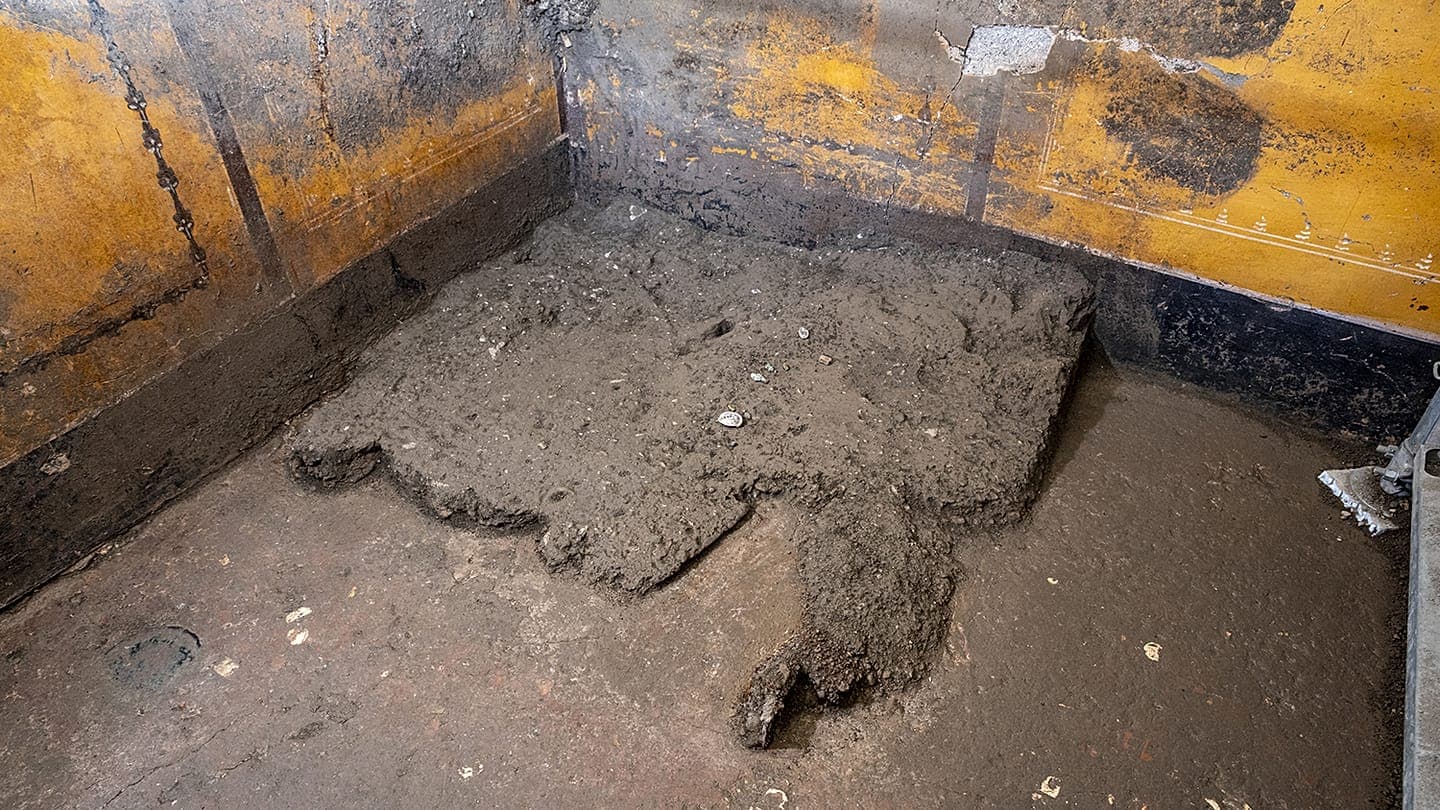
The facade of the house, presumably belonging to Cornelius Maximus on the basis of insulations now no longer visible, was excavated back in 1912, but the rooms behind the facade have been investigated only now — as part of a large-scale project to restore and improve accessibility of the neighbouring Insula of the Chaste Lovers. Refined Fourth Style wall paintings, probably executed by a workshop on the Via di Castricio, point to a fairly high standard of living, consistent with the house's central location. At the same time, at the time of the eruption, work was under way here that significantly reduced living comfort. An additional detail of daily life came from the finds of at least two mouse skeletons inside an amphora on the mezzanine: according to analyses by the park's laboratory, these were most likely Apodemus sylvaticus — the 'wood mouse', and the individuals were not fully mature (117 bone fragments). The find adds to evidence of the presence of rodents in other Vesuvian contexts — from the villa at Civita Giuliana to the sewers of Herculaneum.
'The human dimension of the past'
The director of the Archaeological Park, Gabriel Zuchtriegel, commented on the find as follows: 'Pompeii is not only a place of great works of art: it is also a space where the most ordinary objects restore the human dimension of the past. The value of this find lies in the fact that it allows us to read together different traces of a single life: personal habits, work, memories.' According to him, the identity of the house's occupant cannot be established with certainty, but the found fragments bring us closer to his everyday life.