The key facts
- The crash near Urda killed at least 69 people; in January, 46 people died in a collision at Adamuz on the same line
- The crash near Urda killed at least 69 people; in January, 46 people died at Adamuz on the same line
- Transport Minister Óscar Puente named a computer failure and human error as the likely cause; the leak of dispatcher audio recordings caused outrage
- Vox filed a complaint against the minister, and the polls diverge in their assessment of the balance of power a month before the election
- Vox filed a complaint against the minister, and polls differ in their assessment of the balance of power a month before the elections
Second disaster on the same line
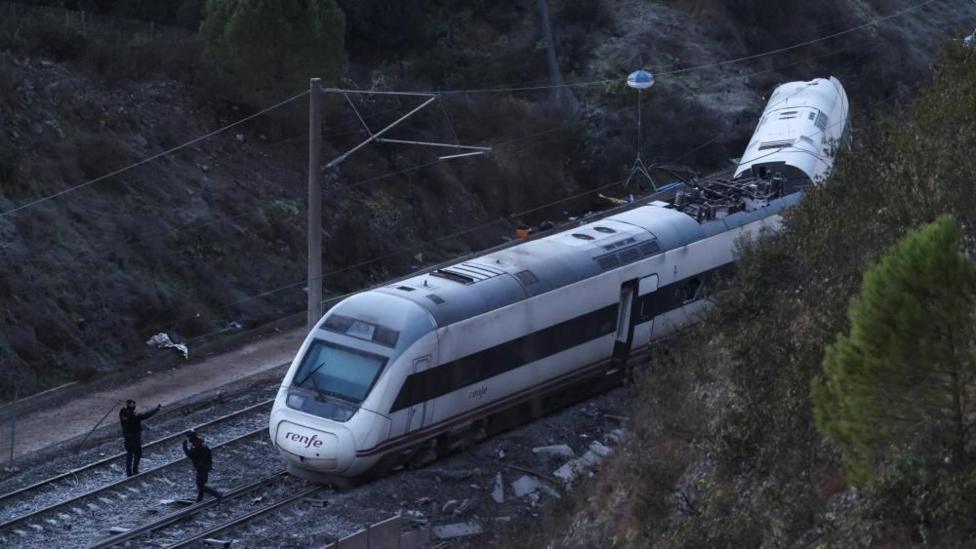
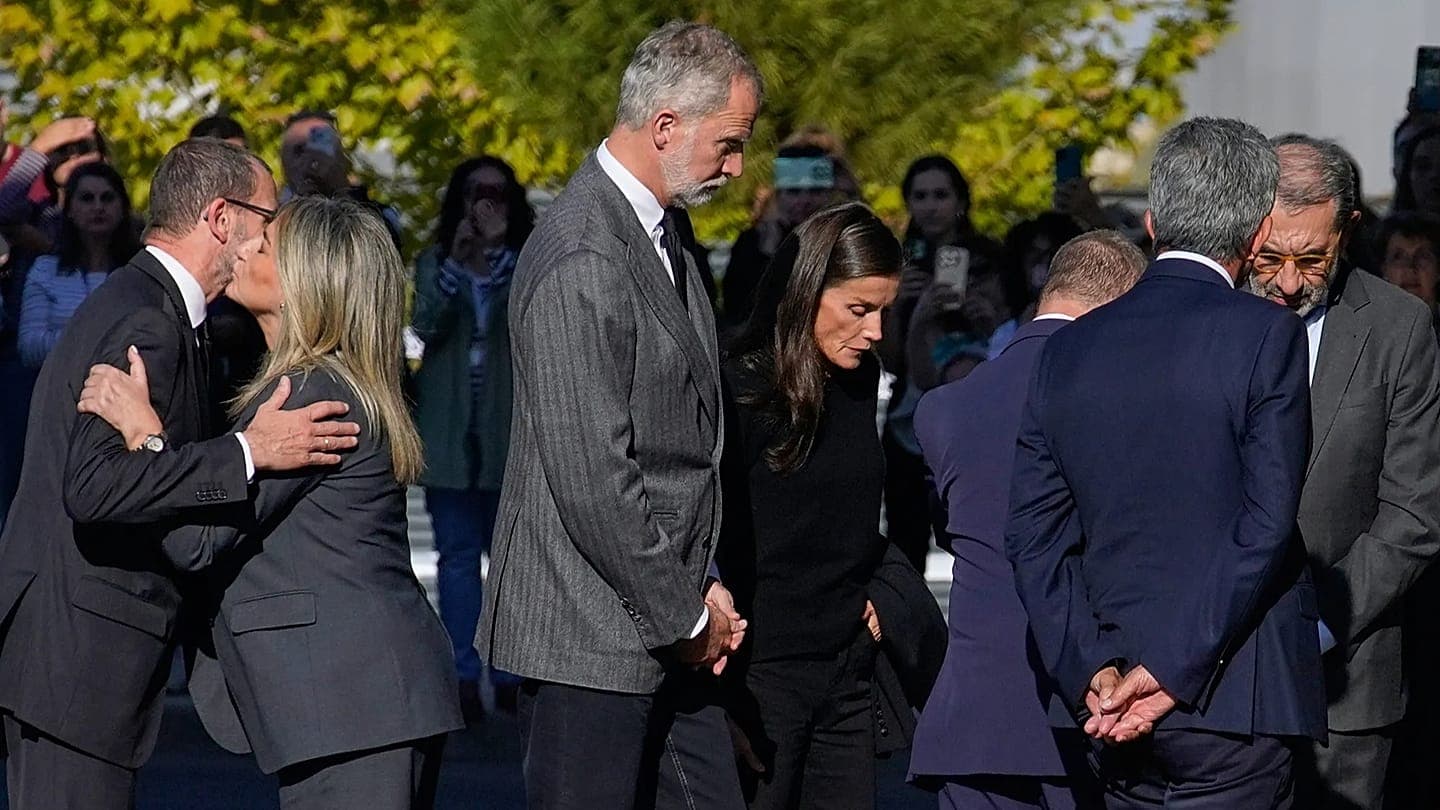
A high-speed train operated by Renfe rammed into the rear of a stationary Iryo train on the Madrid–Seville line near Urda, about 140 km south of the capital. According to the latest figures, at least 69 people have died — the second major rail tragedy in Spain within a year. In January, on the same line near Adamuz, a collision claimed 46 lives. Three days of national mourning have been declared; residents of Urda helped the injured, bringing blankets, food and water to a sports hall turned into a makeshift hospital. Survivors described the chaos of the first seconds: passenger Iñaki García, 60, told the BBC that there were many dead in the neighbouring carriage. Antonio García, a pharmacist from Urda who was among the first to arrive at the scene, relayed the words of a dying passenger bidding farewell to his wife and children: “God is good.”
Leaked recordings and the human error theory
Transport Minister Óscar Puente said from the outset that the likely cause was a computer failure followed by human error. By evening, leaked audio recordings of the dispatcher's conversations with the drivers had emerged, which were seen as supporting this version. The Semaf drivers' union condemned the leak as irresponsible and biased; the union had earlier called a strike for Thursday, demanding that “haste in rail transport must never be placed above safety.” Driver Vicente Almenar noted that “the entire procedure failed,” since it is unknown what his colleague saw on the screen. As euronews notes, the investigation still has to establish what exactly caused the collision — a human factor, a technical one, or coordination failures, but the political debate is already running ahead of the investigation.
Political pressure a month before the election
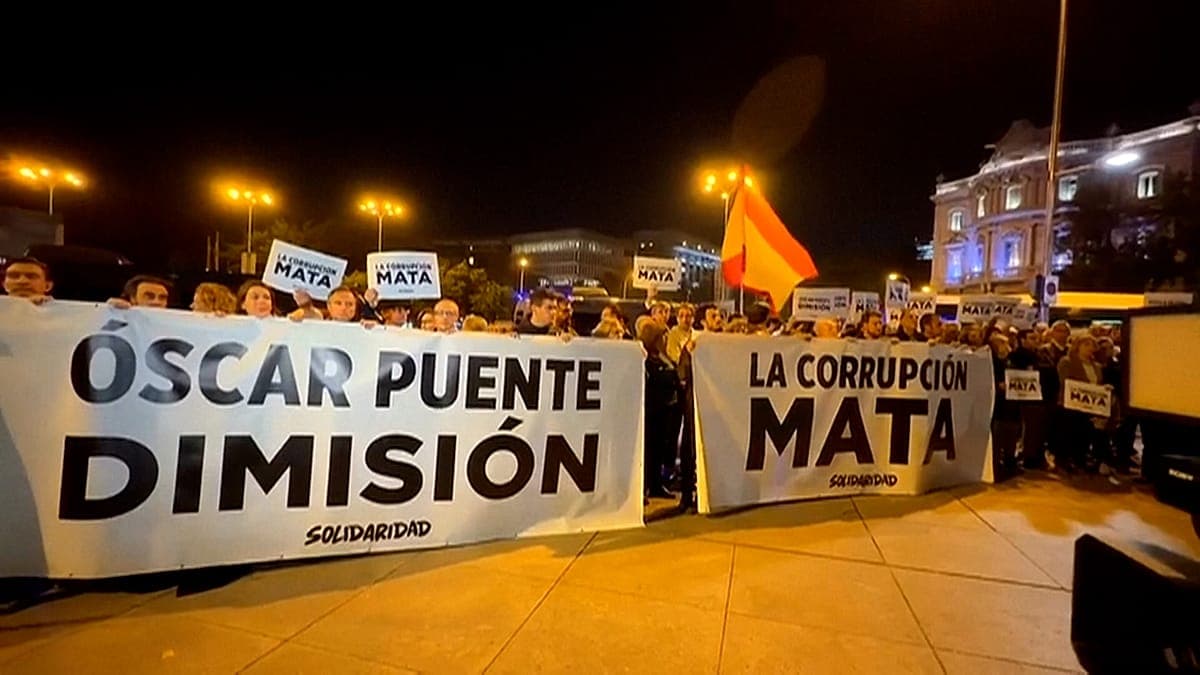
The disaster occurred about a month before the snap general election, in which Sánchez's Socialists trail the conservatives in most polls. The main parties, except the far-right Vox, suspended their campaign, but the confrontation continued: on Wednesday evening a protest took place outside the transport ministry in Madrid, where far-right groups clashed with police. Vox filed a criminal complaint for involuntary manslaughter against Minister Puente, while Frente Amplio demanded that he appear in parliament. The leader of the People's Party, Alberto Núñez Feijóo, who travelled to Urda, said: “The Spanish people need answers. People are asking what is happening to their country's high-speed railways.” Sánchez visited the crash site twice.
A contradictory picture in the polls
The balance of power ahead of the election remains uncertain, as the polls produce sharply divergent results. According to an El Mundo poll of 26 October, the People's Party was on 30.6% (125–131 seats), the Socialists on 26.1% (103–109), and Vox on 19.9% (66–69); an El Español poll gave the PP about 32% and 135 seats, the PSOE 27% and 108, and Vox 18.6% and 63. Both polls allowed for an absolute majority for a PP–Vox coalition. However, the Centre for Sociological Research (CIS), in its latest barometer, placed the PSOE clearly ahead of the PP. As euronews emphasises, these discrepancies add uncertainty to an election period already saturated with crises, to which the tragedy in Urda has now been added.
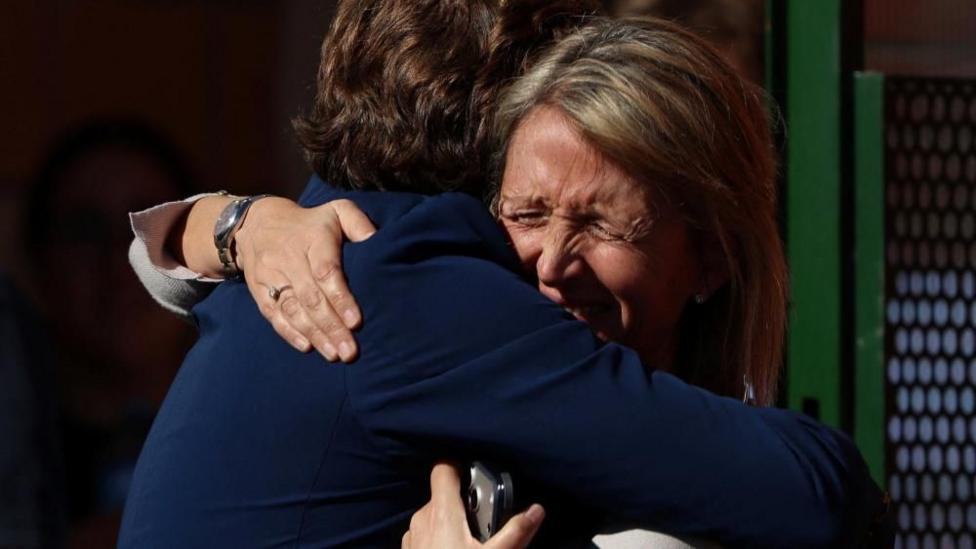 Image source, Reuters
People embrace outside the centre where they were taken after the crash
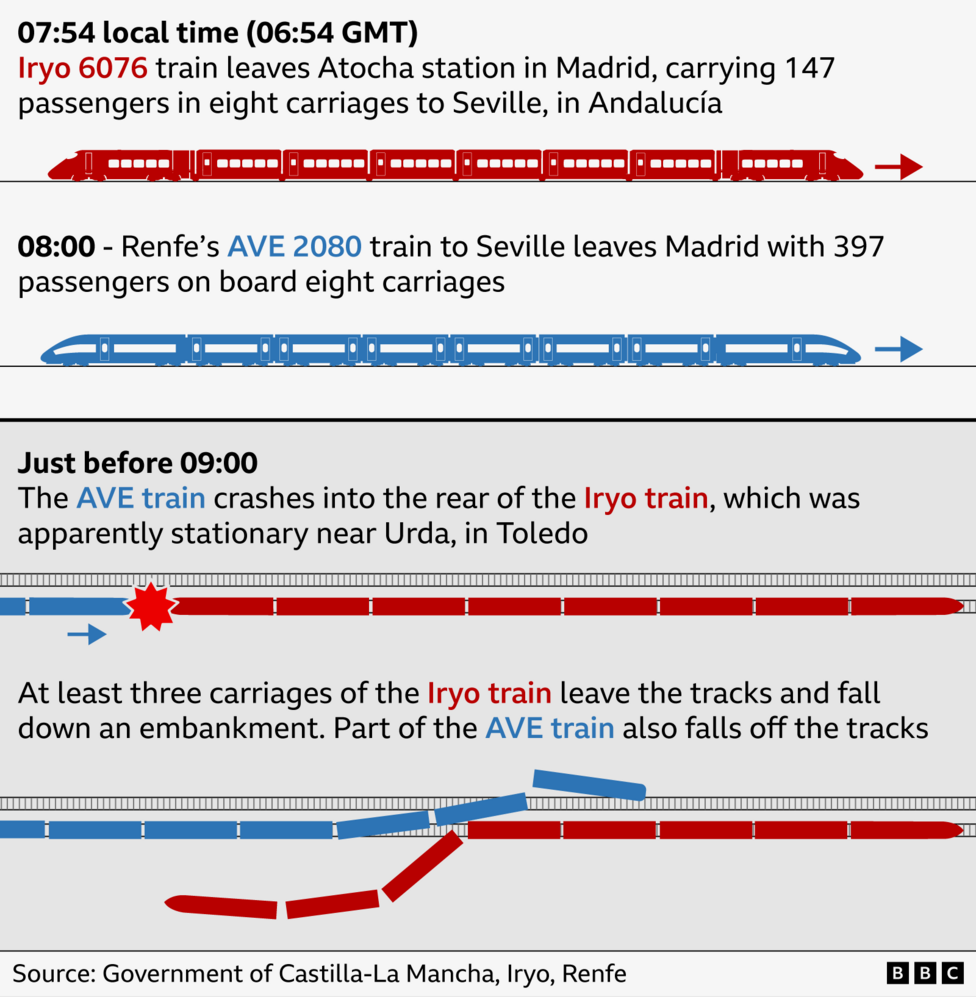
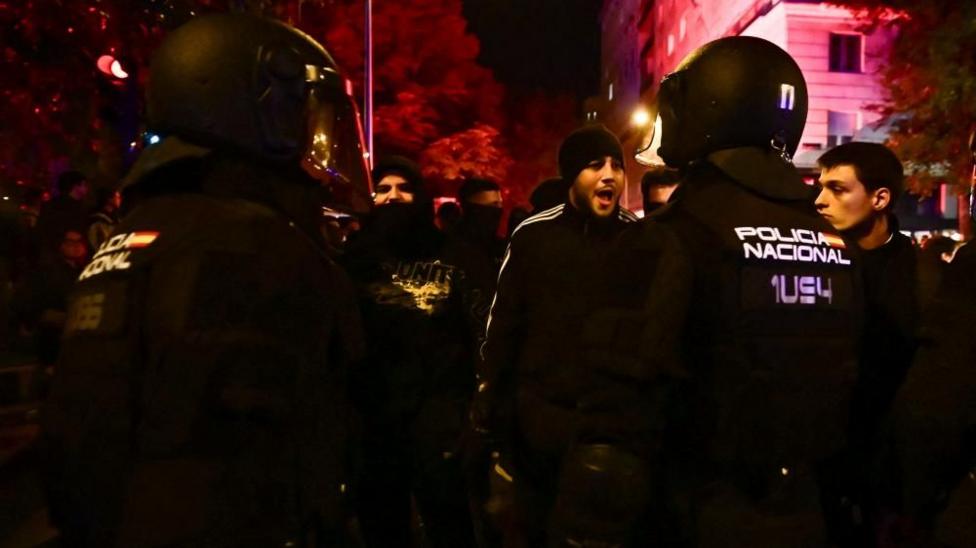 Image source, Reuters
Protesters and police face off outside the transport ministry in Madrid