The key facts
- On October 21, the upper technical water reservoir burst in a tunnel of section “B” on the fourth level of the plant, and the lower drainage reservoir was also damaged
- Officially: no one was injured, workers received first aid and returned to work; according to witnesses and Ozodlik — at least five injured
- A working group has been established; in 2024 three people died at the site, and in 2025 authorities reported eight accidents
What happened at the construction site
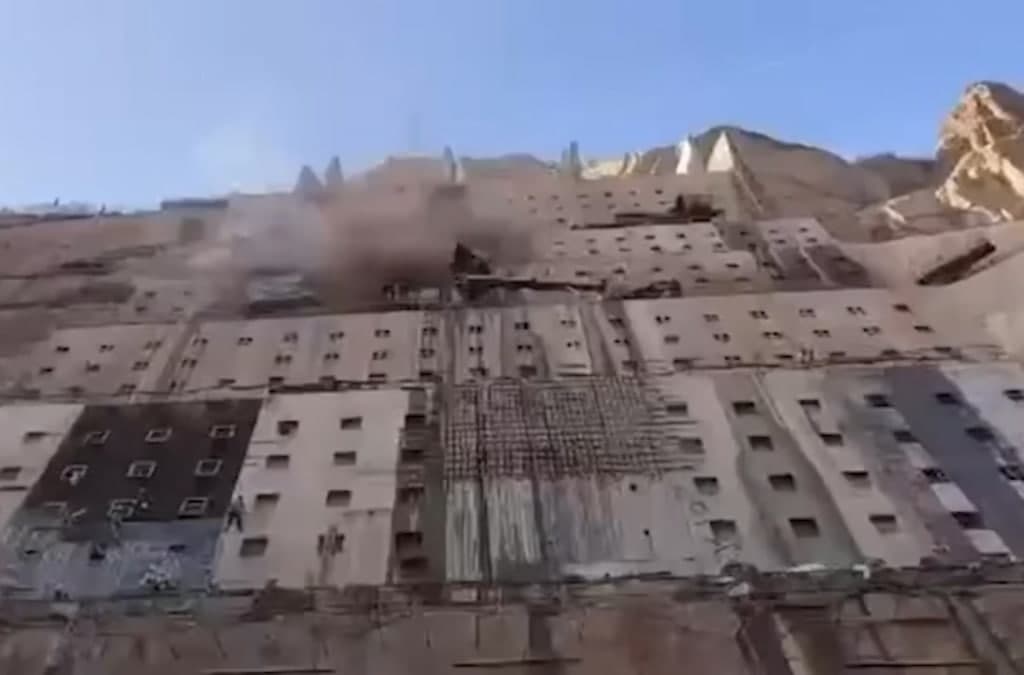
On October 21, at around 4:15 p.m., at the construction site of the Rogun hydropower plant in Tajikistan, in a tunnel on the fourth level of section “B”, an incident occurred during cement work: a technical water reservoir burst, and water poured onto the workers inside the tunnel. This was reported, citing the State Supervisory Service for Work Safety, by the Asia-Plus outlet. According to the agency, the incident took place in the weekend section of the tunnel, in the area of berms No. 32 and 33, where employees of the subcontractor Sino Hydro were working. Two water collection reservoirs are located in this part of the tunnel: after the upper one burst, the lower drainage reservoir was also damaged, as a result of which water from both reservoirs rushed simultaneously into the lower part of the tunnel, where the workers were.
Conflicting information about the injured
Official version: none of the plant’s workers were injured; they received first aid and then returned to their duties. However, witnesses whose names were not disclosed told journalists that several people were buried under soil and rocks, and Radio Ozodlik reported, citing its source, that at least five plant employees sustained bodily injuries. One plant employee described the incident as an accident unrelated to construction quality, but neither confirmed nor denied the information about the injured. To determine the causes and prevent similar incidents, a working group has been established: specialists are examining the technical condition of the reservoirs, the reliability of the anchor fastenings, and compliance with safety requirements.
Accidents at the site had happened before
Safety issues at the Rogun hydropower plant had been raised in previous years as well. In November 2024, as a result of an accident at the site, three workers diedand one more was injured. In 2025, one employee of the Iranian company involved in the project claimed that substandard materials may have been used, while the government of Tajikistan reported eight workplace accidents at the construction site without disclosing the number of dead and injured. Meanwhile, the project continues to develop: the World Bank previously allocated $300 million for construction, and another $500 million is expected from the Asian Development Bank. The plant on the Vakhsh River, with a dam 335 meters high that is to become the tallest in the world, includes six hydroelectric units of 600 MW each; two are currently operating, the launch of the third is scheduled for September 2027, and full completion of construction is planned for 2035.
What this means for electricity exports
The Rogun hydropower plant is directly tied to the region’s energy plans: in 2025, Uzbekistan and Tajikistan approved a draft agreement on supplying electricity generated at the plant to Uzbekistan at a price of 3.4 cents per kWh, with an annual 1% indexation starting from the second year. Until construction is fully completed, supplies are envisaged only during the growing season — from April 1 to September 30 — and year-round after the plant is launched; the agreement is designed for 20 years with an automatic extension for another 10 years. Neither the Tajik authorities nor the aforementioned outlets reported on the impact of the October 21 incident on these timelines.