The key facts
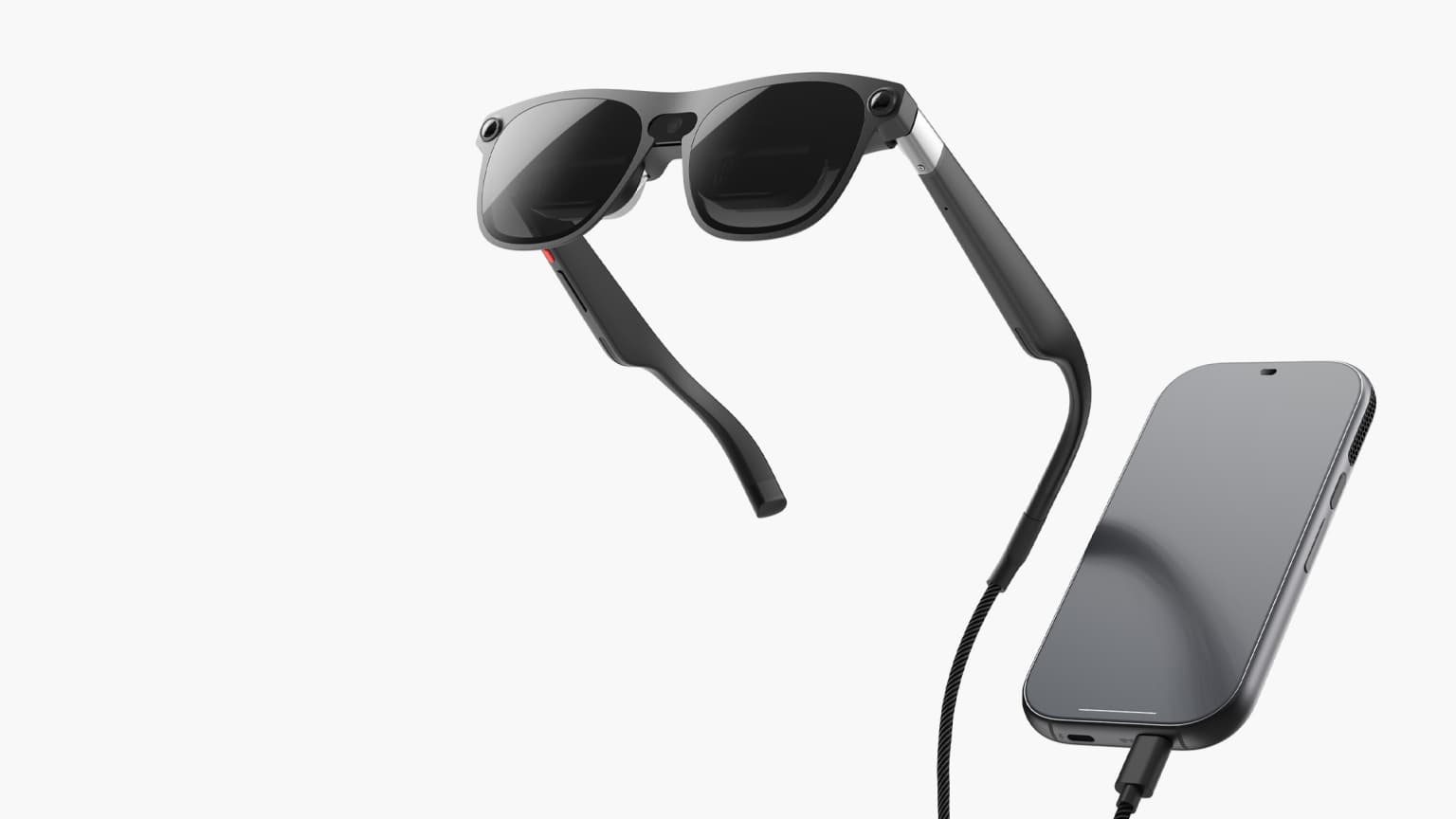
- Xreal Aura runs on Android XR and Snapdragon Reality Elite, with computing offloaded to an external puck-shaped unit
- Sony Micro-OLED display: 1200p, 120 Hz, 95-degree field of view; weight is 95 g versus 69 g for Ray-Ban Meta Display
- Prices: $1,279 (12+256 GB) and $1,499 (16+512 GB), until December discounted to $1,099 and $1,299; shipping from mid-November
Announcement at Android Developer Summit
At the Android Developer Summit, Xreal — Google's partner in smart glasses — unveiled the wired Aura smart glasses running on Android XR and Qualcomm Snapdragon Reality Elite platforms. The devices had already been demonstrated earlier in the year at the Google I/O conference, TechCrunch reports. As with Android smartphones, Google is betting on a set of partners, including Samsung and Xreal, to bring Android XR devices to consumers amid Meta's expansion into smart glasses.
How Aura is built
Aura's key feature is offloaded computing: the glasses connect via a cable to a smartphone-sized device that processes the data, while the glasses merely display content in the user's field of view. In design, the new product is closer to Meta's glasses than to the large helmet-style Apple Vision Pro. The display is based on Sony Micro-OLED with 1200p resolution, a 120 Hz refresh rate and a 95-degree field of view — on paper that is better than the Ray-Ban Meta Display, but Aura is heavier: 95 grams versus 69 grams for Meta, plus the user has to carry the puck-shaped unit. Sound is delivered via Bose technology, and the Gemini assistant is available for answering questions and understanding on-screen context.
Capabilities and sales
At launch, Aura supports popular Google Play apps and games, as well as dedicated XR apps: NBA App for Android XR, Nevatars, Fallout: Factions, Project Hail Mary: Journey Among the Stars, NASCAR XR App and the San Francisco Ballet's The Nutcracker. A computer or handheld console can be connected to the glasses via USB-C, turning them into an additional display, or a multi-monitor workspace or a large virtual screen can be set up. Sales have begun in the US, Canada, Japan and South Korea: the 12+256 GB version costs $1,279 (until December — $1,099), the 16+512 GB version — $1,499 (until December — $1,299); shipping starts in mid-November.
Market context
Back in May, when Xreal first showed the glasses, the company's CEO Chi Xu told TechCrunch that the smart glasses business is difficult and “everyone is losing money”, but argued that the industry has reached a turning point: the hardware, operating system and interface are finally ready to scale. Aura is the first commercial embodiment of this approach in combination with Android XR, although there is no confirmed data on sales or demand yet.