The key facts
- Google has launched Connected Apps Platform in public beta for developers in the US
- Gemini already offers more than 50 connected apps, including Adobe, Peloton, and Calm
- Search integrations will expand in the coming weeks; no timeline for a global launch has been disclosed
What Google announced
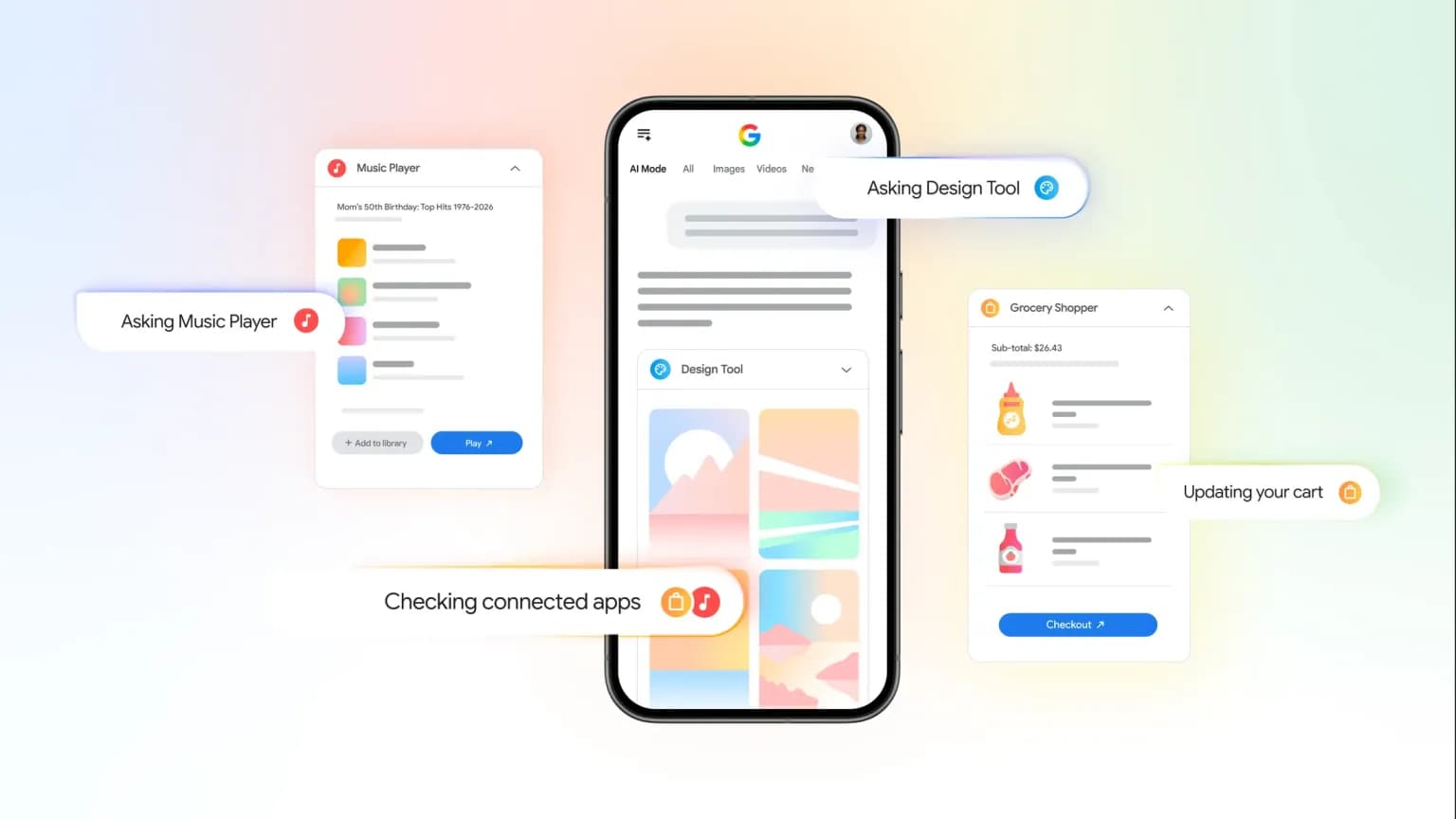
Google has opened the door for third-party companies and developers to connect their apps to its AI products — Gemini and Google Search — through a new Connected Apps Platform, TechCrunch reports. Earlier this year, 'connected apps' already appeared in Gemini and Search: they allow a third-party service to be securely linked and used to perform specific actions — for example, connecting Canva to design a flyer or YouTube Music to create a playlist. Now, however, any developer can submit their app, not just Google partners.
How it works and what is already available
To connect, a developer needs to integrate with a cloud MCP server (Model Context Protocol) or Android MCP via the AppFunctions API, and then register, test, and submit the app through Google Connected Console. Developers can choose where the app will be available — in Search, in the Gemini app, or in both. After launch, the developer sees traffic, latency, and error rates, and retains control over their brand: verified logos and accounts. According to TechCrunch, Gemini already offers more than 50 Connected Apps — from Adobe, Experian, Localiza, and Peloton to Google's own services such as Workspace, Photos, YouTube Music, and Google Home. Search has fewer integrations so far: Instacart, Canva, YouTube Music, Yahoo Fantasy Football, and others; these apps will appear in Search in the coming weeks. A new partner named is the meditation app Calm, which will soon launch in both Gemini and Search.
Context and limitations
TechCrunch notes that a similar approach is being pursued by other consumer AI services, including ChatGPT with its Connected Apps; the bet is that such integrations could shift users' habits from launching individual apps to working with services through their preferred AI provider. The publication also draws an analogy with SEO: connecting to the platform could be one of the first steps for a business that wants to be more visible in the 'agentic web'. For now, the platform is in public beta on an invitation-only waitlist basis for developers in the US; Google has not disclosed timelines for broader access. The article does not provide details on the feature's availability for users in other countries, including Uzbekistan.