The key facts
- Since the beginning of 2026, at least 40 sailors have died in the Black Sea and more than 570 vessels have been damaged
- War-risk insurance rates reach 15% of hull value — almost twice as high as for the Persian Gulf
- In September, Russian grain exports fell by 52%, and diesel exports by 467,000 barrels per day
The Black Sea has overtaken the Strait of Hormuz in the number of casualties
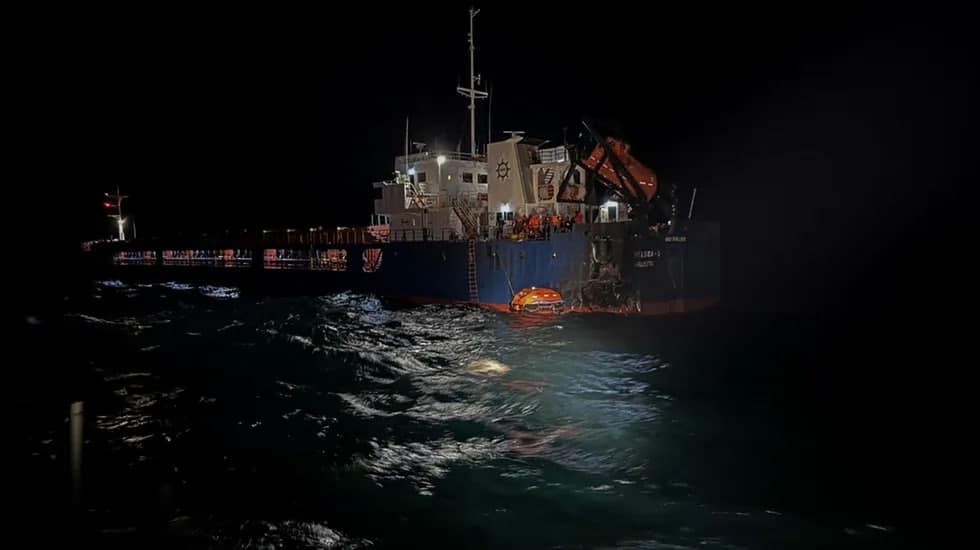
The war between Russia and Ukraine has turned the Black Sea into the most dangerous shipping route in the world, reports Financial Times (summary — Kun.uz). Since the beginning of 2026, at least 40 sailors have died there. For comparison: in the Strait of Hormuz, where traffic has been complicated by the US and Israel's war against Iran, 24 sailors died over the same period.
Scale of attacks and insurance
According to the company Ambrey and the International Maritime Organization, more than 570 vessels have been affected in the Black Sea since the start of the year. Some attacks were accidental, but most ships became deliberate targets: both Russia and Ukraine seek to deprive each other of income from maritime exports. The cost of war-risk insurance in the region reaches 15% of a vessel's hull value — almost twice the rates for ships in the Persian Gulf. The zone of maximum military risk covers almost the entire Black Sea, except for the territorial waters of Romania, Bulgaria and Turkey.
Crews and consequences for carriers
Crews on ships in the region are made up of citizens of Syria, Egypt and Azerbaijan. According to FT, Syrian sailors earn about $800 a month in the Black Sea; they are promised double pay for each day in the combat zone, and in the event of death their families receive compensation of $25,000 to $50,000. Carriers increasingly either refuse to operate in the Black Sea or use older vessels that are cheaper to insure: shipping oil through the Strait of Hormuz from the Middle East is now more profitable and safer.
Mutual strikes and impact on global supplies
In September, Robert Brovdi, commander of Ukraine's unmanned systems forces, said that during an eleven-day operation Ukrainian forces struck more than 300 Russian vessels, with targets including not only sanctioned tankers but also grain carriers. In response, Russia intensified strikes on ships using Ukrainian ports: according to Ambrey's calculations, about 90% of Russian attacks in the Black Sea over the past 45 days targeted commercial vessels.
Consequences for markets
The strikes are affecting global supplies of fuel and food. In September, Russian grain exports fell by 52% compared with last year, and Ukraine managed to export only half of the projected volume of agricultural products. According to Kpler, Russian diesel exports in September fell by 467,000 barrels per day compared with last year.