The key facts
- TTF rose from ~28 to ~96 euros/MWh since the start of the year (+234%), the highest since December 2022
- EU storage is 74.6% full versus 82.9% a year earlier — the lowest for this time of year since 2011
- A typical household with gas heating may pay ~600 euros more (up to ~715 euros including VAT)
Prices and reserves
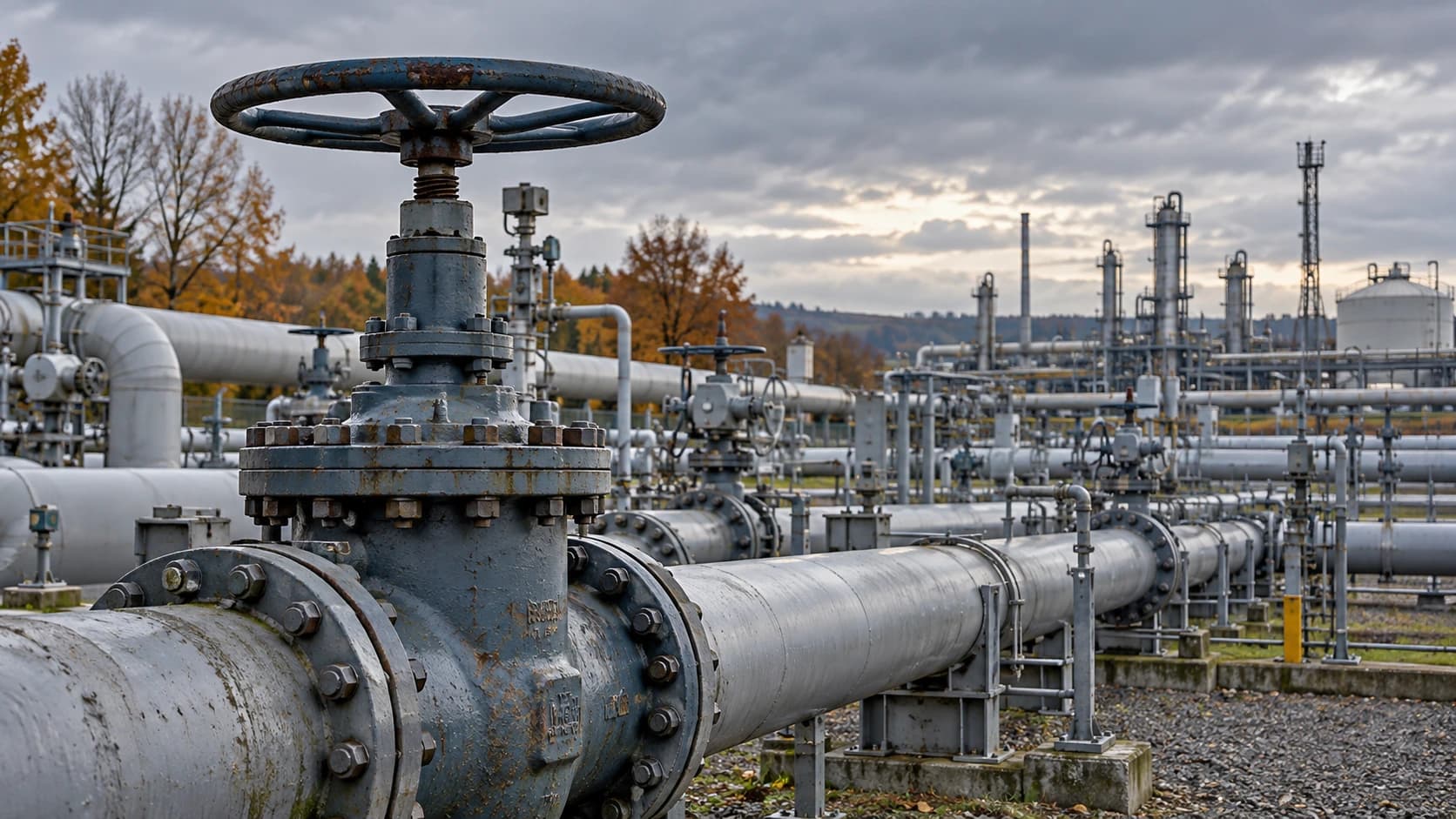
The European benchmark gas contract TTF traded at around 28 euros per megawatt-hour in early January, and on Monday, October 26, it held near 96 euros after a brief peak of 97.64 euros — the highest level since December 2022 and an increase of roughly 234% since the start of the year. It is still far from the August 2022 record (above 340 euros), but, as Euronewsnotes, the concern is not so much the level as the direction of price movement. According to Bruegel, as of October 24 EU storage facilities were 74.6% full, compared with 82.9% a year earlier and 98.5% in 2023; IEEFA calls this the lowest figure for this time of year since records began in 2011. Stocks have effectively stopped growing, and some countries, including Austria (a decline from 69.3% to 67.2% during October), have already begun withdrawing gas before November.
The cause: the loss of Qatari LNG and the ban on Russian gas
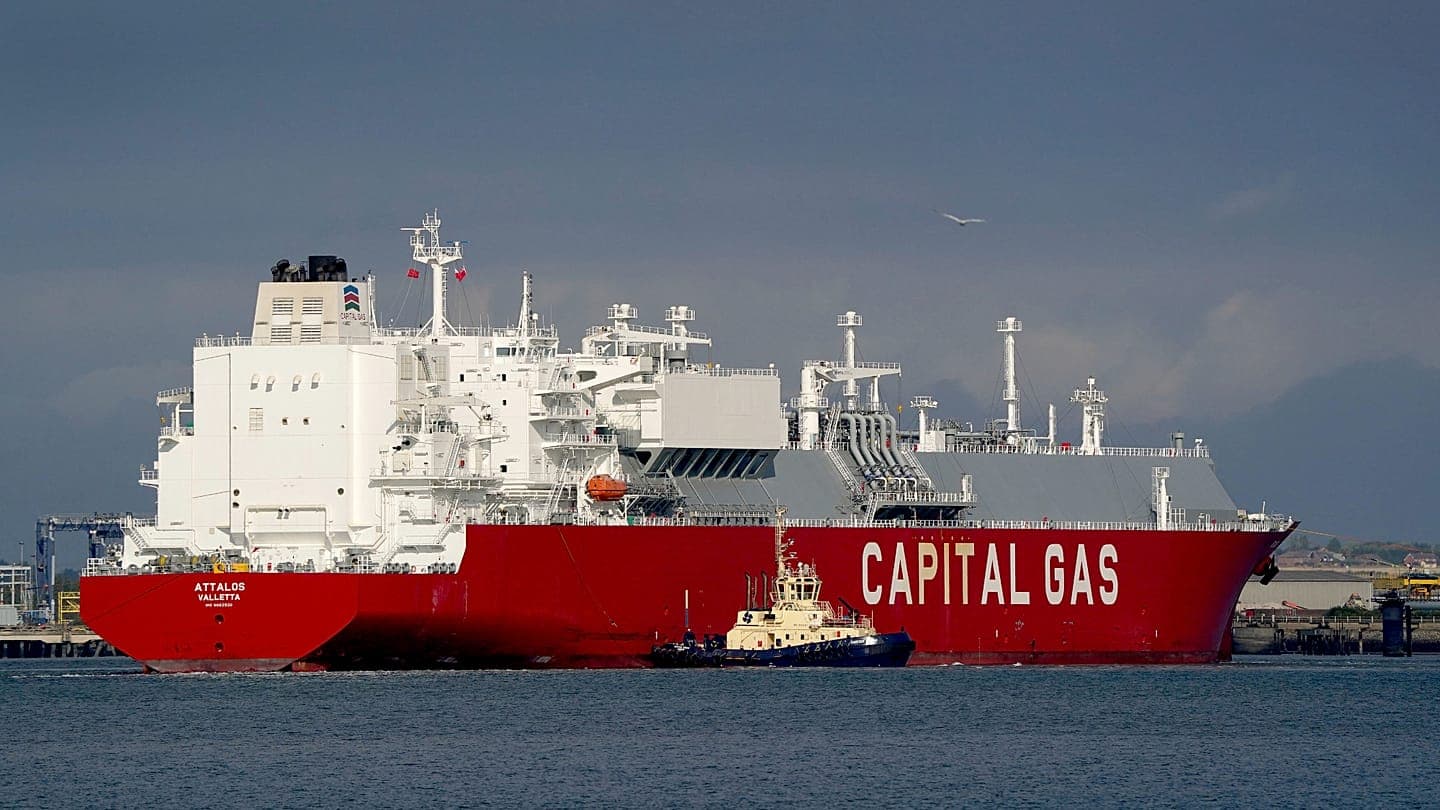
The war with Iran and the closure of the Strait of Hormuz have cut Europe off from Qatar: according to Bruegel, Middle Eastern LNG accounted for about 8% of the EU's LNG imports last year, but not a single cargo has arrived since May. In an overheated market, every missing tanker has to be bought back in competition with Asian buyers. A second gap lies ahead: Russian LNG, which accounted for about a fifth of imports in the second quarter, will be completely banned in the EU from January 2027. IEEFA analyst Ana Maria Jaller-Makarewicz said that in the institute's calculations, taking this ban into account, the EU may need to use roughly 7% less gas than last winter.
Forecasts and bills
Wood Mackenzie expects storage facilities to be only 17–20% full by the end of March — assuming a normal winter and the resolution of the Middle East conflict this year, with Qatar and the UAE returning to normal volumes in early 2027. The company's director, Tom Marzec-Manser, suggested that in a cold winter stocks would be even lower, and that even a rapid end to the war would not restore the balance of the global LNG market, in his estimate, until the autumn of 2028 — throughout that time, wholesale prices in Europe will remain high. TTF futures for the winter months are trading at around 95 euros per MWh — almost three times the average level of last winter (~36 euros). For a typical household with gas heating (about 10,000 kWh from November to March), the difference means roughly 600 euros in additional costs, or about 715 euros including 20% VAT. According to the HEPI index, retail prices in EU capitals in early September already averaged 11.9 eurocents per kWh — 12% more than in February. How much of the impact reaches a particular family depends on the country and the type of contract: fixed tariffs and government support can soften the increase.
Savings as the main lever
Jaller-Makarewicz considers reducing demand the main lever that Europe controls: part of the savings will happen on its own due to high prices. Lowering indoor temperature by one degree can cut bills by up to 10%; lowering hot water temperature and insulation also help. She proposed that Brussels set a framework target for reducing demand, leaving flexibility to member states' measures tailored to their domestic markets. In the long term, in her view, the way out is reducing dependence on gas: demand in the EU fell by 17.7% between 2021 and 2025, and this buffer is now being put to the test. The outcome of the winter, as Euronews concludes, will depend less on Brussels and more on how cold January turns out to be and how strong the wind is.