The key facts
- Alistair Burt became the UK's first special envoy for detainees abroad in September 2026
- He is holding talks with partners from the Five Eyes and Gulf states; a meeting of the 'core group' may take place in Britain next year
- The family of Craig and Lindsay Foreman, detained in Iran, criticises the government for slow action; Nazanin Zaghari-Ratcliffe warned that the new post must not become an 'excuse' for inaction
A new role and an international network
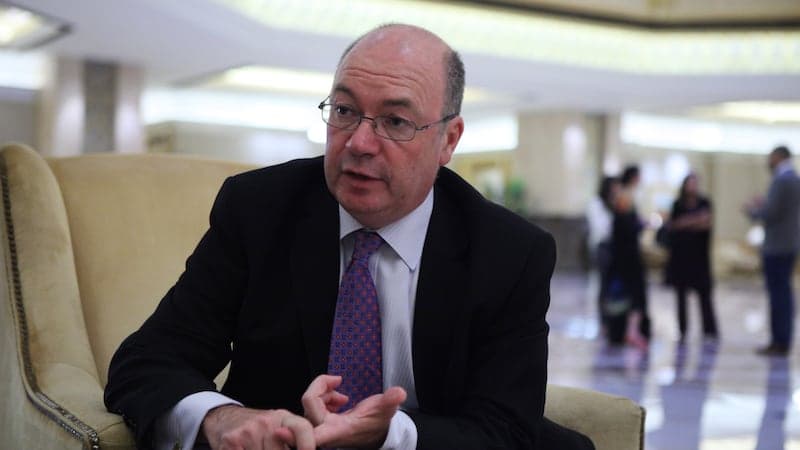
A month ago, the United Kingdom created the post of special envoy for complex consular cases — effectively the country's first representative for citizens arbitrarily detained abroad. The post was taken by Alistair Burt, who served as Minister of State for the Middle East from 2017 to 2019, when London sought the release of British nationals detained in Iran, including Nazanin Zaghari-Ratcliffe and Anoosheh Ashoori. The position was created amid growing pressure from detainees' families and their members of parliament; the model for the role is considered to be the American diplomat Roger Carstens, the US President's Special Envoy for Hostage Affairs.
Statement in Parliament
Speaking on Monday before the Foreign Affairs Committee of the House of Commons, Burt said that the practice of state-sponsored hostage-taking is intensifying, and that this is precisely what has driven growing international interest in a collective response. According to him, he has already met with counterparts from the Five Eyes and Gulf states to strengthen the network of affected countries. Britain expects to host the 'core group' of hostage envoys from among its Five Eyes allies next year: in Burt's view, this will give the meeting a higher level of representation and underscore London's serious concern about such practices. 'In fact, preventing this, persuading the states that act this way — that is a path that will bring them no success whatsoever,' he said.
The Foreman case and criticism from families
One of the most high-profile remaining cases is that of the couple Craig and Lindsay Foreman, sentenced in Iran to 10 years in prison on espionage charges. The detainees themselves and the British government reject the accusations, insisting they were innocent tourists. The family, which met with Burt in September, has repeatedly accused the government of acting too slowly. The newspaper The National notes that the case is complicated by the war between the US and Iran and by repeated, reportedly Iran-backed attacks on British territory, which have worsened bilateral relations.
Limits of the new role
Burt stressed that the envoy should not replace the work of the consular service, which already engages directly with other states on each case: 'It would be wrong to create the impression that the involvement of an envoy substantially changes this.' He also said he cannot publicly discuss individual cases without the families' consent, and acknowledged that families find themselves in impossible and exhausting situations when dealing with the government. 'In the end, for families there is only one criterion of success: they want their person back. That is the one thing that is beyond the gift and control of the United Kingdom. We are not the ones holding people — others are,' he noted. A similar concern was previously voiced by Zaghari-Ratcliffe herself, who spent six years in Tehran's Evin prison: while welcoming Burt's appointment, she feared the post could quickly become an 'excuse' for government inaction.