The key facts
- October 26 presentation to the president: master plans for healthcare infrastructure development for 2026–2036 for each region
- Inventory in 10 regions identified 3,499 facilities — 494 more than in the Cadastre Agency data
- In the Samarkand region, the districts' share of bed capacity is planned to increase from 41.7% to 67%, with 1,500 new beds in three districts by 2030
Presentation to the president and the problem of fragmented services
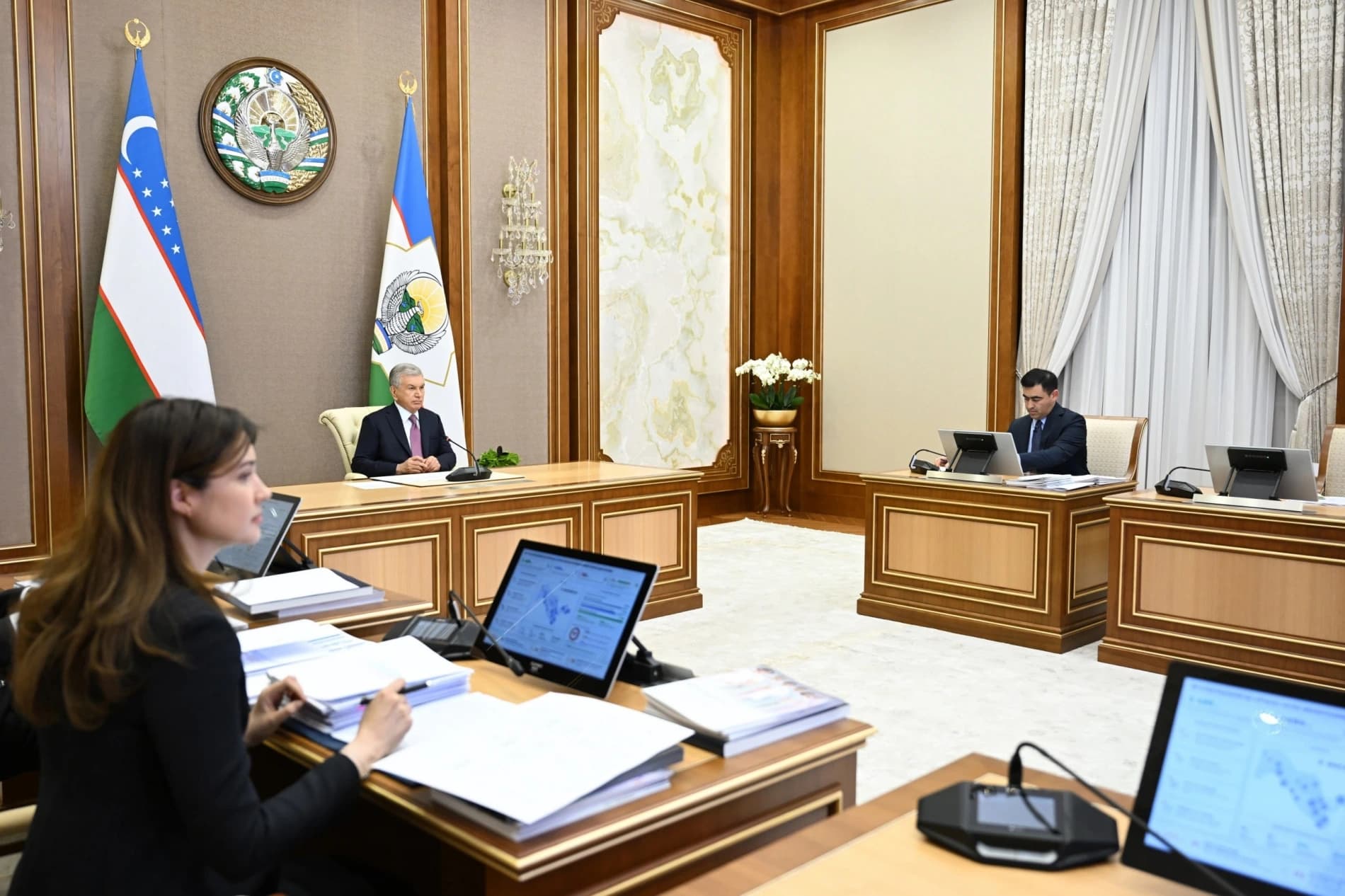
On October 26, President Shavkat Mirziyoyev reviewed a presentation on developing medical infrastructure based on a unified master plan for 2026–2036 and on expanding the private sector's participation in healthcare, the president's press service and the outlets reported Kun.uz, Gazeta.uz and Spot.uz. The reform is motivated by fragmented organization of services in a number of regions, irrational distribution of hospital bed capacity, and the use of outdated buildings and equipment, which affects the quality of care.
Inventory: more facilities than in the cadastre
The work is to begin with compiling reliable data on existing facilities. An inventory conducted in 10 regions identified 3,499 healthcare facilities — 494 more than recorded in the data of the Cadastre Agency. It is proposed to complete the inventory in all regions, create electronic passports for the facilities, and establish a unified digital registry of healthcare system real estate.
What the master plan will determine
Based on the collected data, master plans will be prepared for each region. They will take into account population size and growth, demand for medical services, facility capacity, and the time patients need to reach medical institutions. According to the president's press service, the master plan will determine which facilities to keep, merge or reconstruct, where to build new ones, how to equip them, and how many specialists will be needed; investment programs are also to be formed on the basis of these plans.
Samarkand region as an example
The need for redistribution was illustrated using the Samarkand region as an example: 80% of its population lives in districts, but only 41.7% of hospital beds are located there. The master plan envisages increasing the districts' share of bed capacity to 67%. New hospitals and reconstruction of existing ones are planned in Samarkand, Urgut, Pastdargom, Kattakurgan, Ishtikhon and Payarik; in Urgut, Kattakurgan and Pastdargom, a total of 1,500 new beds are planned by 2030. It is proposed to reorganize the specialized facilities of the regional center on the basis of multidisciplinary hospitals, and to develop central laboratories, sterilization and diagnostic services.
Unified requirements and the private sector
In addition to construction, it is proposed to introduce unified requirements for the design of polyclinics and hospitals: convenient patient flow, infection control, an inclusive environment, and room equipment. In clinical practice, clinical protocols based on international recommendations are to be adapted to national conditions, with their results regularly evaluated.
Outsourcing and long-term contracts
A separate block of proposals concerns the private sector. Public medical institutions will procure medical and support services on an outsourcing basis — hemodialysis, laboratory and diagnostic services, equipment maintenance — while private organizations purchase equipment at their own expense and ensure its operation and renewal. Instead of annual contracts, cooperation mechanisms of up to five years are proposed, allowing private partners to invest in equipment on a long-term basis. Also considered are unified tender documents, an electronic procurement system, and the transfer of certain facilities to professional companies for management.