The key facts
- The median equivalised household income of young people aged 18–24 in France is €23,850, the EU average is €21,482, 11th place out of 34 countries
- The median equivalised household income of young people aged 18–24 in France is €23,850, the EU average is €21,482, ranking 11th out of 34 countries
- In 28 of 34 countries, young people live in households with an income below the national median; in the EU this is 93.6% of the national level
- Experts note distortions: students in dormitories are excluded from the sample, and late moving out from parents inflates the figures
- Experts note distortions: students in dormitories are excluded from the sample, and late moves out of the parental home inflate the figures
Context: protests and attention to Generation Z
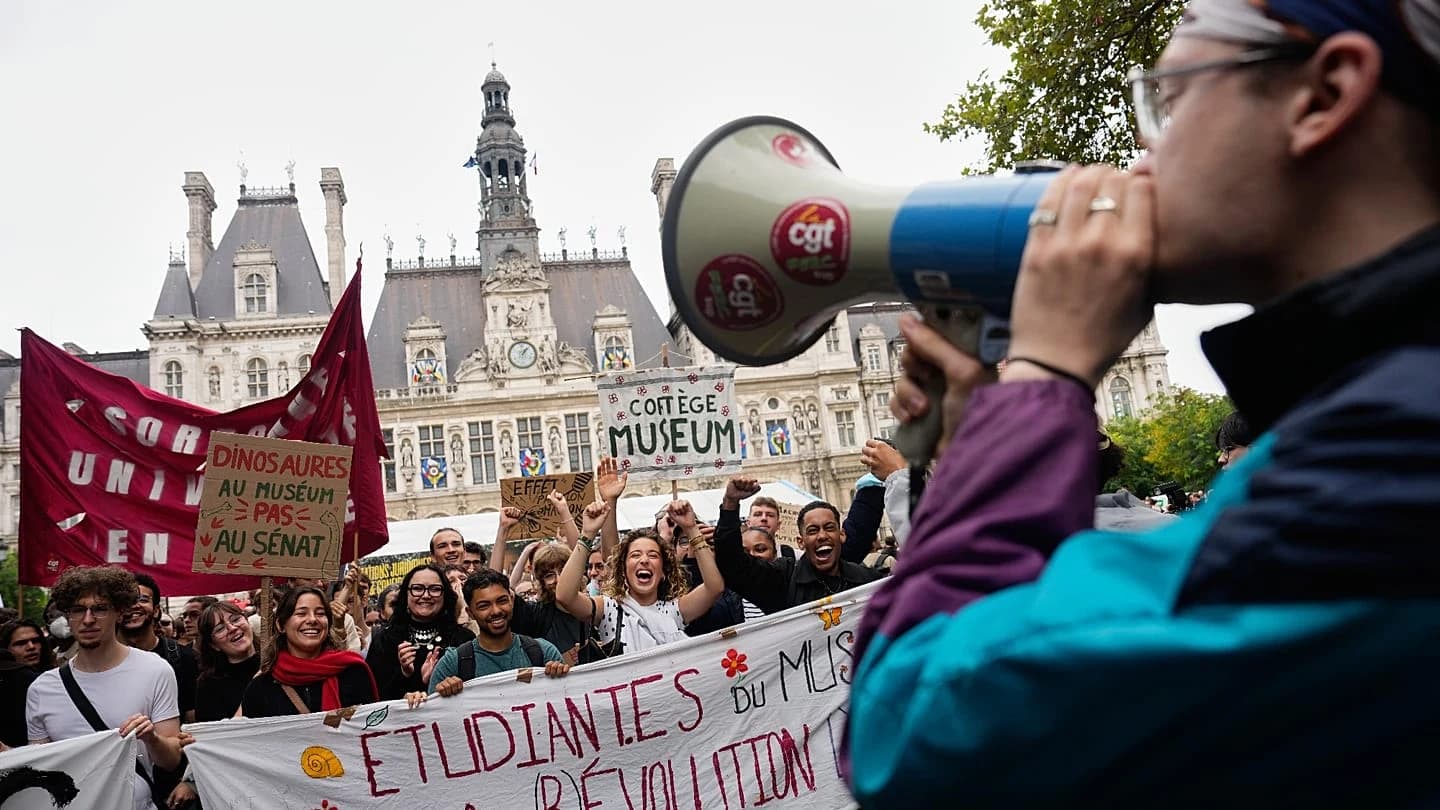
Against the backdrop of waves of protests in several European countries, driven by the rising cost of living, unaffordable housing, low wages and pressure on public services, the financial situation of young people has come into focus. In France, students and young people are at the forefront of the demonstrations. EU law expert Alberto Alemanno believes that portraying these protests as a 'teenage revolution' is deeply mistaken and stresses their multifaceted nature. Against this backdrop, Euronews examined Eurostat data on household incomes, in which young Europeans live.
What the indicator measures
Equivalised disposable income, as defined by Eurostat, is the total household income after taxes and deductions, available for consumption or saving, divided by the number of household members converted into equivalent adults; it includes social benefits. The data refer to people aged 18–24 and show the income of the household they live in, not their own earnings. It is an important benchmark, but, as the authors of the analysis themselves note, it does not reflect the full picture.
France and the ranking leaders
In France, young people live in households with a median equivalised income of €23,850 in 2025, compared with an EU average of €21,482 — 11th place among 34 European countries, including EU states, candidate countries and EFTA members. Switzerland leads (€52,206), followed by Luxembourg (€43,028) and Austria (€37,299). Among the four largest EU economies, Germany ranks highest (€26,330), while Italy (€20,315) and Spain (€19,338) are below the EU average. The lowest figures are in North Macedonia (€4,640), Albania (€5,736) and Türkiye (€5,987); figures in Bulgaria, Hungary, Serbia and Romania are also below half the EU average.
Limitations of the data
Anne Brunner, research director at the Observatoire des inégalités, pointed out that in France the indicator does not take into account students living independently or in dormitories — they are excluded from the sample. She also emphasised the heterogeneity of the 18–24 age group: it includes both students living with their parents and young low-skilled workers with precarious employment and a risk of poverty.
Young people lag behind in most countries
Comparison with the national median income shows that in 28 of the 34 countries, young people live in households with an income below the national average. For the EU as a whole, this is 93.6% of the median income of the entire population (€21,482 versus €22,939). In France it is 90.1%: €23,850 versus €26,459, a gap of €2,609. The largest gap is in Finland (74.9%), followed by Denmark (78.3%), Norway (82.7%), Luxembourg (86.0%) and Sweden (88.2%). In six countries, the household income of young people is above the national level: Croatia leads (105.7%), followed by Malta (105.5%) and Slovenia (105.4%). Ilari Ilmakunnas, senior researcher at the Finnish Centre for Pensions, explains the gap by shorter working careers, education and housing conditions. Brunner adds that in Nordic countries policy supports early independence, so income is measured against young people's modest resources, and the low share there should not be seen as a sign of greater hardship.
Purchasing power and a call to look broader
Taking into account price differences (purchasing power standards, PPS), Austria leads with 33,052 PPS, followed by Luxembourg (32,391) and Switzerland (29,989). France ranks 13th in PPS (21,446), slightly above the EU average; Germany is higher (24,237), while Spain (21,272) and Italy (20,883) are below. The Secretariat of the European Youth Forum notes that income is only part of the picture: in some countries young people appear better off on paper because they live with their parents longer, but behind the figures stands a generation that cannot afford to move out, rent or buy housing. 'The paradox is that young people appear better off the longer they depend on their families, and poorer when they start living independently,' the secretariat stated. The forum calls for taking into account 'social wages' — affordable housing, public services, education, healthcare and social protection, which determine people's real opportunities.