The key facts
- 38 students of the Music School of Chios performed with the Sing-Akademie zu Berlin choirs at Berlin Cathedral on 3 October
- 38 students of the Music School of Chios performed together with the Sing-Akademie zu Berlin choirs at Berlin Cathedral on October 3
- The exchange was organised by the Chios Music Festival and the Sing-Akademie with the support of the Greek-German Youth Foundation (ΕΓΙΝ/DGJW)
- The exchange was organized by the Chios Music Festival and Sing-Akademie with the support of the Greek-German Youth Foundation (ΕΓΙΝ/DGJW)
- The Greek group spent eight days in Berlin and took part in three concerts
A joint service at Berlin Cathedral
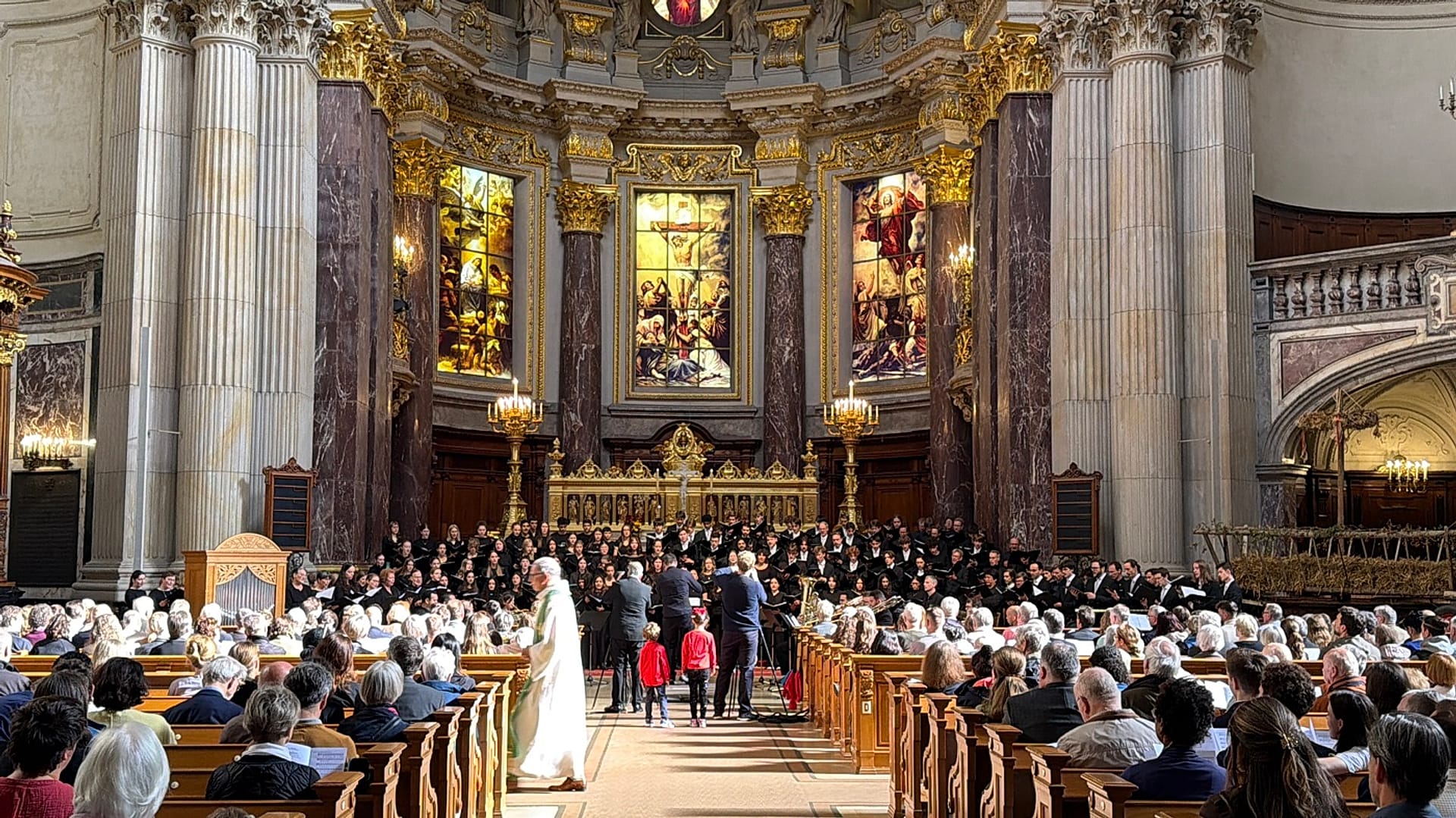
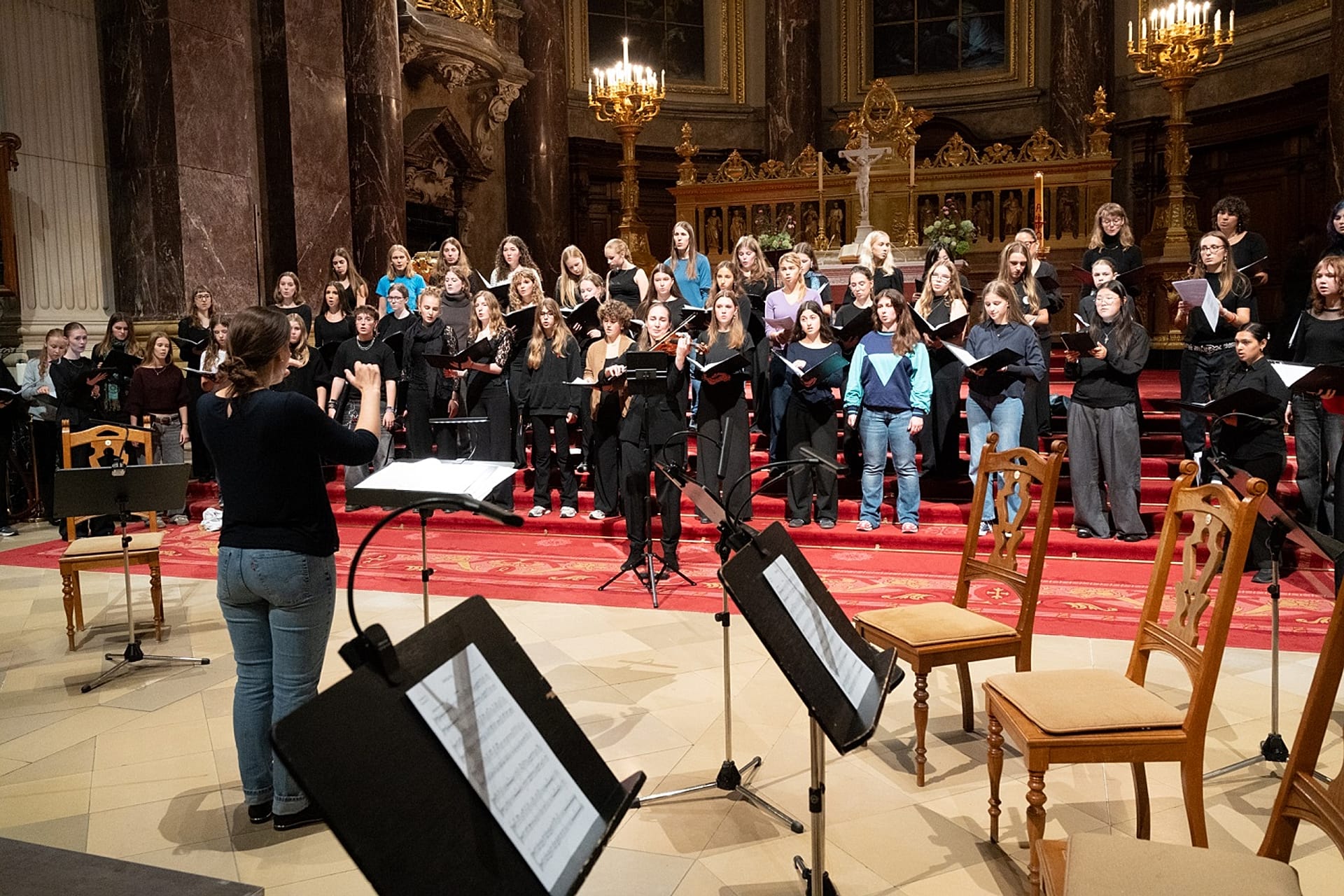
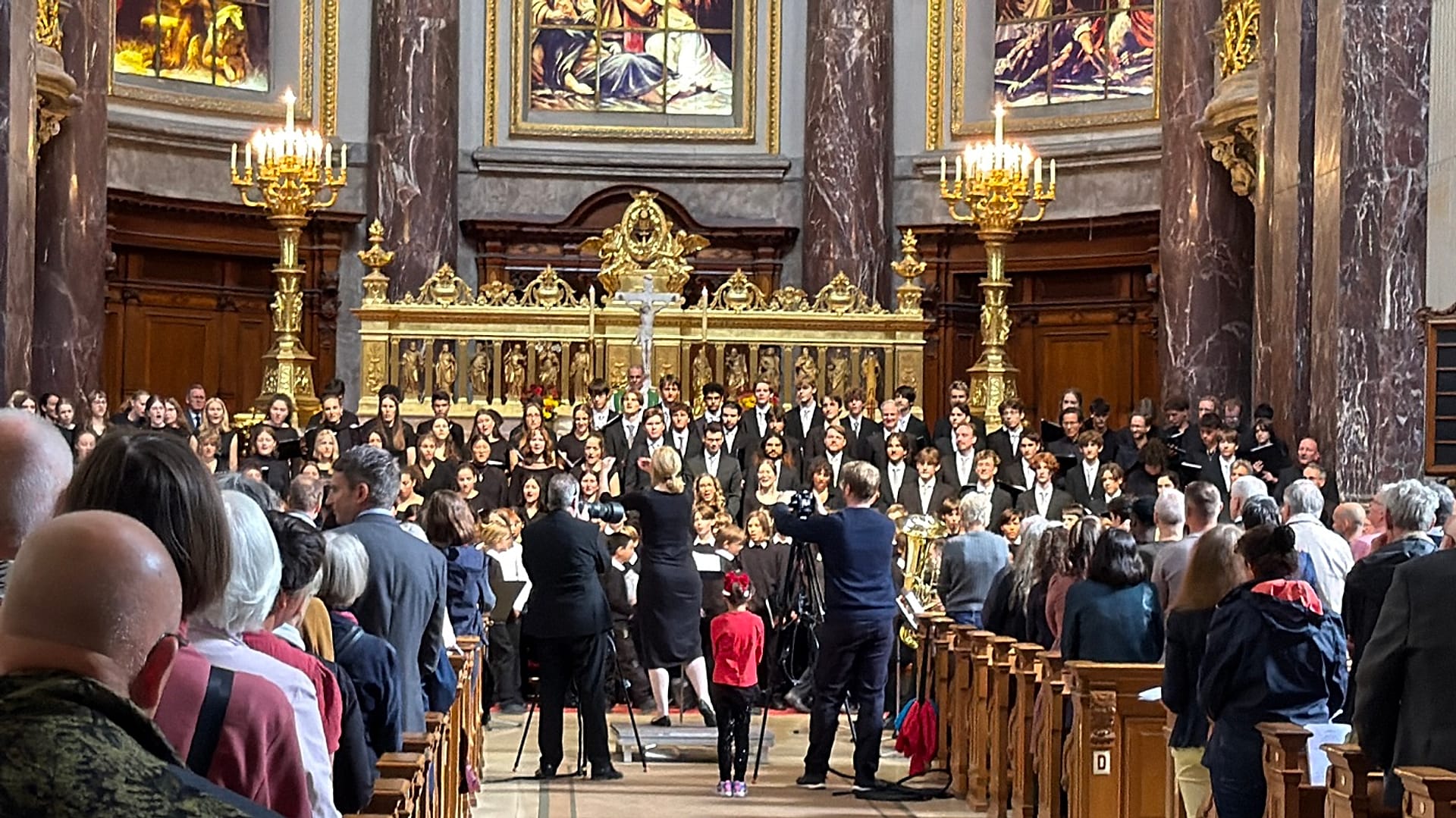
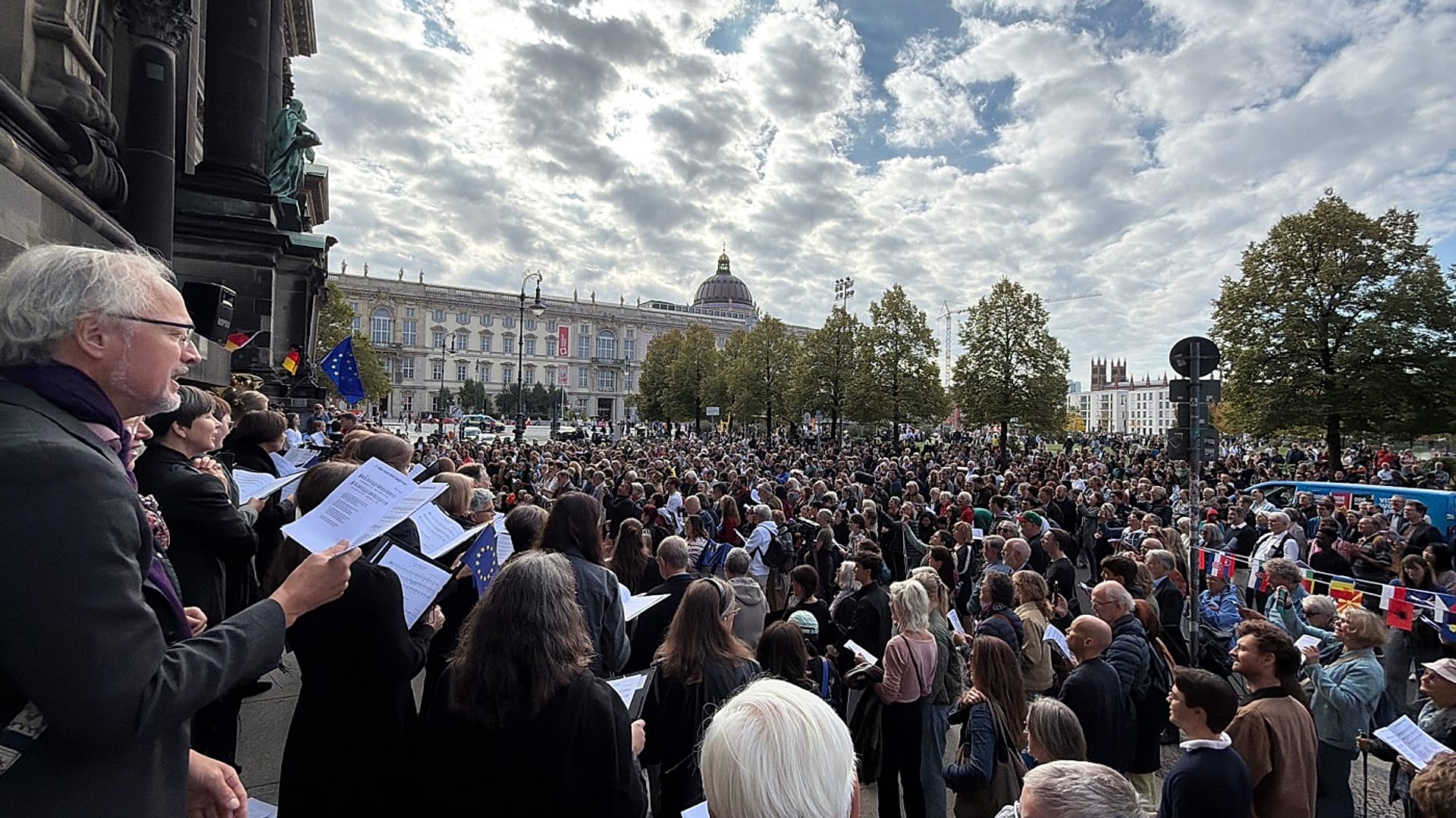
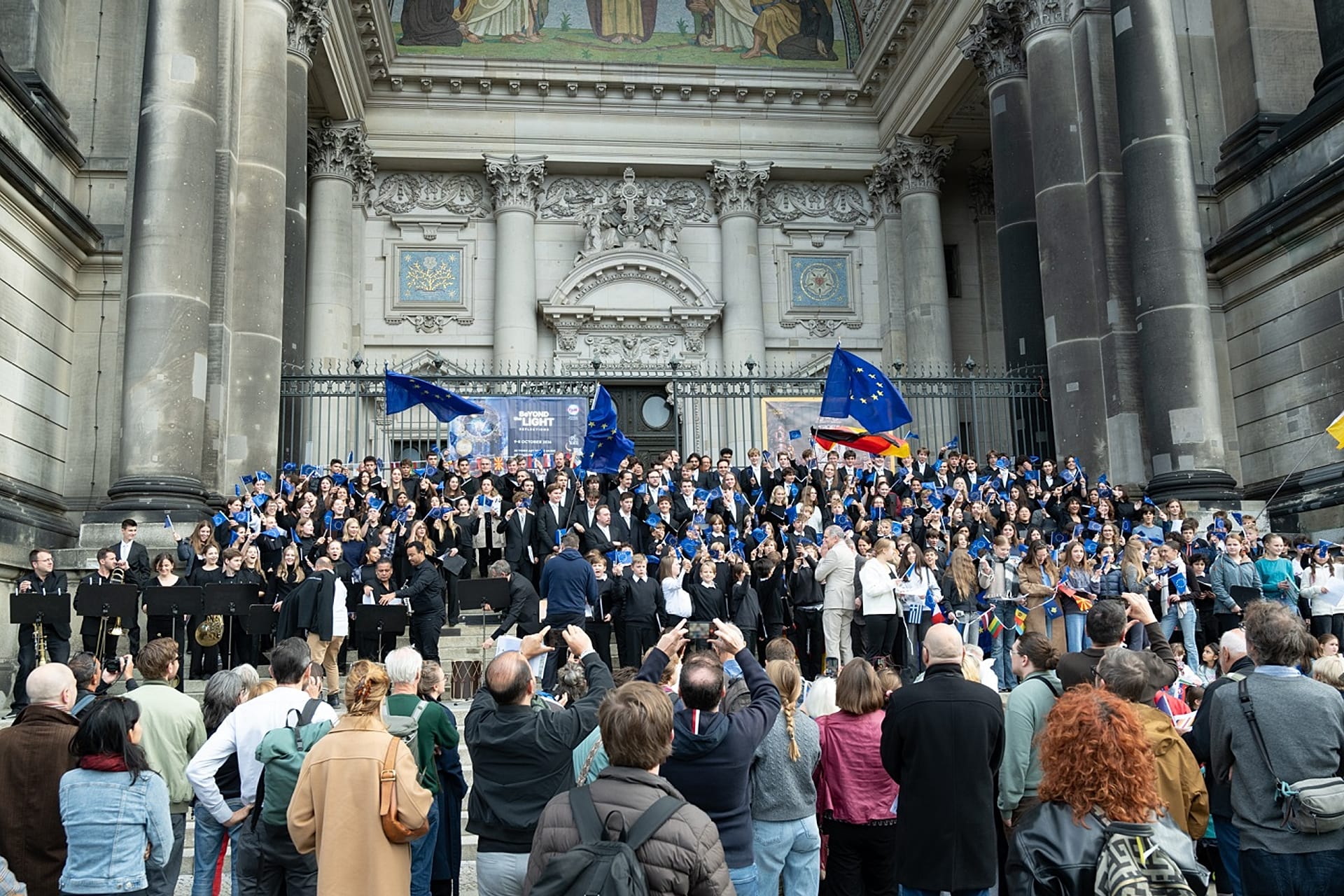
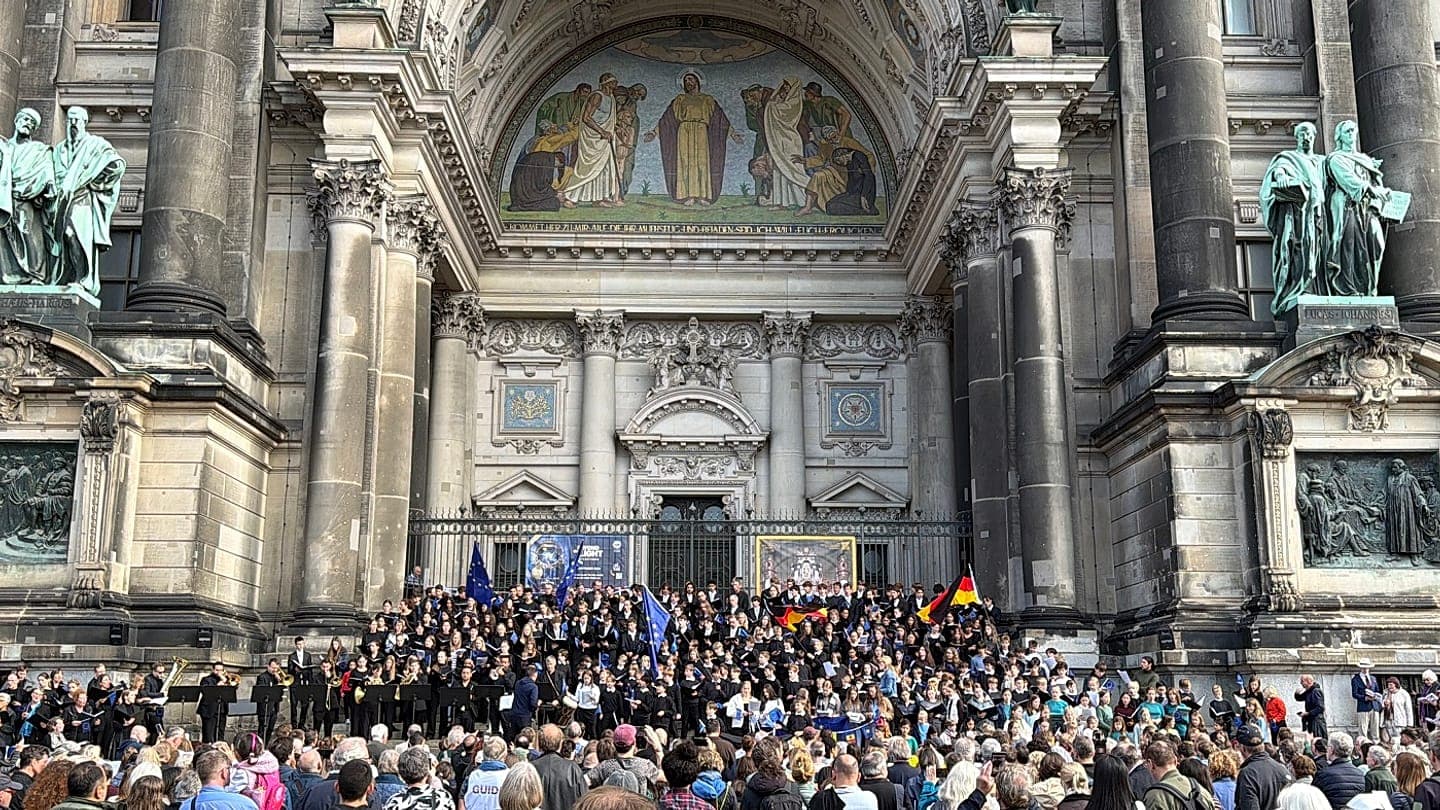
On 3 October, German Unity Day, around 240 Greeks and Germans sang together at a festive service in Berlin Cathedral. The Greek side was represented by 38 students of the Music School of Chios, who performed together with the choirs and ensembles of the Sing-Akademie zu Berlin. The programme featured works by Mendelssohn, Poulenc, Britten, Levandovsky and Holst, as well as Michalis Adamis's 'Ora kali' and Yannis Christou's 'Messa Latina'. The academy's artistic director Kai-Uwe Jirka conducted; he described the outcome of the meeting as deeply moving and stressed that young people from across Europe were singing shoulder to shoulder, sending a strong signal in support of Europe.
The story behind the 'Sing for Europe!' initiative
According to Jirka, the ceremony at the cathedral has been held for three years now, and after the service the participants come out onto the steps and sing 'for Europe'. He explained the origin of the tradition: three years ago, after the service at the Lustgarten, a far-right party held a rally, and the participants decided that this was unacceptable — they wanted to be together 'without hatred and racism'. Since then, the space has been reserved for choirs with the idea that 'what is Germany without Europe? And what is Europe without Greece?'. After the service ended on 3 October, the musical gathering continued on the cathedral steps overlooking the Lustgarten as part of the 'Sing for Europe!' initiative, where the choirs and a large crowd sang together.
The exchange as a continuation of cooperation
This is not the first joint performance: in August, as part of the 10th Chios Music Festival, more than 50 young singers from the Sing-Akademie zu Berlin spent a week on Chios with concerts at various venues across the island. Conductor Friederike Stamer, who founded the academy's women's choir 20 years ago, said that the exchange requires hard work — the musical style and language differ — but that the participants get to know another musical culture more deeply, and that making music together is, in her view, an unforgettable experience. The Greek group spent eight days in the German capital and took part in three concerts. The project was organised by the Chios Music Festival and the Sing-Akademie with the support of the Greek-German Youth Foundation (ΕΓΙΝ/DGJW).
Views of the organisers and participants
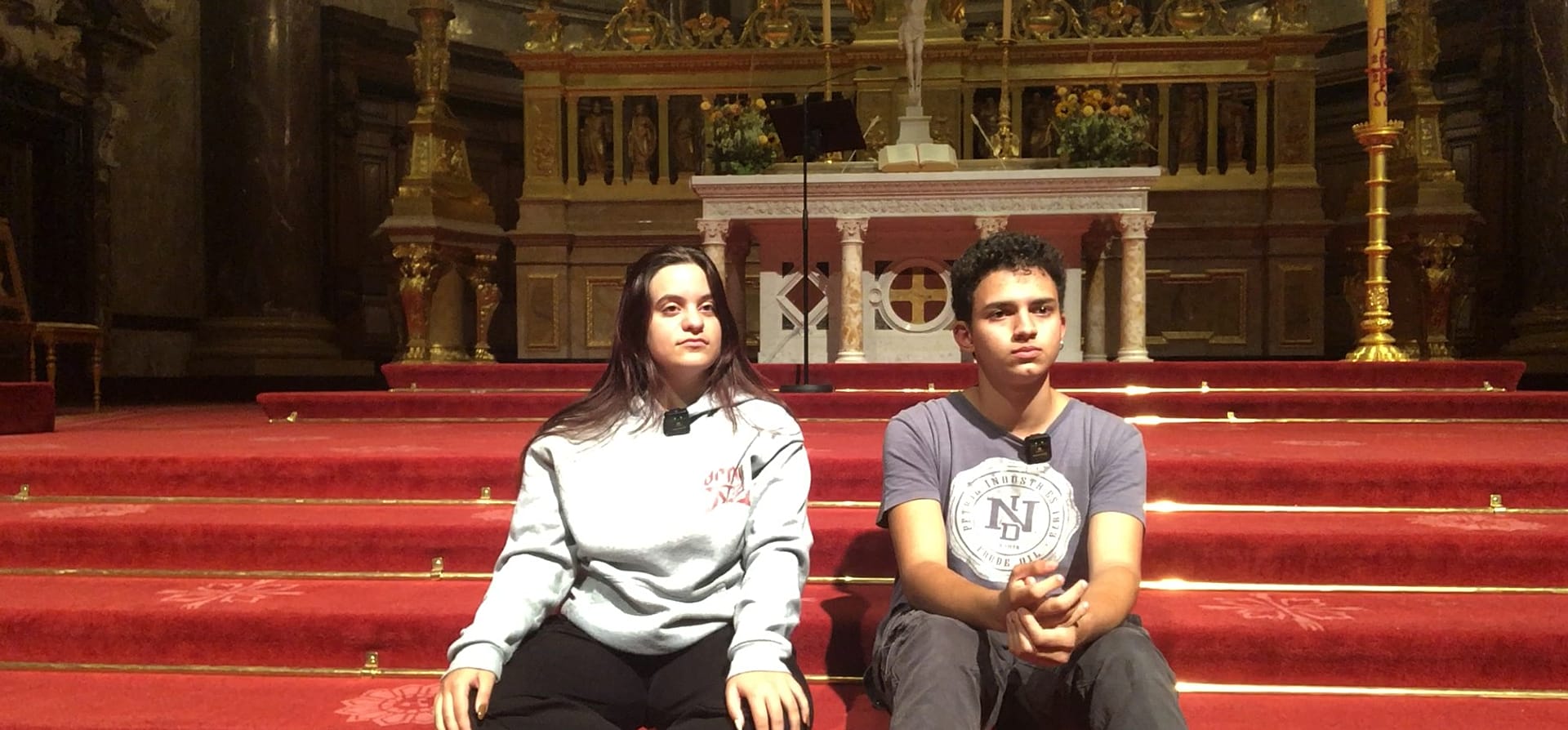
The festival's artistic directors, Olga Holdorf Miriagou and Lefteris Veniadis, highlighted the project's significance for young people. Miriagou stressed that the choir from Berlin has more opportunities than the children from Chios — an island 'on the edge of Europe'— which is why it is important to create opportunities on the island as well when the Berlin children come to visit. Veniadis spoke about the 'miracle' of singing German and Greek songs together and about a kind of 'osmosis' between the children. Among the participants, Orfeas Kirythras, a student of the Chios school, called the experience unique, while student Chrysa Noka admitted that she had doubts at first, but then adapted successfully. Berlin choristers Louisa Castellani and Elsa Krijnenburg noted the friendships they had formed and said that the shared language of music and English made communication easier; Castellani expressed the hope of repeating the collaboration next year.
Why it matters
The project shows how cultural exchange between a peripheral Greek island and a major European centre gives young musicians experiences they cannot have at home — something the festival organisers say outright. It primarily affects the students of the two music schools and their communities. Practical follow-through is already visible: the exchange has become two-way and regular — the Berlin choristers visited Chios in August, the Greek students spent eight days in Berlin, and the participants expressed hope for a continuation next year.