The key facts
- 15 young Canadians filed a lawsuit against the federal government in 2019; in 2023 the court of appeal ruled that the case must be heard on its merits
- The plaintiffs argue that governments violated their rights to life, liberty and security, and demand a 40–45% emissions reduction by 2030 relative to 2005 levels
- The trial takes place amid criticism of Mark Carney's government, which allows for missing climate targets and plans to expand oil production
Trial over Canada's climate policy
In Vancouver, a trial opened on Monday that participants and observers themselves call unprecedented for Canada: 15 young Canadians are trying to prove that the federal government violated their constitutional rights by acting insufficiently against climate change, AFP reports. The proceedings are expected to last five weeks.
The plaintiffs' demands and the government's position
The plaintiffs intend to prove that successive governments violated their constitutional rights to life, liberty and security by failing to protect them from climate-related threats. They are asking the court to order the state to reduce greenhouse gas emissions and meet previously set targets. The current targets call for a 40–45% reduction in emissions by 2030 compared with 2005 levels, however, according to AFP, the government of Prime Minister Mark Carney has already indicated that these benchmarks may not be met. The plaintiffs' lawyer, Catherine Bois Parker, told the agency that the defence will insist that climate policy is a political matter, not one for the courts; she herself argues that the plaintiffs are raising precisely a legal question: «When the government takes actions that harm citizens, the courts must decide whether those actions comply with the Constitution».
The five-year history of the case and personal testimony
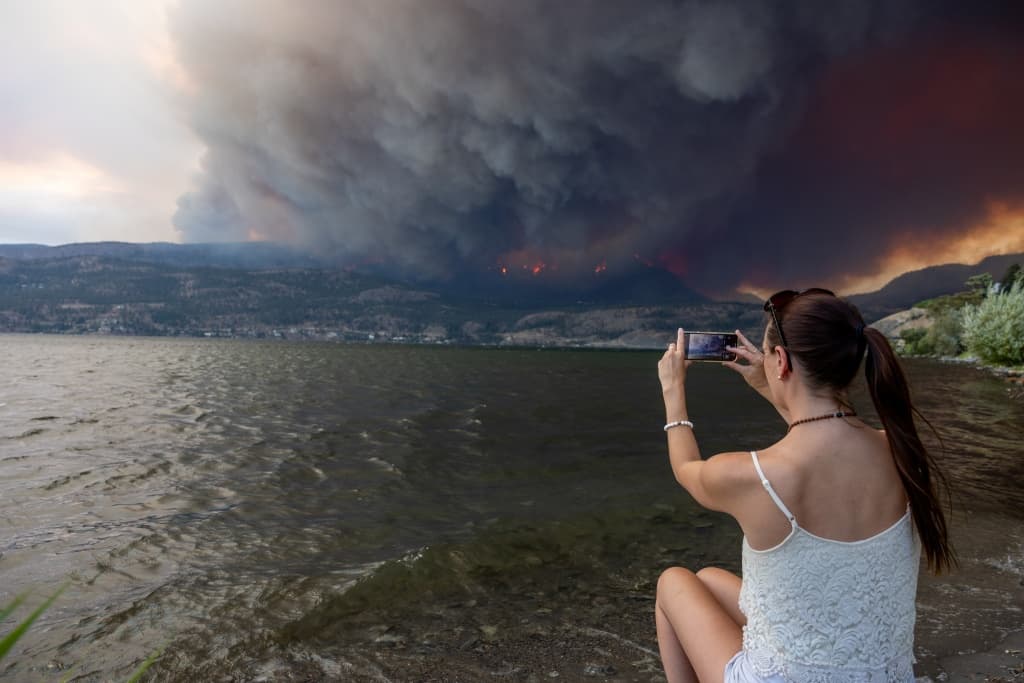
The legal battle began in 2019. The lawsuit was initially dismissed, but in 2023 the federal court of appeal ruled that the plaintiffs were entitled to a full hearing. As AFP notes, the case is unprecedented for Canada: federal courts have never examined whether climate protection is a constitutional matter. The plaintiffs want to show the court that they have already suffered from climate change and that this is not about speculative future risks. Lauren Wright from Saskatchewan, for example, recalled the 2015 wildfires that forced thousands of people to leave their homes: «The air was terrible. We couldn't breathe». Sadie Wypand, a 19-year-old from Calgary and another of the plaintiffs, said: «I'm finally getting my day in court, and my voice will finally be heard».
International context and political backdrop
The lawsuit is among hundreds of similar cases that environmental activists around the world are filing against governments, seeking accountability for climate protection through the courts. AFP notes that the Canadian case is compared with a lawsuit by young people in Germany, where the court ordered the government to strengthen its emissions reduction targets to protect young people's rights. Maria Antonia Tigre, director of global climate litigation practice at Columbia University's Sabin Center, remarked that climate rulings «travel between jurisdictions», and the Canadian trial «could genuinely contribute to the emerging body of precedent». The trial opens amid growing criticism of Carney from environmentally concerned Canadians. The prime minister argues that President Donald Trump's trade war forced Canada to reorient its economy away from dependence on the United States; part of his strategy is expanding oil production in Alberta, including a proposed new pipeline to the Pacific coast. These steps, along with the repeal of the consumer carbon tax, led to the resignation of minister Steven Guilbeault, the architect of the tough climate policy of Carney's predecessor Justin Trudeau.
Why it matters
The ruling in this case could, for the first time in Canada, determine whether climate protection is a constitutional obligation of the state, and, as Tigre notes, influence climate lawsuits in other countries. For the plaintiffs themselves and young Canadians, the outcome will determine whether the government can be compelled through the courts to meet emissions targets. In practical terms, the trial puts at centre stage the contradiction between the stated targets (a 40–45% reduction by 2030) and the government's admission that they may not be met, as well as its plans to expand oil production.