The key facts
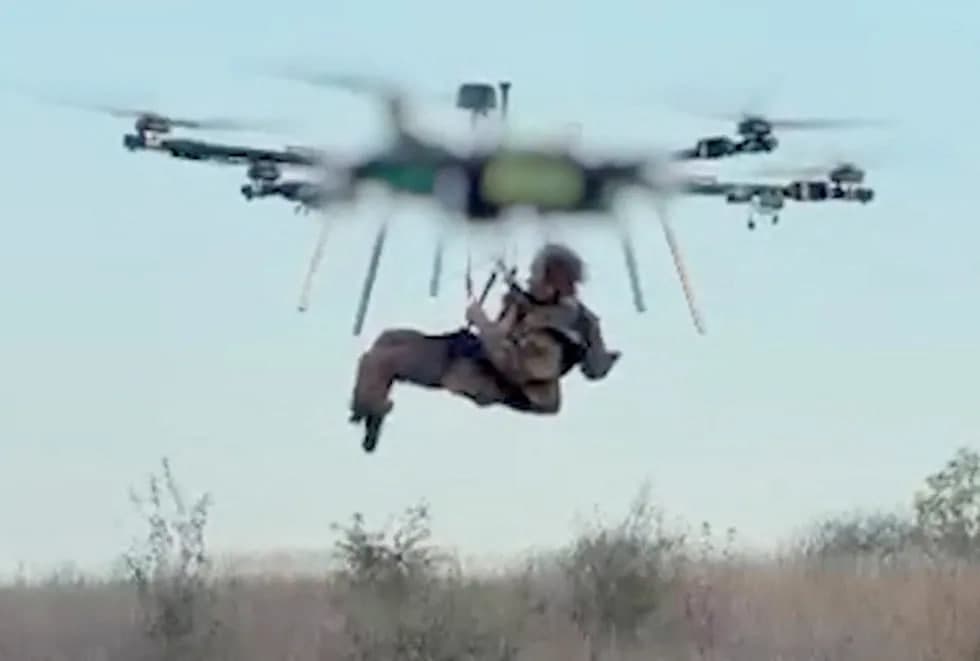
- Ukrainian troops have for the first time in history carried out a successful evacuation of a wounded soldier from the front line using a drone — Reuters reports, citing 49-year-old Konstantin Vlasenko.
- Vlasenko held a position in a trench on the Kupiansk direction for about 10 months, where supplies were possible only by air.
- Two ground robotic platforms sent to take him out were destroyed by Russian drones before reaching him.
The first-ever evacuation of a wounded soldier by drone
The Armed Forces of Ukraine have for the first time in history successfully evacuated a wounded serviceman from the front line using a drone, citing the Reuters news agency, reports Kun.uz. Reuters told the story of the rescue of 49-year-old Konstantin Vlasenko in his own words.
Ten months in a trench near Kupiansk
In May 2025, Vlasenko was serving on the Kupiansk direction in Kharkiv region. Together with a comrade who went by the call sign Basky, he held a position in a trench on the front line. Food and ammunition were delivered to them only by drone: according to Reuters, any movement along the front line could cost a life because of the huge number of enemy drones.
The rotation that never happened
In the autumn of 2025, the time for rotation came, but two fighters sent to replace them were killed before reaching the position. Then two more, sent to retrieve the bodies, were killed as well. According to Vlasenko, he then began to think that 'there was no way out of here alive.' In mid-February, after spending 10 months in the trench, he and Basky were forced to leave the position — the trench had flooded with water, and they moved into a destroyed school building. When they went outside to collect food and clothing dropped by drone, a Russian reconnaissance drone spotted them. Soon another drone struck the position, and that day 50-year-old Basky was killed.
The injury and self-amputation
During the shelling, Vlasenko injured the foot of his right leg, and the front part of the leg broke and twisted out of place. He managed to crawl to cover — a pit roughly 80 by 60 centimetres under a metal boiler used to heat the school. According to his account, his right leg gradually began to rot, and a bone was protruding from the shin of the front leg, so he decided to amputate both of his legs himself. 'I was forced to amputate them, because I would have had to crawl anyway. The bone was coming out more and more', Reuters quotes him as saying.
Failed evacuation attempts and the rescue by drone
When Vlasenko began to lose hope, his commanders set about finding a way to evacuate him, Reuters writes. Because of enemy drones, it was impossible to take him out in an armoured vehicle. First they tried to use a ground robotic platform, but Russian drones destroyed two such vehicles before they could reach him. In the end, the evacuation was carried out by drone — for the first time in history, the agency notes.
Why this matters
This event shows how survival conditions on the front line have changed: according to Reuters, supplying and rotating Vlasenko's position was possible only by air, while two ground platforms and an armoured vehicle failed to reach him. For military medics and commanders, this means that the drone is becoming the only workable evacuation tool in zones completely swept by enemy drones. The details of the drone operation itself — the time, the distance and the type of aircraft — are not disclosed in the report, so it remains unknown exactly how the wounded man was transported.