The key facts
- About 400 words starting with the letter “yu” were counted in Russian based on an analysis of several dictionaries
- The count included rare vocabulary, proper names and variants of personal names
- Petrovsky’s dictionary yielded about 70 names and patronymics starting with “yu”
Counting words starting with the letter “yu”
The Russian language turned out to contain about 400 words beginning with the letter “yu”. Specialists arrived at this figure after studying several authoritative dictionaries. The results of the count were shared with RIA Novosti by Pavel Katyshev, head of the Department of General and Russian Linguistics at the Pushkin Institute. According to him, the vocabulary for this letter is richer than it might seem: besides the familiar “yubka” (skirt), “yunost” (youth), “yumor” (humour) and “yurist” (lawyer), rare vocabulary, proper names and variants of personal names were also taken into account.
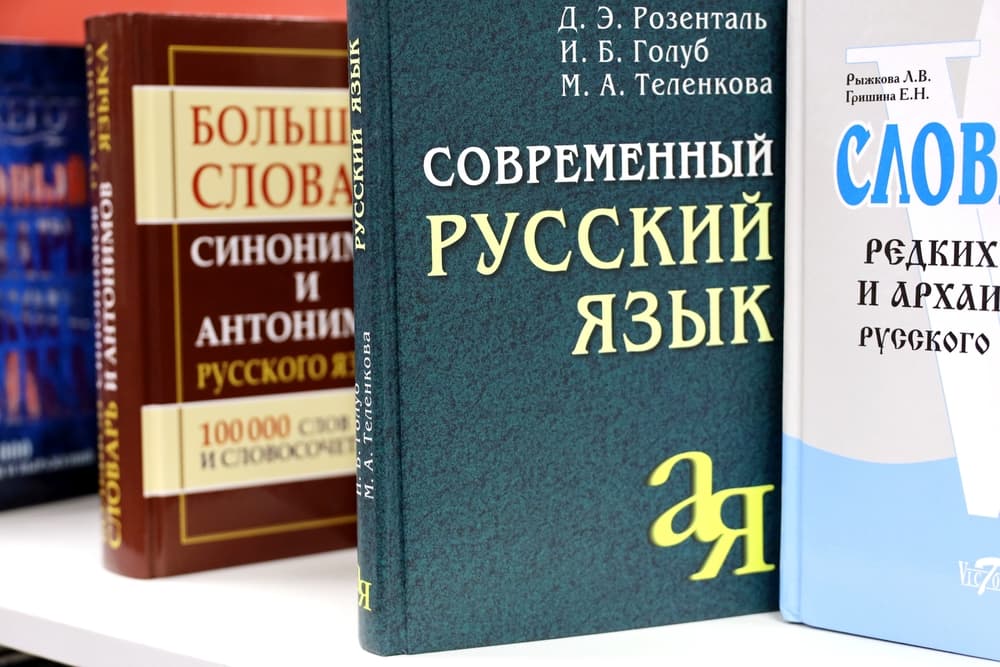
How the count was done
To compile the fullest possible list, the researchers compared materials from several publications: the Large Explanatory Dictionary of the Russian Language edited by Sergei Kuznetsov, the dictionary of the state language of the Russian Federation, the works of Vladimir Khimik and Tatyana Efremova, as well as reference books on personal names and names of residents. After merging the lists, removing duplicates and adding missing entries, approximately 400 items were obtained. Personal names and patronymics made a notable contribution: Nikolai Petrovsky’s dictionary yielded about 70 such entries, including various forms and spelling variants.
Limitations of the result and context
The resulting figure should not be considered final for the language as a whole: it reflects the results of analysing the selected dictionaries and depends on which categories of words are included in the count. The editorial team notes that this limitation follows directly from the methodology — the merging of specific dictionary lists rather than an exhaustive account of all vocabulary. Separately, Life.ru previously reported, citing a linguist, that the stress patterns “vrúchit” and “svérlit” are still considered incorrect, but due to their spread in living speech they may, over years or decades, enter dictionaries as acceptable variants; an example is the word “vklyuchit”, where the variant “vklyúchit” is already recognised as acceptable alongside the primary “vklyuchít”.
Why this matters
The count shows that even a rare initial letter is represented in Russian by hundreds of dictionary entries, including about 70 personal names and patronymics in Petrovsky’s dictionary alone. For lexicographers, teachers and editors this serves as a guideline: the completeness of lexicographic lists depends directly on which sources and categories of words they combine, and stress norms, as the example of the word “vklyuchit” shows, can officially change over time.