The key facts
- Adrian Dredge's essay won the Association of British Science Writers' award for 2026
- Research shows that crime 'hot spot' predictions rely on biased data and reinforce bias
- Research shows that crime 'hot spot' predictions rely on skewed data and reinforce bias
- Dr Dimitrios Kolias of Queen Mary University of London believes modern systems account for historical biases but calls for human oversight
Award for an essay on AI and policing
The growing use of artificial intelligence in policing risks intensifying discrimination against minorities — researchers warn in an essay by young British science writer Adrian Dredge, which BBC News published on 25 October 2026. The work won the Young Science Writer Award 2026, awarded annually by the Association of British Science Writers (ABSW). The authors call for a rethink of AI use in policing with greater human oversight.
An 'old map' and a feedback loop
Dredge explains the problem through an analogy: AI is like a cartographer locked in a windowless room who has only fifty-year-old maps. If such a system is given a list of past crimes and asked to mark where new ones are likely, the police will begin patrolling the marked areas — and more crimes will be recorded there simply because there are more officers there. As a result, on the next 'map' the same zones are shaded even darker: the statistics reflect not all crimes, but partly where the police chose to look.
Research data and objections
Sociologist Sarah Brayne of the University of Texas at Austin, who studied the Los Angeles police, established in a paper in American Sociological Review that the data are biased: crimes in public places are more likely to be recorded, and police attention is disproportionately focused on Black neighbourhoods. According to her, the models create a 'feedback loop' in which they not only predict but also contribute to future events. This view is disputed by Dimitrios Kolias, an associate professor at Queen Mary University of London: he told BBC News that modern systems do not simply copy training examples but combine information in new ways, although he acknowledges that as AI autonomy grows, safety and 'meaningful human control' must be ensured.
'Dirty data' and an example from healthcare
Researchers at New York University point to the problem of 'dirty data': in nine of the 13 US districts they studied, the data available for training systems came from periods of unlawful or biased policing, including fabricated statistics and arrests of innocent people. A system cannot detect corrupted data and reproduces it as a pattern; in the researchers' view, technical fixes from vendor companies are not enough without independent verification of the data's provenance. A medical example is telling: a 2019 study in the journal Science showed that an American AI system that allocated additional care to patients based on predicted costs unfairly favoured white patients, because less was spent on Black patients. After re-tuning it to predict illness severity, the share of Black patients selected for care would have risen from roughly 18% to 47%.
What the researchers propose
Dr Carolyn McKay, an associate professor and researcher in digital justice at the University of Sydney Law School, believes that public policing functions should be subject to human oversight: data need to be checked and cleansed of biases. She notes that even systems that used information about places rather than people, according to critics, still led to over-policing. Kolias, by contrast, suggests that a carefully designed and independently verified AI system could make hidden biased patterns measurable and visible — and thereby help eliminate them. Both sides agree on one thing: without human involvement, AI risks cementing yesterday's mistakes.
 Image source, Markus Spiske
AI can magnify biases contained in past police data, researchers say

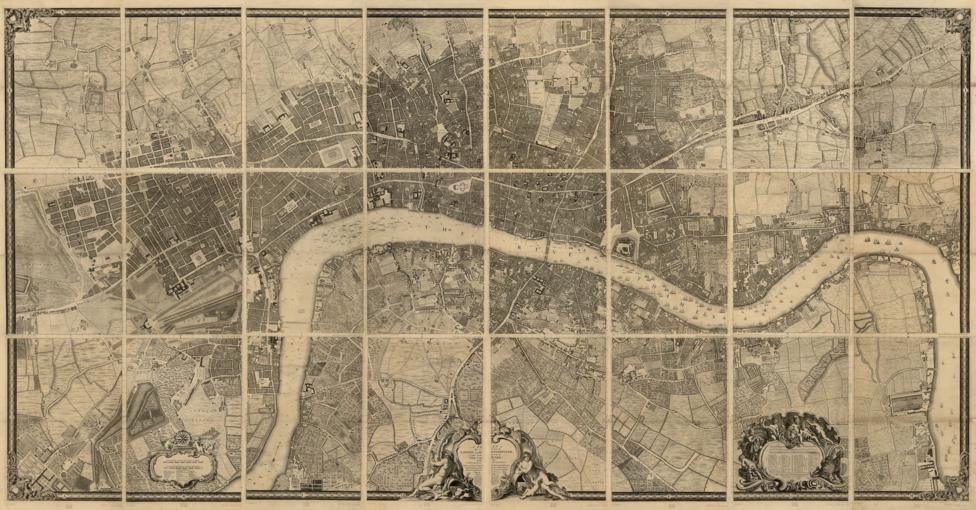 Image source, Rocque Pine Tinney
AI can be thought of as taking wrong turns by relying on an old map
 Image source, ABSW
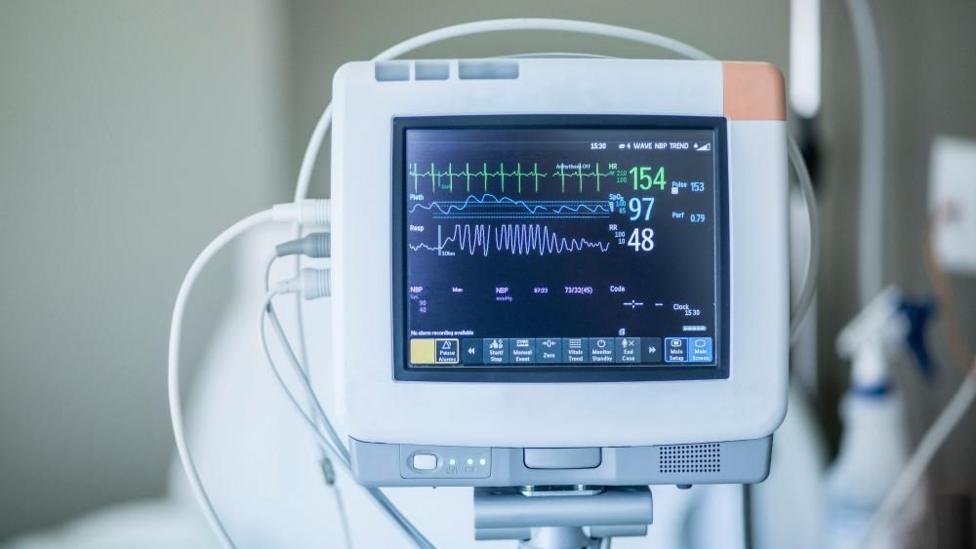 Image source, Getty Images
An AI system showed bias when allocating funds for healthcare, according to a study in 2019