The key facts
- Nearly half of surveyed parents reported that their children aged 13–17 consumed protein products over the past year (University of Michigan survey, 2024).
- The DGE recommends 0.9 g of protein per kilogram of body weight per day for teenagers; about half of German children aged 6–17 consume more than double that amount.
- Undeclared doping substances have been found in protein products; such products often contain sugar, sweeteners, and additives.
Teenagers are increasingly consuming protein products
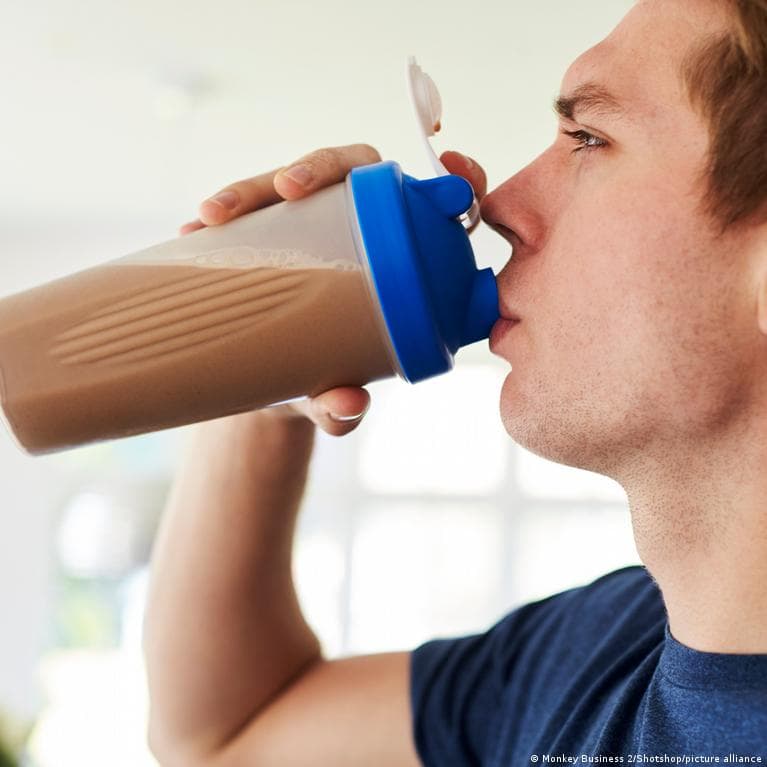
Protein is sold not only as powders and bars: fortified products such as Kindershake and Teen Balance are aimed at a young audience. According to Deutsche Welle, citing a representative 2024 survey by the University of Michigan covering nearly 1,000 parents, just under half reported that their children aged 13–17 had consumed protein products over the previous year. Boys did so more often than girls, especially in connection with sports and building muscle mass; girls — to balance their diet and lose weight. According to Statista, retail revenue from fitness protein products in Germany from March 2024 to March 2025 grew by about 25%.
How much protein is actually needed
According to the recommendations of the German Nutrition Society (DGE), healthy adults need 0.8 g of protein per kilogram of body weight per day, teenagers 0.9 g (for example, a teenager weighing 45 kg needs 40.5 g), and people over 65 and children aged one to four need 1 g. This requirement can be met with ordinary food: oatmeal, potatoes with quark, and whole-grain bread with peanut butter already provide the necessary amount, DW notes. At the same time, a 2015–2017 study in Germany showed that about half of children and adolescents aged 6–17 consume more than twice the recommended daily amount of protein.
Risks of excess protein and product composition
According to the DGE, excess protein can be harmful in the long term: studies show that children who consume too much protein, especially animal protein, often become overweight, and in some puberty begins earlier. Excess protein puts a strain on the kidneys, which have to convert amino acids into urea; the risk is higher with insufficient fluid intake or pre-existing kidney damage, but teenagers are also in a higher-risk group. Protein powders and bars are often fortified not only with vitamins but also with sweeteners, sugar, additives, and flavorings. The German Sport University Cologne found doping substances in protein products advertised for muscle growth. Another possible side effect for teenagers: powders usually consist of milk proteins, which can increase sebum production and trigger or worsen acne, although a direct link has not been definitively proven. Experts also worry that shakes may replace regular meals for teenagers, reducing their intake of fiber, micronutrients, and healthy fats.
Athletes do not need supplements
Protein requirements are indeed higher for physically active people: according to a DGE position paper, those training more than five hours a day are recommended 1.2–2 g of protein per kilogram of body weight, spread over several portions. Protein helps with satiety and may contribute to weight loss, but in the long term the decisive factor is the balance of calories consumed and expended. At the same time, the DGE advises athletes to meet their needs by optimizing their diet: there is no scientific evidence that protein-fortified supplements are necessary under training loads. Taking protein preparations may make sense only in cases of allergies, digestive problems, chewing or swallowing difficulties, or very low appetite. Another downside is the price: in a 2022 study, consumer organizations found that naturally protein-rich products (cheese, quark, soy drinks) are often more expensive when the manufacturer emphasizes their protein content.
Plant-based protein as an alternative
Plant proteins usually contain somewhat fewer essential amino acids than animal proteins; however, whole grains, legumes, and nuts are rich in fiber, vitamins, and unsaturated fats. Therefore, the DGE recommends increasing protein intake primarily through plant-based sources.
Why this matters
The growing market for protein products directly affects teenagers and their parents: data from a University of Michigan survey and rising revenues in Germany show that such products have already entered young people's everyday diets, even though about half of German children aged 6–17 already exceed the recommended protein intake by more than twice. The practical takeaway from these facts: according to DGE recommendations, a regular diet covers the needs of even those who train, and choosing fortified products means overpaying and risking exposure to sweeteners, sugar, or undeclared substances. Parents should bear in mind that the composition of such products and their effects on teenagers' kidneys and skin are the subject of well-founded concerns among experts.