The key facts
- Thousands took part in Saturday's rally in Tirana; police used water cannons, tear gas and rubber bullets, while protesters used firecrackers and stones
- The health ministry reported 13 injured: nine demonstrators, two journalists and three police officers; since mid-October, more than 300 people have been injured according to the authorities
- Organizers announced a new rally for Sunday from 12:00 GMT; Prime Minister Edi Rama blames 'foreign actors,' Russia and Iran for stirring up unrest
Another day of unrest in the capital
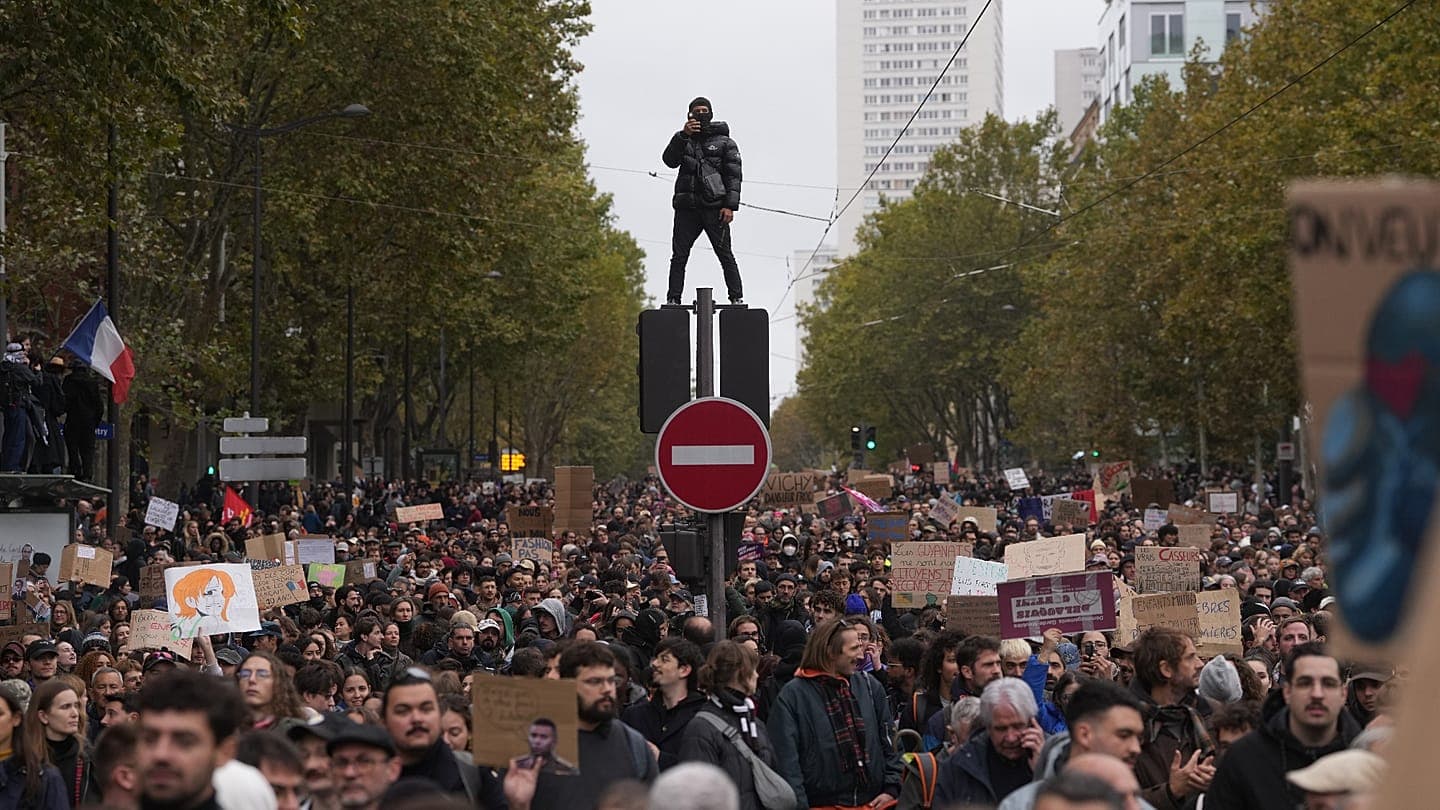
Thousands of people gathered in Tirana on Saturday for a new anti-government rally amid days of unrest in the Albanian capital, AFP reports. Police used tear gas to disperse the crowd, as well as water cannons and rubber bullets, after a group of demonstrators pelted the education ministry building with stones — a focal point of the protests, many of whose windows had been smashed in previous days. Some protesters, for their part, used firecrackers against security forces.
Casualties and detentions
The Ministry of Health reported that 13 people were injured in Saturday's rallies : nine demonstrators, two journalists and three police officers. According to the authorities, since mid-October several government buildings have been attacked, dozens of demonstrators have been detained, and the total number of injured among protesters and police has exceeded 300. The organizers called for new protests on Sunday from 12:00 GMT.
Broad support and demands
Saturday's rally drew students and other residents from across Albania; university faculty associations, artists and opposition parties declared their support. Many shops closed in advance, and some left messages on their shutters such as 'Don't touch us. We are with you.' Among the placards of teachers and professors were 'No violence,' 'Transparency' and 'Democracy in danger.' The activist Sidorela Vatnikaj called the movement a 'revolution', stressing that it is not only about students and the environment, but also about the rule of law.
From the Trump hotel to demands for resignation
The protests began in May over a luxury hotel project linked to the family of US President Donald Trump: in July, scientists said construction had already caused irreversible damage to a stretch of Albania's coastline. Since mid-October, the rallies have grown into a broad movement against corruption demanding the resignation of Socialist Prime Minister Edi Rama. According to Transparency International, Albania ranks 91st out of 182 countries on the Corruption Perceptions Index.
The authorities' position and the symbol of burned dialogue
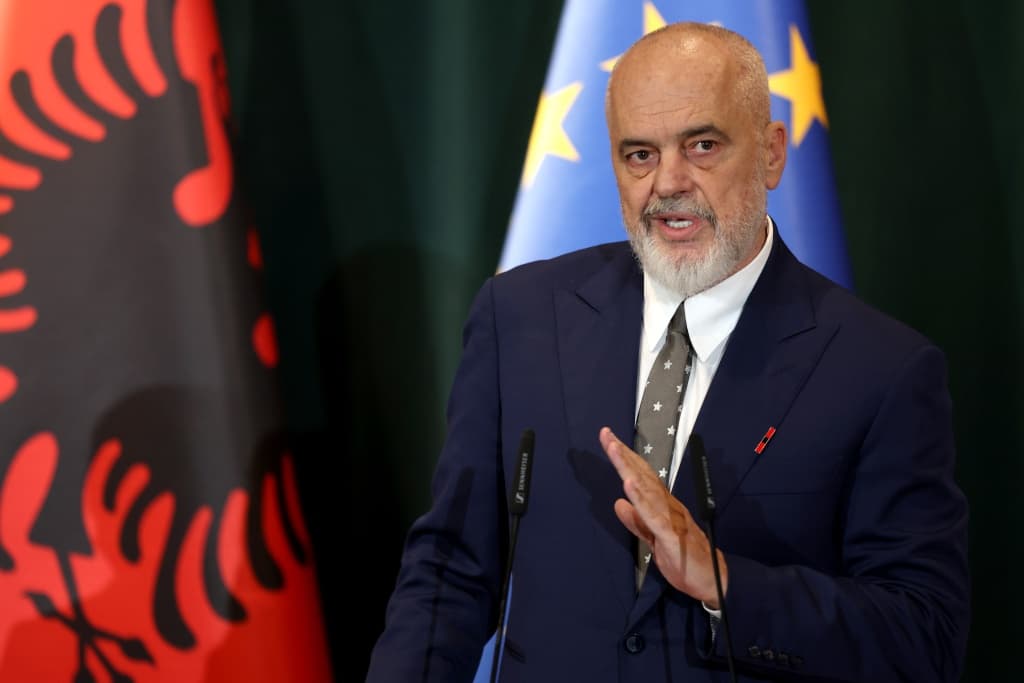
Rama blamed the violence on 'foreign actors' and accused Russia and Iran of spreading disinformation online, while at the same time calling for 'dialogue.' Earlier, he published photographs of about 40 people identified by initials, whom he accused of violence, and demanded the resignation of the heads of dozens of state institutions. The symbolic gesture of dialogue — red cushions around an improvised concrete table outside the government building — remained empty and were then set on fire by hundreds of protesters. The demonstrators emphasize their independence from parties and blame the entire political class: on Saturday, chants of 'Rama to prison' and 'Berisha to prison' were heard, directed at both the prime minister and the long-time opposition leader Sali Berisha.
The social context of the protest
The participants' motives illustrate the country's socio-economic situation: since the fall of communism in the 1990s, more than 1.5 million people have left Albania, the population now stands at 2.3 million, and the average pre-tax salary is 930 euros per month. 'We are here for one reason: we want to stay in our country,' first-year medical student Rosela Mira told AFP. Her school-age sister described deteriorating learning conditions: 40 pupils in a class and a shortage of laboratories. Law student Fabiola Nikaj said she has to work several jobs to help her parents, who live on small pensions. An editorial conclusion from these facts: the movement combines student, environmental and anti-corruption demands against the backdrop of mass emigration, making it broader than ordinary party opposition; meanwhile, the key contradictions — responsibility for the violence and the authorities' readiness for dialogue — remain unresolved, and the announced rallies on Sunday may prolong the escalation.