The key facts
- The rallies took place on Saturday in Istanbul and Ankara; police estimated at least 3,000 participants in each city
- According to the Turkish Journalists' Union, 11 journalists have been arrested and several media outlets closed over two months
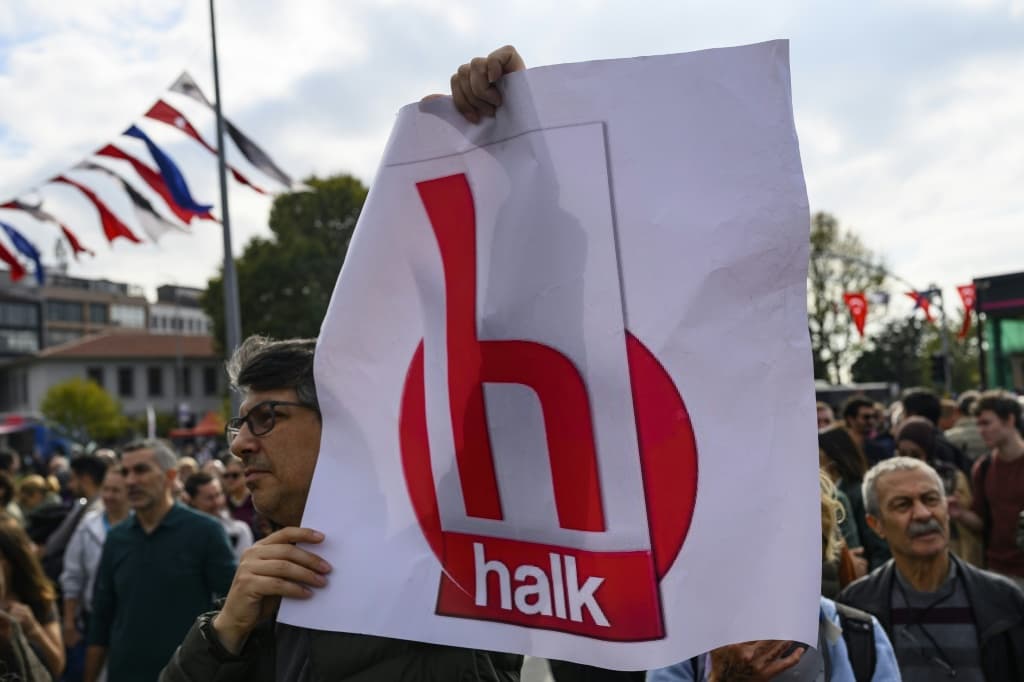
- Earlier in October, police raided the Halk TV channel, halted its broadcast, and appointed an administrator; before that, the website and social media of the outlet T24 were blocked
Mass rallies in two cities
On Saturday, protests were held in Istanbul and Ankara against pressure on journalists, which participants described as a surge in arrests, media closures, and the appointment of state administrators to newsrooms. According to police figures cited by AFP, at least 3,000 people gathered on the Asian side of Istanbul, and at least another 3,000 in Ankara. The crowd consisted mostly of journalists, human rights defenders, and members of opposition parties; demonstrators held photographs of detained colleagues and chanted slogans against censorship and for the release of arrested journalists.
What preceded the rallies
According to the Turkish Journalists' Union, over the past two months the authorities have detained 11 journalists and shut down several media outlets. Earlier in October, police raided Halk TV, the country's most popular news channel: broadcasting was halted and a government administrator was appointed to the newsroom. Before that, the website and social media accounts of the leading digital outlet T24 were blocked — officially, over 'LGBT propaganda.' Both moves, AFP notes, became part of the pressure on media critical of President Recep Tayyip Erdogan and his government.
Journalists' reaction and the authorities' position
The head of the Turkish Journalists' Union, Gokhan Durmus, told AFP that the nature of the government's 'attacks' on the media is changing: recent restrictions, access bans, and the appointment of administrators have affected the most popular TV channels and platforms, and, in his words, a system of 'one voice, one source of news, one centralized management' is taking shape. Veteran journalist Zafer Arapkirli, a columnist for BirGun who is himself a defendant in lawsuits, called the rally a defense not only of journalists but also of society's right to access information. In Ankara, a letter from imprisoned BirGun journalist Ismail Ari from Sancak prison was read out to participants: he wrote that he is being held in custody 'only for doing his job.' Ari was arrested this month — for the second time in seven months — on charges of 'insulting a public official' and 'publicly spreading misleading information' following a complaint by broadcasting regulator chief Ebubekir Sahin. According to AFP, the Turkish government has repeatedly stated that it does not arrest or imprison journalists for their work.