The key facts
- About 67,000 Israelis from the US and Europe entered Israel to vote — 25% more than expected.
- Their votes are equivalent to roughly two of the 120 Knesset seats, which is significant in a close race.
- Those arriving speak of the need to change the government after October 7 and the war in Gaza, in which 74,000 people have been killed over three years.
Voters arriving from abroad could influence the outcome of the election
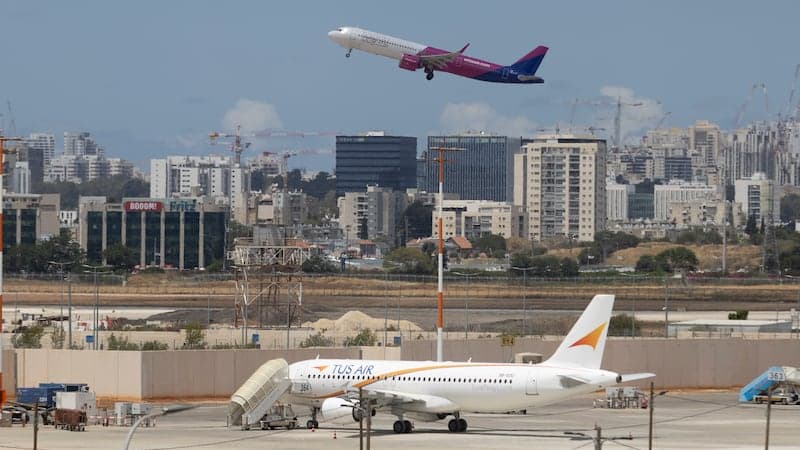
Thousands of Israelis living abroad are flying into the country to vote for 'change' in government and to end Benjamin Netanyahu's tenure as prime minister, voters told The National. According to estimates, about 67,000 Israelis residing in the US and Europe entered the country to take part in Tuesday's vote — 25% more than expected. Their number is equivalent to roughly two seats in the 120-member Knesset, which could have a noticeable impact in a very close electoral race.
Signs of excitement and anxiety in Netanyahu's camp
Ben, an Israeli-American working in tourism who flew in from Maryland and did not give his surname, said that flight loads in the week before the election were 'astronomical' — like peak tourist season, even though it is currently low season. The National's flight from London to Tel Aviv on Thursday was, according to bookings, just over half full a week earlier, but by departure it was completely full. Most passengers were secular Israelis, and, according to available information, this is causing serious concern in Netanyahu's camp. 'We may disagree on what needs to change, but everyone on the flight agreed that change is necessary and that 20 years of the current leadership have been ineffective and counterproductive,' Ben said.
Voters' motives and the context of the Gaza war
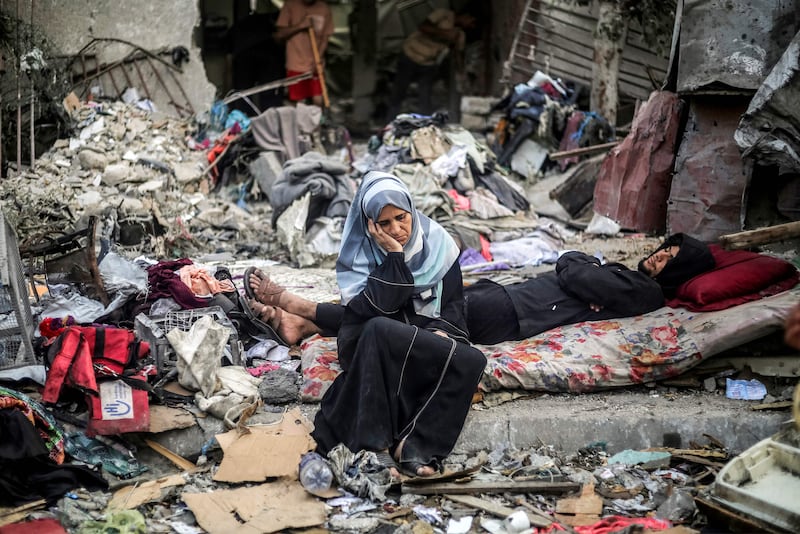
Part of the prime minister's camp's concern is attributed to the fact that Israelis abroad have faced widespread international alarm over Israel's actions in Gaza, where 74,000 people have been killed over the past three years. This followed Hamas's October 7 attacks, in which more than 1,200 Israelis were killed, many in the city of Sderot, where gunfire could still be heard on Friday; the ruins of Gaza, where a ceasefire is believed to be in effect, are visible from afar. It is unclear how this serious security failure will affect Netanyahu's share of the vote, but it is evident that those arriving from abroad want a new approach. 'These elections are very important right now, and it is very important that we change the government… especially after what has happened over the past few years, since October 7,' said Shirley Segal, whose brother flew in from the US. Her brother Danny Segal, who is voting for the centre-right party of former prime minister Naftali Bennett, believes Israel needs 'a different direction' and that current policy threatens the idea of a Jewish national home; at the same time, in his view, given the October 7 attacks, 'it will take some time before we can see a Palestinian state.'
Significance of the event
The outcome of Tuesday's election may determine whether Netanyahu retains power, and the diaspora vote — equivalent to two Knesset mandates — could prove decisive in a close race, as reported by The National. The event directly affects both Israeli voters, including those living abroad, and the fate of post-war arrangements in Gaza. In practical terms, this means the election results could lead to a change of government and a shift in the country's course, although the exact impact of voters arriving from abroad on the outcome remains unknown.